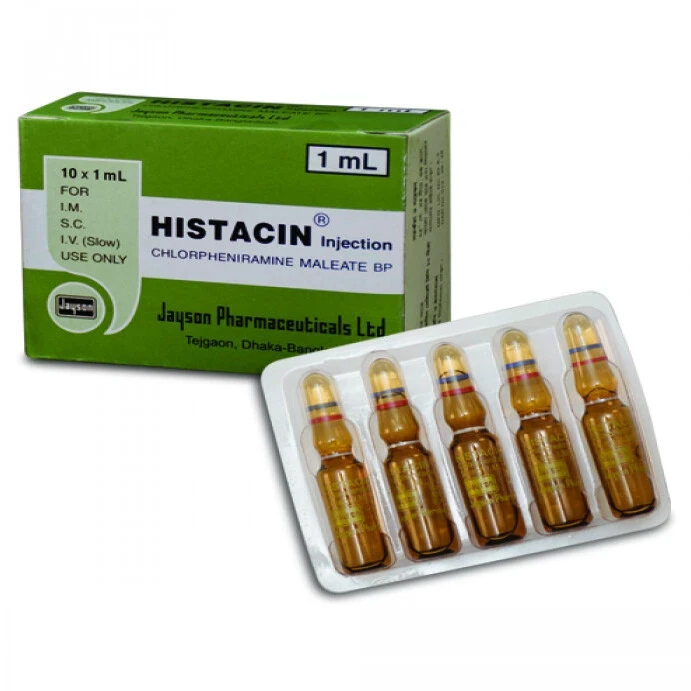
Introduction
A histamine H1 antagonist used in allergic reactions, hay fever, rhinitis, urticaria, and asthma. It has also been used in veterinary applications. One of the most widely used of the classical antihistaminics, it generally causes less drowsiness and sedation than promethazine.
Uses
Chlorpheniramine is a histamine-H1 receptor antagonist indicated for the management of symptoms associated with upper respiratory allergies.
For the treatment of rhinitis, urticaria, allergy, common cold, asthma and hay fever.
Associated Conditions
Pharmacodynamics
In allergic reactions an allergen interacts with and cross-links surface IgE antibodies on mast cells and basophils. Once the mast cell-antibody-antigen complex is formed, a complex series of events occurs that eventually leads to cell-degranulation and the release of histamine (and other chemical mediators) from the mast cell or basophil. Once released, histamine can react with local or widespread tissues through histamine receptors. Histamine, acting on H1-receptors, produces pruritis, vasodilatation, hypotension, flushing, headache, tachycardia, and bronchoconstriction. Histamine also increases vascular permeability and potentiates pain. Chlorpheniramine, is a histamine H1 antagonist (or more correctly, an inverse histamine agonist) of the alkylamine class. It competes with histamine for the normal H1-receptor sites on effector cells of the gastrointestinal tract, blood vessels and respiratory tract. It provides effective, temporary relief of sneezing, watery and itchy eyes, and runny nose due to hay fever and other upper respiratory allergies.
Mechanism of Action
Chlorpheniramine binds to the histamine H1 receptor. This blocks the action of endogenous histamine, which subsequently leads to temporary relief of the negative symptoms brought on by histamine.
Absorption
Well absorbed in the gastrointestinal tract.
Protein Binding
72%
Half Life
21-27 hours
Toxicity
Oral LD50 (rat): 306 mg/kg; Oral LD50 (mice): 130 mg/kg; Oral LD50 (guinea pig): 198 mg/kg [Registry of Toxic Effects of Chemical Substances. Ed. D. Sweet, US Dept. of Health & Human Services: Cincinatti, 2010.] Also a mild reproductive toxin to women of childbearing age.
Food Interactions
- Avoid alcohol.
- Take with food.
Dosage
Child-
- 6-12 years: 2 mg every 4-6 hours, maximum 12 mg daily.
- 2-5 years: 1 mg every 4-6 hours, maximum 6 mg daily.
- 1-2 years: 1 mg twice daily.