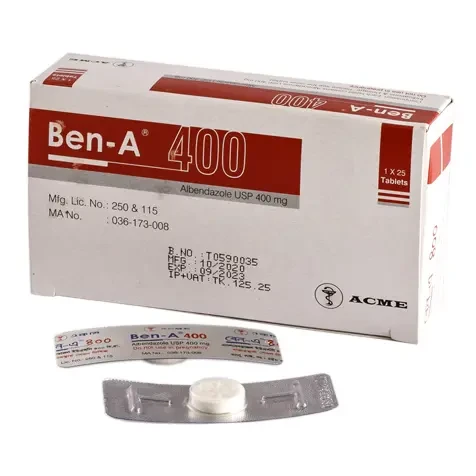
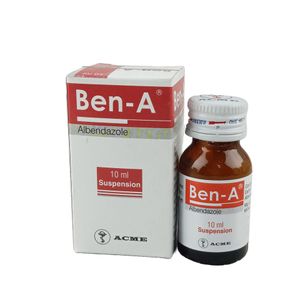
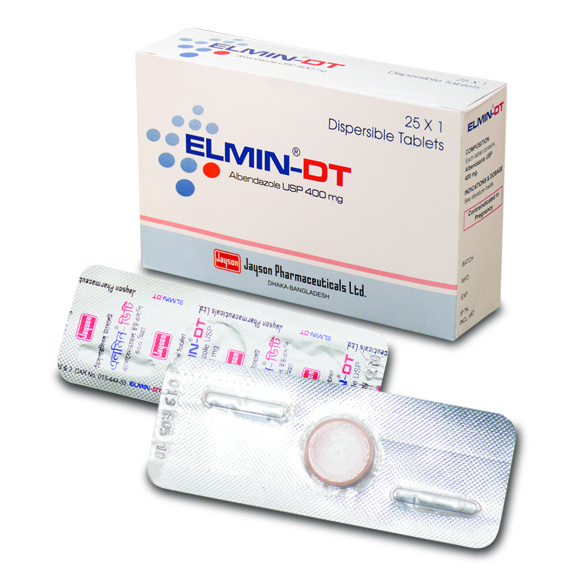
Generic Name Albendazole
Bangla Name এ্যালবেনডাজল
Available brands 109
Language

Introduction

A benzimidazole broad-spectrum anthelmintic structurally related to mebendazole that is effective against many diseases. (From Martindale, The Extra Pharmacopoeia, 30th ed, p38)

Uses

Albendazole is a benzimidazole anthelmintic used to treat parenchymal neurocysticercosis and other helminth infections.

For the treatment of parenchymal neurocysticercosis due to active lesions caused by larval forms of the pork tapeworm, Taenia solium and for the treatment of cystic hydatid disease of the liver, lung, and peritoneum, caused by the larval form of the dog tapeworm, Echinococcus granulosus.

Associated Conditions

  • Ascariasis
  • Hookworm Infection
  • Hydatid disease caused by Echinococcus granulosus
  • Neurocysticercosis caused by Taenia solium
  • Other specified protozoal diseases

Pharmacodynamics

Albendazole is a broad-spectrum anthelmintic. The principal mode of action for albendazole is by its inhibitory effect on tubulin polymerization which results in the loss of cytoplasmic microtubules.

Mechanism of Action

Albendazole causes degenerative alterations in the tegument and intestinal cells of the worm by diminishing its energy production, ultimately leading to immobilization and death of the parasite. It works by binding to the colchicine-sensitive site of tubulin, thus inhibiting its polymerization or assembly into microtubules. As cytoplasmic microtubules are critical in promoting glucose uptake in larval and adult stages of the susceptible parasites, the glycogen stores of the parasites are depleted. Degenerative changes in the endoplasmic reticulum, the mitochondria of the germinal layer, and the subsequent release of lysosomes result in decreased production of adenosine triphosphate (ATP), which is the energy required for the survival of the helminth.

Absorption

Poorly absorbed from the gastrointestinal tract due to its low aqueous solubility. Oral bioavailability appears to be enhanced when coadministered with a fatty meal (estimated fat content 40 g)

Protein Binding

70% bound to plasma protein

Route of Elimination

Albendazole is rapidly converted in the liver to the primary metabolite, albendazole sulfoxide, which is further metabolized to albendazole sulfone and other primary oxidative metabolites that have been identified in human urine. Urinary excretion of albendazole sulfoxide is a minor elimination pathway with less than 1% of the dose recovered in the urine. Biliary elimination presumably accounts for a portion of the elimination as evidenced by biliary concentrations of albendazole sulfoxide similar to those achieved in plasma.

Half Life

Terminal elimination half-life ranges from 8 to 12 hours (single dose, 400mg).

Toxicity

Symptoms of overdose include elevated liver enzymes, headaches, hair loss, low levels of white blood cells (neutropenia), fever, and itching.

Food Interactions

  • Take with a high fat meal. A high fat meal increases solubility and absorption. Take with food when treating systemic infections.

Dosage

Adults & children over 2 years:
  • 400 mg (1 tablet or 10 ml suspension) as a single dose in cases of Enterobius vermicularis, Trichuris trichiura, Ascaris lumbricoides, Ancylostoma duodenale and Necator americanus.
  • In cases of strongyloidiasis or taeniasis, 400 mg (1 tablet or 10 ml suspension) daily should be given for 3 consecutive days. If the patient is not cured on follow-up after three weeks, a second course of treatment is indicated. 
Children of 1-2 years: Recommended dose is a single dose of 200 mg (5 ml suspension).

Children under 1 year: Not recommended.

In Hydatid disease (Echinococcosis):
  • Albendazole is given by mouth with meals in a dose of 400 mg twice daily for 28 days for patients weighing over 60 kg.
  • A dose of 15 mg/kg body weight daily in two divided doses (to a maximum total daily dose of 800 mg) is used for patients weighing less than 60 kg.
  • For cystic echinococcosis, the 28 days course may be repeated after 14 days without treatment, to a total of 3 treatment cycles.
  • For alveolar echinococcosis, cycles of 28 days of treatment followed by 14 days without treatment, may need to continue for months or years.
  • In giardiasis, 400 mg (1 tablet or 10 ml suspension) once daily for five days is used.

Frequently Asked Questions About Albendazole

1. What is Albendazole?

Albendazole is an anthelmintic (anti-worm) medication used to treat infections caused by parasites such as roundworms, hookworms, whipworms, and tapeworms.

2. How does Albendazole work?

Albendazole works by inhibiting the parasites' ability to absorb glucose, leading to their death due to energy depletion.

3. What conditions does Albendazole treat?

Albendazole is used to treat parasitic infections such as neurocysticercosis, hydatid disease (echinococcosis), ascariasis, hookworm infections, and strongyloidiasis.

4. Is Albendazole available over the counter?

No, Albendazole is a prescription medication and requires a doctor's approval.

5. How should I take Albendazole?

Albendazole should be taken with food to improve absorption. Always follow your doctor's dosage instructions.

6. What is the typical dose of Albendazole?

  • For neurocysticercosis: 400 mg twice daily for 8-30 days.
  • For hydatid disease: 400 mg twice daily for 28 days, repeated in cycles.
  • For other parasitic infections: Dose varies based on the condition.

7. Can Albendazole be taken on an empty stomach?

No, it is recommended to take Albendazole with a fatty meal to enhance absorption.

8. What are the common side effects of Albendazole?

Common side effects include headache, nausea, vomiting, dizziness, and abdominal pain.

9. Can pregnant women take Albendazole?

No, Albendazole is not recommended during pregnancy, especially in the first trimester, as it may harm the fetus.

10. Can breastfeeding mothers take Albendazole?

Albendazole should be used with caution while breastfeeding. Consult a doctor before taking it.

11. How long does it take for Albendazole to work?

It depends on the infection. Some conditions improve within a few days, while others require weeks of treatment.

12. What should I do if I miss a dose?

Take the missed dose as soon as you remember, but skip it if it's almost time for your next dose. Do not double dose.

13. Can Albendazole be used for children?

Yes, but the dosage depends on the child's age and weight. A doctor should determine the appropriate dose.

14. What should I avoid while taking Albendazole?

Avoid alcohol and grapefruit juice as they may affect the drug’s effectiveness.

15. Can Albendazole treat all types of worms?

No, it is effective against many but not all parasitic infections. Consult your doctor for a proper diagnosis.

16. Is Albendazole safe for the liver?

Albendazole can cause liver enzyme elevations. Patients with liver disease should use it with caution.

17. Can I drink alcohol while taking Albendazole?

It is best to avoid alcohol as it may increase the risk of liver damage.

18. What happens if I take too much Albendazole?

Overdose symptoms may include nausea, vomiting, dizziness, and abdominal pain. Seek medical attention immediately.

19. Does Albendazole interact with other medications?

Yes, Albendazole may interact with certain medications, such as dexamethasone, praziquantel, and cimetidine. Inform your doctor about all medicines you are taking.

20. Is Albendazole the same as Mebendazole?

Both are anthelmintics, but they differ in their spectrum of activity and how they are absorbed.

21. Can I take Albendazole for pinworms?

Yes, Albendazole is effective against pinworm infections.

22. Can Albendazole be used for tapeworms?

Yes, Albendazole is commonly used to treat tapeworm infections.

23. Does Albendazole kill parasites instantly?

No, it takes a few days to weeks to kill parasites completely.

24. Can Albendazole be taken for preventive purposes?

It is not typically used as a preventive medication.

25. Does Albendazole cause diarrhea?

Diarrhea can be a side effect, but it is not common.

26. Is Albendazole a steroid?

No, Albendazole is an antiparasitic drug.

27. Can I take Albendazole with antibiotics?

Consult your doctor as interactions may occur.

28. Can Albendazole cure giardiasis?

No, Albendazole is not the first-line treatment for giardiasis.

29. Is Albendazole used for scabies?

No, Albendazole is not effective against scabies.

30. Does Albendazole cause headaches?

Yes, headaches are a possible side effect.

31. Can Albendazole cause dizziness?

Yes, dizziness is a possible side effect.

32. Is Albendazole effective against malaria?

No, Albendazole is not used for malaria treatment.

33. How is Albendazole stored?

Store at room temperature, away from moisture and heat.

34. Can Albendazole cause weight loss?

Weight loss is not a common side effect.

35. Can Albendazole cause allergic reactions?

Yes, allergic reactions like rash or swelling may occur.

36. Does Albendazole cause fatigue?

Fatigue is a possible but uncommon side effect.

37. Can I crush Albendazole tablets?

Yes, but check with your doctor for the best way to take it.

38. Can Albendazole affect my kidneys?

It primarily affects the liver, not the kidneys.

39. Does Albendazole treat toxocariasis?

Yes, Albendazole is effective against toxocariasis.

40. Can Albendazole treat river blindness?

No, ivermectin is preferred for river blindness.

41. Can Albendazole cause anemia?

Rarely, but it can affect blood cell counts.

42. Does Albendazole cause hair loss?

Hair loss is not a common side effect.

43. Is Albendazole used in animals?

Yes, but human and veterinary doses differ.

44. Can Albendazole be given intravenously?

No, it is taken orally.

45. Can Albendazole treat amoebiasis?

No, metronidazole is used for amoebiasis.

46. Can Albendazole cause joint pain?

Joint pain is a rare side effect.

47. Can I take Albendazole with vitamins?

Yes, but consult your doctor.

48. Does Albendazole affect blood sugar?

No, it does not directly affect blood sugar.

49. Can Albendazole be used for fungal infections?

No, it is not an antifungal drug.

50. How long should I take Albendazole?

The duration depends on the infection. Follow your doctor's prescription.

Medical review

Last reviewed: 24 Jul 2026

Medically reviewed by:

This is general information, not personal medical advice. Consult a doctor before taking any medicine.

Taking medicines without doctor's advice can cause long-term problems.
Brand medicines containing Albendazole