Introduction:

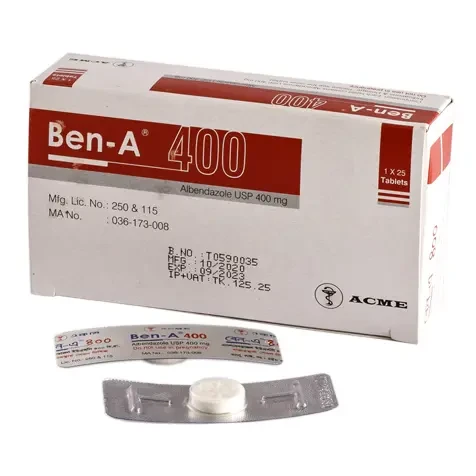
Benfast Chewable Tablet 400 mg is an anti-parasitic drug used to treat certain types of parasitic worm infections in humans, reptiles, birds, and other animals. It has been approved for use in humans in over 90 countries since 1985. The drug is available in various forms including injection, tablets, and chewable tablets. There is a wide array of brand names including Albendazol, Zentel, and Tabendazole, among others.

Uses for:

Benfast Chewable Tablet 400 mg is mainly used in the treatment of ascariasis, hookworm infections, Whipworm infections, and other parasitic worm infections. It can also be used to treat tapeworms. Benfast Chewable Tablet 400 mg may also be used for other conditions as determined by a doctor.

Mechanism of Action:

Benfast Chewable Tablet 400 mg works by paralyzing the parasites. It inhibits the formation of microtubules, which are part of the cellular structure in the worms. This prevents the cells from replicating and the worms from surviving. By paralyzing the worms, Benfast Chewable Tablet 400 mg is able to kill them without affecting the host.

How Long Does it Take to Work?

The effects of Benfast Chewable Tablet 400 mg can be felt within a few hours of taking the medication. The worms will begin to die off within 24 to 48 hours of taking the medication. It is important to continue taking the medication for the full course of treatment in order to ensure that all of the worms are killed.

Absorption:

Benfast Chewable Tablet 400 mg is quickly and almost completely absorbed from the gastrointestinal tract following oral administration. The peak plasma concentrations are reached within 2-4 hours.

Route of Elimination:

Benfast Chewable Tablet 400 mg is metabolized in the liver and excreted both in the urine and feces. Benfast Chewable Tablet 400 mg is also eliminated from the body through biliary elimination.

Dosage:

The dosage of Benfast Chewable Tablet 400 mg depends on the type of infection being treated. For ascariasis and other infections, the recommended dosage is 400 milligrams (mg) two times a day for three days. For tapeworm infections, the recommended dosage is 800 mg taken one time only. It is important to follow the doctor’s instructions when taking Benfast Chewable Tablet 400 mg.

Administration:

Benfast Chewable Tablet 400 mg can be taken orally with or without food. It is important to take the medication as prescribed by a doctor. The tablets should not be chewed or crushed. If a dose is missed, it should be taken as soon as possible.

Side Effect:

The most common side effects of albendazole are nausea, vomiting, abdominal pain, and diarrhea. Less common side effects may include rash, headache, dizziness, and tingling or numbness in the hands or feet. If side effects occur, they should be reported to the prescribing doctor.

Toxicity:

Benfast Chewable Tablet 400 mg has been found to be relatively safe, but it can be toxic if taken in high doses for a long period of time. The most common signs of toxicity include nausea, vomiting, abdominal pain, and diarrhea. If toxicity occurs, it is important to stop taking the medication and seek medical treatment.

Precaution:

It is important to consult your doctor if you have any other medical conditions, are pregnant or breastfeeding, or taking any other medications before taking Benfast Chewable Tablet 400 mg. It is also important to tell your doctor if you are planning to become pregnant while taking Benfast Chewable Tablet 400 mg. Lastly, it is important to tell your doctor if you are allergic to Benfast Chewable Tablet 400 mg or any other medications.

Interaction:

Benfast Chewable Tablet 400 mg may interact with other medications, such as rifampin and warfarin. It may also interact with certain foods, such as dairy products, carbonated beverages, and grapefruit juice. It is important to talk to your doctor or pharmacist about your current medications and any foods you are eating before taking Benfast Chewable Tablet 400 mg.

Disease Interaction:

Benfast Chewable Tablet 400 mg can interact with certain diseases such as liver disease, kidney disease, and heart disease. It is important to talk to your doctor about any diseases you may have before taking Benfast Chewable Tablet 400 mg. If you have a known allergy to Benfast Chewable Tablet 400 mg or any other medication, it is important to inform your doctor.

Drug Interaction:

Benfast Chewable Tablet 400 mg can interact with certain medications such as rifampin, warfarin, and phenobarbital. It is important to tell your doctor or pharmacist about any medications you are taking before taking Benfast Chewable Tablet 400 mg.

Food Interactions:

Benfast Chewable Tablet 400 mg can interact with certain foods. It is important to avoid drinking grapefruit juice while taking Benfast Chewable Tablet 400 mg. It is also important to avoid drinking carbonated beverages and eating dairy products while taking the medication.

Pregnancy Use:

It is not recommended to take Benfast Chewable Tablet 400 mg during pregnancy. There is a risk of harm to the unborn baby which outweighs its potential benefits.

Lactation Use:

Benfast Chewable Tablet 400 mg is secreted in breast milk, so it is not recommended for women who are breastfeeding.

Acute Overdose:

An acute overdose of Benfast Chewable Tablet 400 mg can be dangerous and symptoms may include nausea, vomiting, abdominal pain, and diarrhea. If an overdose is suspected, it is important to seek medical attention immediately.

Contraindication:

Benfast Chewable Tablet 400 mg is contraindicated in people with hypersensitivity to the medication, those taking medications that interact with Benfast Chewable Tablet 400 mg, and those with certain medical conditions.

Use Direction:

Benfast Chewable Tablet 400 mg should be taken according to the directions provided by your doctor. The dosage and duration of treatment depends on the type of infection being treated. It is important to follow the instructions provided by your doctor and take the medication exactly as prescribed. Do not take more medication than prescribed.

Storage Condition:

Benfast Chewable Tablet 400 mg should be stored at room temperature, away from heat, light, and moisture. It should also be kept out of the reach of children.

Volume of Distribution:

Benfast Chewable Tablet 400 mg has a volume of distribution of 15L/kg.

Half Life:

Benfast Chewable Tablet 400 mg has a half-life of about 8 hours.

Clearance:

Benfast Chewable Tablet 400 mg has a total clearance rate of 3.7 mL/min/kg.

See in details version Benfast Chewable Tablet 400 mg also Benfast Chewable Tablet 400 mg in bangla

Some Frequently Asked Questions About Benfast Chewable Tablet 400 mg

1. What is Benfast Chewable Tablet 400 mg?

Benfast Chewable Tablet 400 mg is an anthelmintic (anti-worm) medication used to treat infections caused by parasites such as roundworms, hookworms, whipworms, and tapeworms.

2. How does Benfast Chewable Tablet 400 mg work?

Benfast Chewable Tablet 400 mg works by inhibiting the parasites' ability to absorb glucose, leading to their death due to energy depletion.

3. What conditions does Benfast Chewable Tablet 400 mg treat?

Benfast Chewable Tablet 400 mg is used to treat parasitic infections such as neurocysticercosis, hydatid disease (echinococcosis), ascariasis, hookworm infections, and strongyloidiasis.

4. Is Benfast Chewable Tablet 400 mg available over the counter?

No, Benfast Chewable Tablet 400 mg is a prescription medication and requires a doctor's approval.

5. How should I take Benfast Chewable Tablet 400 mg?

Benfast Chewable Tablet 400 mg should be taken with food to improve absorption. Always follow your doctor's dosage instructions.

6. What is the typical dose of Benfast Chewable Tablet 400 mg?

  • For neurocysticercosis: 400 mg twice daily for 8-30 days.
  • For hydatid disease: 400 mg twice daily for 28 days, repeated in cycles.
  • For other parasitic infections: Dose varies based on the condition.

7. Can Benfast Chewable Tablet 400 mg be taken on an empty stomach?

No, it is recommended to take Benfast Chewable Tablet 400 mg with a fatty meal to enhance absorption.

8. What are the common side effects of Benfast Chewable Tablet 400 mg?

Common side effects include headache, nausea, vomiting, dizziness, and abdominal pain.

9. Can pregnant women take Benfast Chewable Tablet 400 mg?

No, Benfast Chewable Tablet 400 mg is not recommended during pregnancy, especially in the first trimester, as it may harm the fetus.

10. Can breastfeeding mothers take Benfast Chewable Tablet 400 mg?

Benfast Chewable Tablet 400 mg should be used with caution while breastfeeding. Consult a doctor before taking it.

11. How long does it take for Benfast Chewable Tablet 400 mg to work?

It depends on the infection. Some conditions improve within a few days, while others require weeks of treatment.

12. What should I do if I miss a dose?

Take the missed dose as soon as you remember, but skip it if it's almost time for your next dose. Do not double dose.

13. Can Benfast Chewable Tablet 400 mg be used for children?

Yes, but the dosage depends on the child's age and weight. A doctor should determine the appropriate dose.

14. What should I avoid while taking Benfast Chewable Tablet 400 mg?

Avoid alcohol and grapefruit juice as they may affect the drug’s effectiveness.

15. Can Benfast Chewable Tablet 400 mg treat all types of worms?

No, it is effective against many but not all parasitic infections. Consult your doctor for a proper diagnosis.

16. Is Benfast Chewable Tablet 400 mg safe for the liver?

Benfast Chewable Tablet 400 mg can cause liver enzyme elevations. Patients with liver disease should use it with caution.

17. Can I drink alcohol while taking Benfast Chewable Tablet 400 mg?

It is best to avoid alcohol as it may increase the risk of liver damage.

18. What happens if I take too much Benfast Chewable Tablet 400 mg?

Overdose symptoms may include nausea, vomiting, dizziness, and abdominal pain. Seek medical attention immediately.

19. Does Benfast Chewable Tablet 400 mg interact with other medications?

Yes, Benfast Chewable Tablet 400 mg may interact with certain medications, such as dexamethasone, praziquantel, and cimetidine. Inform your doctor about all medicines you are taking.

20. Is Benfast Chewable Tablet 400 mg the same as Mebendazole?

Both are anthelmintics, but they differ in their spectrum of activity and how they are absorbed.

21. Can I take Benfast Chewable Tablet 400 mg for pinworms?

Yes, Benfast Chewable Tablet 400 mg is effective against pinworm infections.

22. Can Benfast Chewable Tablet 400 mg be used for tapeworms?

Yes, Benfast Chewable Tablet 400 mg is commonly used to treat tapeworm infections.

23. Does Benfast Chewable Tablet 400 mg kill parasites instantly?

No, it takes a few days to weeks to kill parasites completely.

24. Can Benfast Chewable Tablet 400 mg be taken for preventive purposes?

It is not typically used as a preventive medication.

25. Does Benfast Chewable Tablet 400 mg cause diarrhea?

Diarrhea can be a side effect, but it is not common.

26. Is Benfast Chewable Tablet 400 mg a steroid?

No, Benfast Chewable Tablet 400 mg is an antiparasitic drug.

27. Can I take Benfast Chewable Tablet 400 mg with antibiotics?

Consult your doctor as interactions may occur.

28. Can Benfast Chewable Tablet 400 mg cure giardiasis?

No, Benfast Chewable Tablet 400 mg is not the first-line treatment for giardiasis.

29. Is Benfast Chewable Tablet 400 mg used for scabies?

No, Benfast Chewable Tablet 400 mg is not effective against scabies.

30. Does Benfast Chewable Tablet 400 mg cause headaches?

Yes, headaches are a possible side effect.

31. Can Benfast Chewable Tablet 400 mg cause dizziness?

Yes, dizziness is a possible side effect.

32. Is Benfast Chewable Tablet 400 mg effective against malaria?

No, Benfast Chewable Tablet 400 mg is not used for malaria treatment.

33. How is Benfast Chewable Tablet 400 mg stored?

Store at room temperature, away from moisture and heat.

34. Can Benfast Chewable Tablet 400 mg cause weight loss?

Weight loss is not a common side effect.

35. Can Benfast Chewable Tablet 400 mg cause allergic reactions?

Yes, allergic reactions like rash or swelling may occur.

36. Does Benfast Chewable Tablet 400 mg cause fatigue?

Fatigue is a possible but uncommon side effect.

37. Can I crush Benfast Chewable Tablet 400 mg tablets?

Yes, but check with your doctor for the best way to take it.

38. Can Benfast Chewable Tablet 400 mg affect my kidneys?

It primarily affects the liver, not the kidneys.

39. Does Benfast Chewable Tablet 400 mg treat toxocariasis?

Yes, Benfast Chewable Tablet 400 mg is effective against toxocariasis.

40. Can Benfast Chewable Tablet 400 mg treat river blindness?

No, ivermectin is preferred for river blindness.

41. Can Benfast Chewable Tablet 400 mg cause anemia?

Rarely, but it can affect blood cell counts.

42. Does Benfast Chewable Tablet 400 mg cause hair loss?

Hair loss is not a common side effect.

43. Is Benfast Chewable Tablet 400 mg used in animals?

Yes, but human and veterinary doses differ.

44. Can Benfast Chewable Tablet 400 mg be given intravenously?

No, it is taken orally.

45. Can Benfast Chewable Tablet 400 mg treat amoebiasis?

No, metronidazole is used for amoebiasis.

46. Can Benfast Chewable Tablet 400 mg cause joint pain?

Joint pain is a rare side effect.

47. Can I take Benfast Chewable Tablet 400 mg with vitamins?

Yes, but consult your doctor.

48. Does Benfast Chewable Tablet 400 mg affect blood sugar?

No, it does not directly affect blood sugar.

49. Can Benfast Chewable Tablet 400 mg be used for fungal infections?

No, it is not an antifungal drug.

50. How long should I take Benfast Chewable Tablet 400 mg?

The duration depends on the infection. Follow your doctor's prescription.

*** Taking medicines without doctor's advice can cause long-term problems.
Related Medicines