Introduction

Ceftibuten dihydrate is a broad-spectrum cephalosporin antibiotic used to treat a variety of bacterial infections. It is effective against a range of gram-positive and gram-negative bacteria. Ceftibuten is particularly used for respiratory tract infections, urinary tract infections, and some skin infections.

Uses

Ceftibuten dihydrate is used to treat:

  • Acute bacterial exacerbations of chronic bronchitis.
  • Pharyngitis and tonsillitis caused by specific bacteria.
  • Uncomplicated urinary tract infections.
  • Some skin and soft tissue infections.
It is typically used when other antibiotics are ineffective or contraindicated. It is often prescribed in cases where oral therapy is preferred.

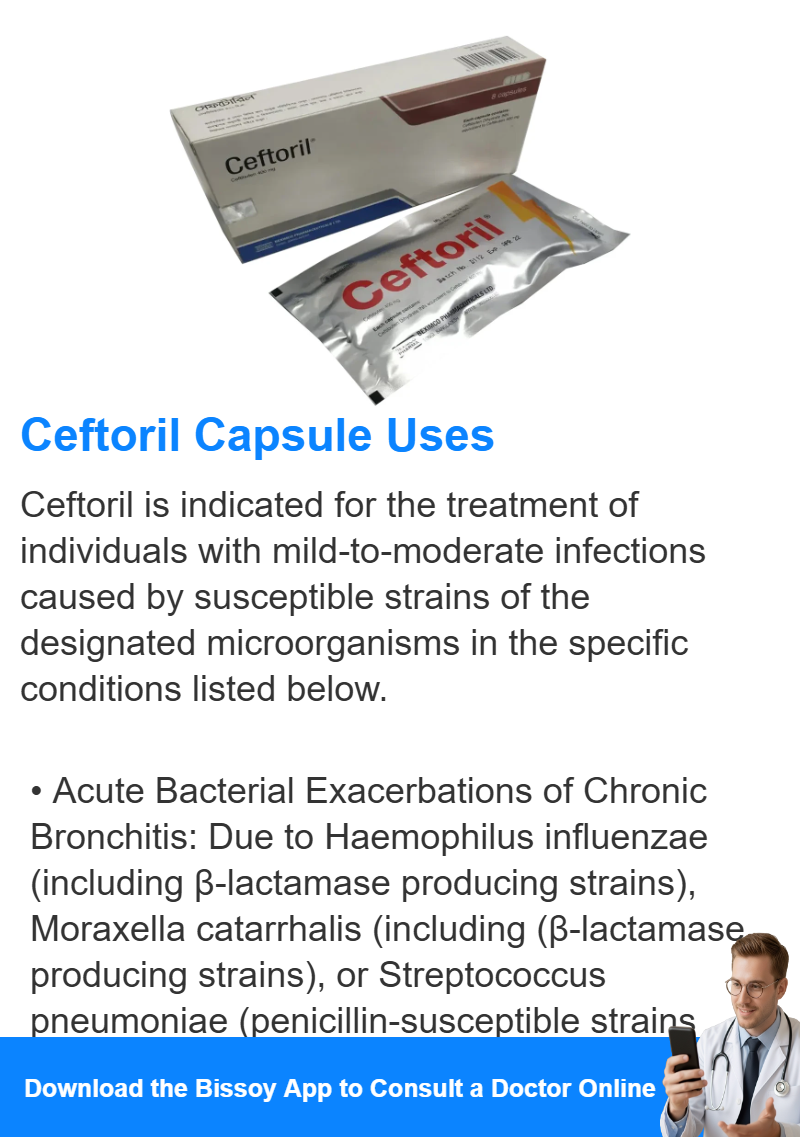
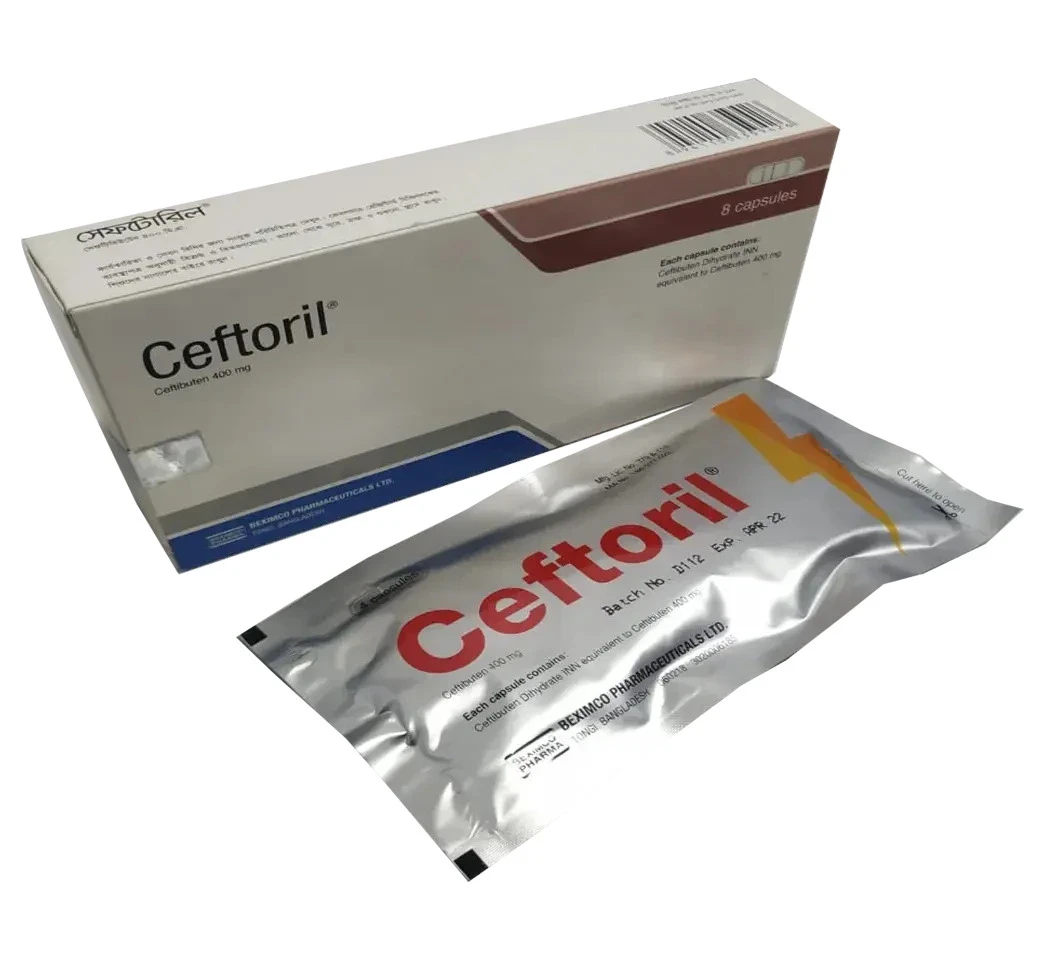
Brand Name Ceftoril
Type Capsule
Weight 400 mg
Generic Ceftibuten Dihydrate
Manufacturer Beximco Pharmaceuticals Ltd.
Available in English বাংলা

Mechanism of Action

Ceftibuten works by inhibiting bacterial cell wall synthesis. It binds to penicillin-binding proteins (PBPs) located in the bacterial cell wall, leading to the disruption of cell wall construction. This inhibition results in bacterial cell lysis and death, effectively treating the infection.

How Long Does It Take to Work?

Ceftibuten usually begins to work within a few hours after administration, with noticeable clinical improvements often observed within 24 to 48 hours. The full course of treatment may take several days, depending on the infection being treated and the patient’s response.

Absorption

Ceftibuten is well absorbed from the gastrointestinal tract. The oral bioavailability of ceftibuten is approximately 10 to 15%, and its absorption is not significantly affected by food, though it is better absorbed on an empty stomach. Peak plasma concentrations are generally achieved within 1 to 2 hours after oral administration.

Route of Elimination

Ceftibuten is primarily eliminated through the kidneys. Approximately 70% of the administered dose is excreted in the urine as unchanged drug. The remainder is metabolized to inactive metabolites and excreted in the bile.

Dosage

Otitis Media-
  • Adult Dosage: 400 mg orally every 24 hours for 10 days
  • Pediatric Dosage: >6 months: 9 mg/kg/day (maximum 400 mg) every 24 hours for 10 days
Tonsillitis/Pharyngitis-
  • Adult Dosage: 400 mg orally every 24 hours for 10 days
  • Pediatric Dosage: >6 months: 9 mg/kg/day (maximum 400 mg) every 24 hours for 10 days
Bronchitis-
  • Adult Dosage: 400 mg orally every 24 hours for 10 days
  • Pediatric Dosage: >12 years: 400 mg orally every 24 hours for 10 days
Cystitis-
  • Adult Dosage: 400 mg orally every 24 hours for 7 days
  • Pediatric Dosage: >12 years: 400 mg orally every 24 hours for 7 days
Pneumonia-
  • Adult Dosage: 200 mg orally every 12 hours for 7 to 14 days
  • Pediatric Dosage: >12 years: 200 mg orally every 12 hours for 7 to 14 days
Sinusitis-
  • Adult Dosage: 400 mg orally every 24 hours for 10 to 14 days
  • Pediatric Dosage: >12 years: 400 mg orally every 24 hours for 10 to 14 days
Urinary tract Infection-
  • Adult Dosage: 400 mg orally every 24 hours for 10 days
  • Pediatric Dosage: >6 months: 9 mg/kg/day (maximum 400 mg) every 24 hours for 10 days

The typical dosage of ceftibuten dihydrate is:

  • For adults with uncomplicated urinary tract infections: 400 mg once daily for 7 to 10 days.
  • For acute bacterial exacerbations of chronic bronchitis: 400 mg once daily for 10 days.
  • For pharyngitis or tonsillitis: 400 mg once daily for 7 to 10 days.
Dosage adjustments may be necessary for patients with renal impairment. Always follow the specific dosing instructions provided by the healthcare provider.

Administration

Ceftibuten is administered orally, typically in the form of a capsule or suspension. It should be taken as directed, usually once daily. For optimal results, it is generally recommended to take ceftibuten at the same time each day, and it can be taken with or without food.

Side Effects

Common side effects of ceftibuten include:

  • Gastrointestinal disturbances such as nausea, vomiting, and diarrhea.
  • Abdominal pain and dyspepsia.
  • Headache and dizziness.
Serious side effects may include allergic reactions, severe gastrointestinal symptoms, and pseudomembranous colitis. Seek medical attention if severe or persistent side effects occur.

Toxicity

Symptoms of ceftibuten toxicity may include severe gastrointestinal symptoms, signs of allergic reactions, or renal impairment. In the case of overdose, supportive care and symptomatic treatment are required. No specific antidote is available for ceftibuten toxicity.

Precautions

Precautions include:

  • Monitoring renal function, especially in patients with pre-existing renal conditions.
  • Careful use in patients with a history of penicillin or cephalosporin allergy.
  • Monitoring for signs of superinfection or pseudomembranous colitis.
Patients should be advised to complete the full course of therapy to prevent the development of resistant bacteria.

Interaction

Ceftibuten may interact with other medications, including:

  • Anticoagulants, which may enhance the risk of bleeding.
  • Probenecid, which may increase ceftibuten levels by reducing its renal clearance.
  • Other antibiotics, which may have additive effects or alter bacterial susceptibility.
It is important to inform healthcare providers of all concurrent medications to manage potential interactions.

Disease Interaction

Use ceftibuten with caution in patients with:

  • Renal impairment, as dosage adjustments may be necessary.
  • History of gastrointestinal disease, especially colitis.
Regular monitoring and dose adjustments may be needed based on the patient's condition and response to therapy.

Drug Interaction

Drug interactions may include:

  • Antacids containing aluminum or magnesium, which may decrease the absorption of ceftibuten.
  • Medications affecting renal function or blood clotting.
Monitoring and adjustment of therapy may be required to avoid adverse effects and interactions.

Food Interactions

Ceftibuten can be taken with or without food. Food does not significantly affect its absorption, but taking the medication with food may help reduce gastrointestinal irritation.

Pregnancy Use

Ceftibuten is classified as a Category B drug for pregnancy, indicating that it is not expected to harm the fetus based on animal studies. However, it should be used during pregnancy only if clearly needed. Pregnant women should consult their healthcare provider regarding the benefits and risks of ceftibuten therapy.

Lactation Use

Ceftibuten is excreted in breast milk in small amounts. It is generally considered safe for use during lactation, but breastfeeding mothers should discuss the risks and benefits with their healthcare provider to ensure the safety of the infant.

Acute Overdose

In case of acute overdose, symptoms may include gastrointestinal disturbances and signs of renal impairment. Treatment involves supportive care, including fluid and electrolyte management, and monitoring for any adverse effects. Specific antidotes are not available.

Contraindication

Ceftibuten is contraindicated in patients with known hypersensitivity to cephalosporins or any component of the formulation. Caution should be used in patients with a history of allergic reactions to beta-lactam antibiotics.

Use Direction

Follow the prescribed dosage and administration instructions. Complete the full course of therapy as directed to ensure effectiveness and prevent the development of resistance. Consult a healthcare provider for any concerns or questions regarding use.

Storage Conditions

Store ceftibuten at room temperature, away from moisture and heat. Keep out of reach of children. The medication should be stored according to the manufacturer's instructions, and the expiry date should be checked before use.

Volume of Distribution

The volume of distribution of ceftibuten is approximately 0.2 to 0.3 L/kg. This indicates its distribution into body tissues and fluids, influencing its therapeutic and pharmacokinetic profile.

Half Life

The terminal half-life of ceftibuten is approximately 1.5 to 2 hours. This relatively short half-life supports its dosing regimen, typically requiring daily administration to maintain effective plasma levels.

Clearance

Ceftibuten is primarily cleared by the kidneys. The renal clearance of ceftibuten is about 20 to 30 L/hour, reflecting its effective elimination through urinary excretion. Renal function significantly impacts clearance rates, necessitating dose adjustments in patients with impaired renal function.

See in details version Ceftoril Capsule 400 mg also Ceftoril Capsule 400 mg in bangla

Social card

Uses

Some Frequently Asked Questions About Ceftoril Capsule 400 mg

*** Taking medicines without doctor's advice can cause long-term problems.
Dr. Sabera Sultana Biswas Asmani

Dr. Sabera Sultana Biswas Asmani

Gynecology, Obstetrics Specialist & Surgeon

Call Doctor
Dr. Md. Shoaib Hossain

Dr. Md. Shoaib Hossain

Ear, Nose, Throat Specialist

Call Doctor
Prof. Dr. D. A. Hassan Chowdhury

Prof. Dr. D. A. Hassan Chowdhury

General, Laparoscopic & Colorectal (Piles) Surgery Specialist

Call Doctor
Related Medicines