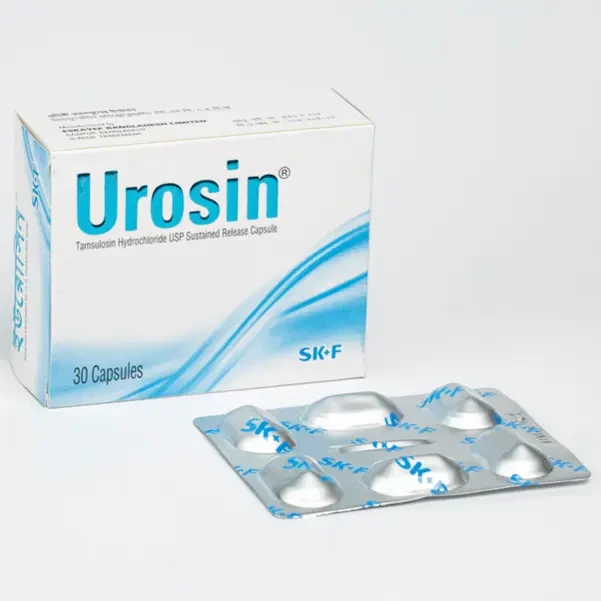
Introduction
Tamsulosin is a selective alpha-1A and alpha-1B adrenoceptor antagonist that exerts its greatest effect in the prostate and bladder, where these receptors are most common. It is indicated for the treatment of signs and symptoms of benign prostatic hypertrophy. Antagonism of these receptors leads to relaxation of smooth muscle in the prostate and detrusor muscles in the bladder, allowing for better urinary flow. Other alpha-1 adrenoceptor antagonists developed in the 1980s were less selective and more likely to act on the smooth muscle of blood vessels, resulting in hypotension.
Tamsulosin was first approved by the FDA on April 15, 1997.
Uses
Tamsulosin is an alpha-1A and alpha-1B adrenergic receptor antagonist used to treat benign prostatic hyperplasia, ureteral stones, prostatitis, and female voiding dysfunction.
Tamsulosin is indicated for the treatment of signs and symptoms of benign prostatic hyperplasia.
Tamsulosin is also used off label for the treatment of ureteral stones, prostatitis, and female voiding dysfunction.
Associated Conditions
Pharmacodynamics
Tamsulosin is an alpha adrenoceptor blocker with specificity for the alpha-1A and alpha-1D subtypes, which are more common in the prostate and submaxillary tissue. The final subtype, alpha-1B, are most common in the aorta and spleen. Tamsulosin binds to alpha-1A receptors 3.9-38 times more selectively than alpha-1B and 3-20 times more selectively than alpha-1D. This selectivity allows for a significant effect on urinary flow with a reduced incidence of adverse reactions like orthostatic hypotension.
Mechanism of Action
Tamsulosin is a blocker of alpha-1A and alpha-1D adrenoceptors. About 70% of the alpha-1 adrenoceptors in the prostate are of the alpha-1A subtype. By blocking these adrenoceptors, smooth muscle in the prostate is relaxed and urinary flow is improved. The blocking of alpha-1D adrenoceptors relaxes the detrusor muscles of the bladder which prevents storage symptoms. The specificity of tamsulosin focuses the effects to the target area while minimizing effects in other areas.
Absorption
Oral tamsulosin is 90% absorbed in fasted patients. The area under the curve is 151-199ng/mL*hr for a 0.4mg oral dose and 440-557ng/mL*hr for a 0.8mg oral dose. The maximum plasma concentration is 3.1-5.3ng/mL for a 0.4mg oral dose and 2.5-3.6ng/mL for a 0.8mg oral dose. Taking tamsulosin with food increases the time to maximum concentration from 4-5 hours to 6-7 hours but increases bioavailability by 30% and maximum plasma concentration by 40-70%.
Volume of Distribution
16L after intravenous administration.
Protein Binding
Tamsulosin is 94%-99% protein bound, mostly to alpha-1-acid glycoprotein.
Route of Elimination
97% of an orally administered does is recovered in studies, which 76% in the urine and 21% in the feces after 168 hours. 8.7% of the dose is excreted as unmetabolized tamsulosin.
Half Life
The half life in fasted patients is 14.9±3.9 hours. The elimination half life is 5-7 hours and the apparent half life is 9 to 13 hours in healthy subjects. In patients who require tamsulosin, the apparent half life is 14-15 hours.
Clearance
2.88L/h.
Toxicity
In the event of overdose, patients may experience hypotension and should lie down in a supine position to maintain blood pressure and heart rate. If further measures are required intravenous fluids should be considered. If further progression is required, vasopressors may be used and renal function should be monitored. Dialysis is unlikely to assist in treating overdose because tamsulosin is extensively protein bound.
The oral LD50 in rats is 650mg/kg.
Tamsulosin is not indicated for use in women and no studies have been performed in pregnancy, though animal studies have not shown fetal harm. Tamsulosin is excreted in the milk of rats but there is no available data on what the effect of this tamsulosin exposure may be. Animal studies have shown male and female rat fertility is affected by tamsulosin due to impairment of ejaculation and fertilization. In men, tamsulosin is associated with abnormal ejaculation. Tamsulosin is not mutagenic but may be carcinogenic at levels above the maximum recommended human dose. Female rats experience a slight increase in the rates of mammary gland fibroadenomas and adenocarcinomas.
Food Interactions
- Take after a meal. Take 30 minutes after the same meal each day to reduce plasma level variations.