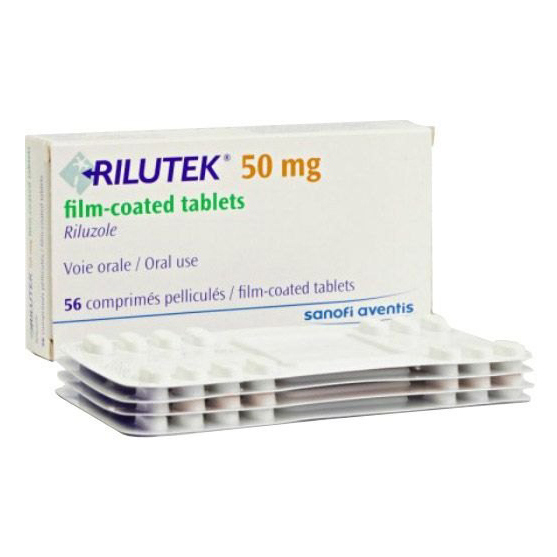
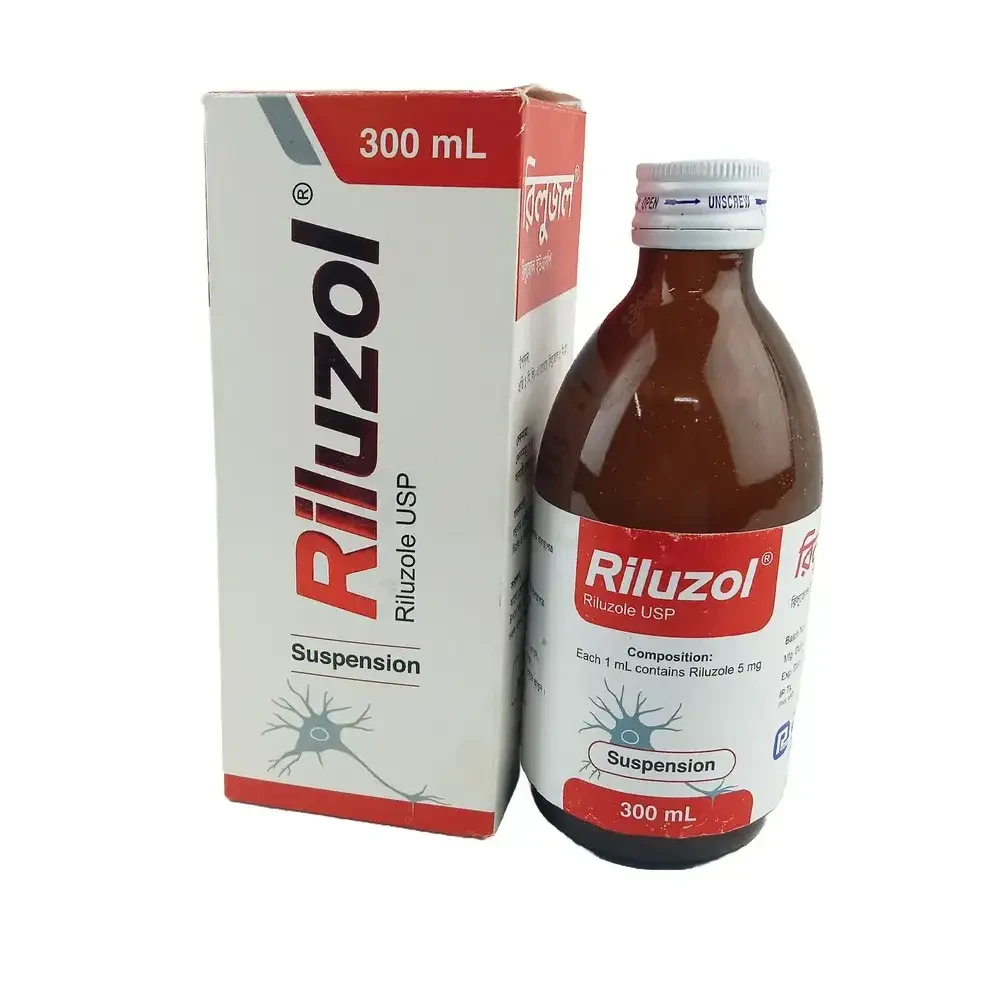
Introduction
A glutamate antagonist (receptors, glutamate) used as an anticonvulsant (anticonvulsants) and to prolong the survival of patients with amyotrophic lateral sclerosis.
Uses
Riluzole is a glutamate antagonist used to treat amyotrophic lateral sclerosis.
For the treatment of amyotrophic lateral sclerosis (ALS, Lou Gehrig's Disease)
Associated Conditions
Pharmacodynamics
Riluzole, a member of the benzothiazole class, is indicated for the treatment of patients with amyotrophic lateral sclerosis (ALS). Riluzole extends survival and/or time to tracheostomy. It is also neuroprotective in various in vivo experimental models of neuronal injury involving excitotoxic mechanisms. The etiology and pathogenesis of amyotrophic lateral sclerosis (ALS) are not known, although a number of hypotheses have been advanced. One hypothesis is that motor neurons, made vulnerable through either genetic predisposition or environmental factors, are injured by glutamate. In some cases of familial ALS the enzyme superoxide dismutase has been found to be defective.
Mechanism of Action
The mode of action of riluzole is unknown. Its pharmacological properties include the following, some of which may be related to its effect: 1) an inhibitory effect on glutamate release (activation of glutamate reuptake), 2) inactivation of voltage-dependent sodium channels, and 3) ability to interfere with intracellular events that follow transmitter binding at excitatory amino acid receptors.
Absorption
Riluzole is well-absorbed (approximately 90%), with average absolute oral bioavailability of about 60% (CV=30%). A high fat meal decreases absorption, reducing AUC by about 20% and peak blood levels by about 45%.
Protein Binding
96% bound to plasma proteins, mainly to albumin and lipoprotein over the clinical concentration range.
Half Life
The mean elimination half-life of riluzole is 12 hours (CV=35%) after repeated doses.
Food Interactions
- Take on an empty stomach. Take at least 1 hour before or 2 hours after meals.