Introduction
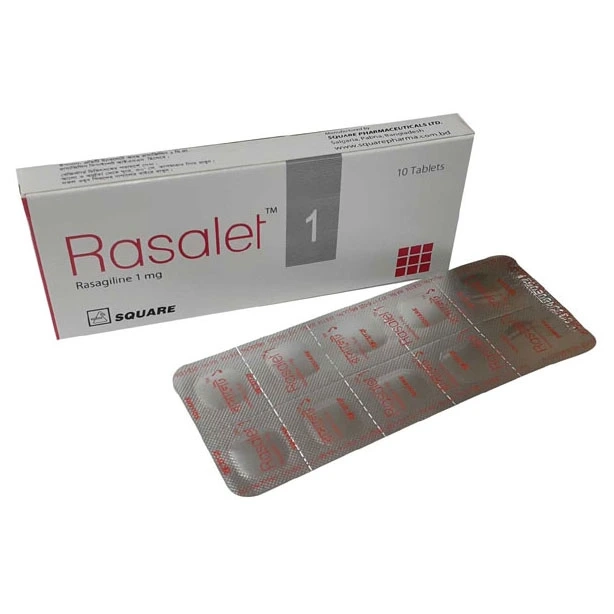
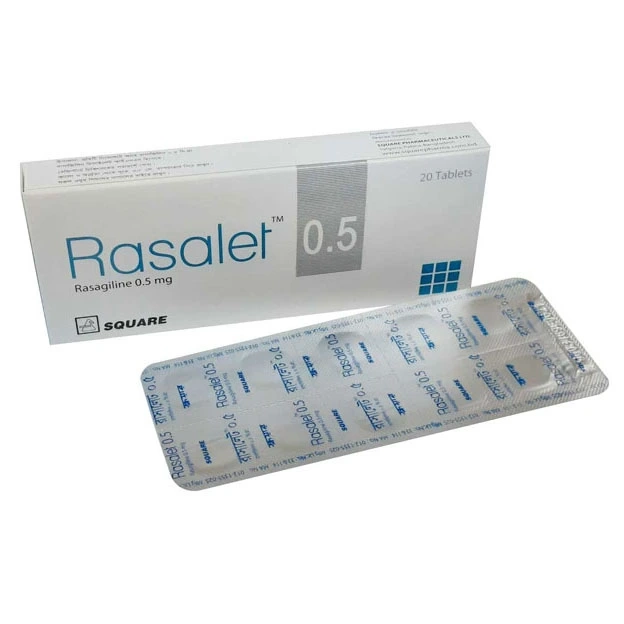
Rasagiline is an irreversible inhibitor of monoamine oxidase and is used as a monotherapy in early Parkinson's disease or as an adjunct therapy in more advanced cases.
Uses
Rasagiline is an irreversible inhibitor of monoamine oxidase used for the symptomatic management of idiopathic Parkinson's disease as initial monotherapy and as adjunct therapy to levodopa.
For the treatment of the signs and symptoms of idiopathic Parkinsons disease as initial monotherapy and as adjunct therapy to levodopa.
Associated Conditions
Pharmacodynamics
Rasagiline is a propargylamine and an irreversible inhibitor of monoamine oxidase (MAO). MAO, a flavin-containing enzyme, regulates the metabolic degradation of catecholamines and serotonin in the CNS and peripheral tissues. It is classified into two major molecular species, A and B, and is localized in mitochondrial membranes throughout the body in nerve terminals, brain, liver and intestinal mucosa. MAO-A is found predominantly in the GI tract and liver, and regulates the metabolic degradation of circulating catecholamines and dietary amines. MAO-B is the major form in the human brain and is responsible for the regulation of the metabolic degradation of dopamine and phenylethylamine. In ex vivo animal studies in brain, liver and intestinal tissues rasagiline was shown to be a potent,selective, and irreversible monoamine oxidase type B (MAO-B) inhibitor. At the recommended therapeutic doses, Rasagiline was also shown to be a potent and irreversible inhibitor of MAO-B in platelets. The selectivity of rasagiline for inhibiting only MAO-B (and not MAO-A) in humans and the sensitivity to tyramine during rasagiline treatment at any dose has not been sufficiently characterized to avoid restriction of dietary tyramine and amines contained in medications.
Mechanism of Action
The precise mechanisms of action of rasagiline is unknown. One mechanism is believed to be related to its MAO-B inhibitory activity, which causes an increase in extracellular levels of dopamine in the striatum. The elevated dopamine level and subsequent increased dopaminergic activity are likely to mediate rasagiline's beneficial effects seen in models of dopaminergic motor dysfunction.
Absorption
Rasagiline is rapidly absorbed following oral administration. The absolute bioavailability of rasagiline is about 36%.
Volume of Distribution
- 87 L
Protein Binding
Plasma protein binding ranges from 88-94% with mean extent of binding of 61-63% to human albumin over the concentration range of 1-100 ng/ml.
Route of Elimination
Rasagiline undergoes almost complete biotransformation in the liver prior to excretion. Glucuronide conjugation of rasagiline and its metabolites, with subsequent urinary excretion, is the major elimination pathway. After oral administration of 14C-labeled rasagiline, elimination occurred primarily via urine and secondarily via feces (62% of total dose in urine and 7% of total dose in feces over 7 days), with a total calculated recovery of 84% of the dose over a period of 38 days. Less than 1% of rasagiline was excreted as unchanged drug in urine.
Half Life
Rasagiline has a mean steady-state half life of 3 hours but there is no correlation of pharmacokinetics with its pharmacological effect because of its irreversible inhibition of MAO-B.
Toxicity
Signs and symptoms of overdosage may include, alone or in combination, any of the following: drowsiness, dizziness, faintness, irritability, hyperactivity, agitation, severe headache, hallucinations, trismus, opisthotonos, convulsions, and coma; rapid and irregular pulse, hypertension, hypotension and vascular collapse; precordial pain, respiratory depression and failure, hyperpyrexia, diaphoresis, and cool, clammy skin.
Food Interactions
- Avoid St. John's Wort. Co-administration of rasagiline with this herb is contraindicated.
- Avoid tyramine-containing foods and supplements. Avoid food containing high amounts of tyramine (>150mg) as these may increase the risk of hypertensive reaction. Tyramine-containing foods include cheese, red wine, fava beans, pickled food, cured food, and alcoholic beverages.
- Take with or without food.