Introduction

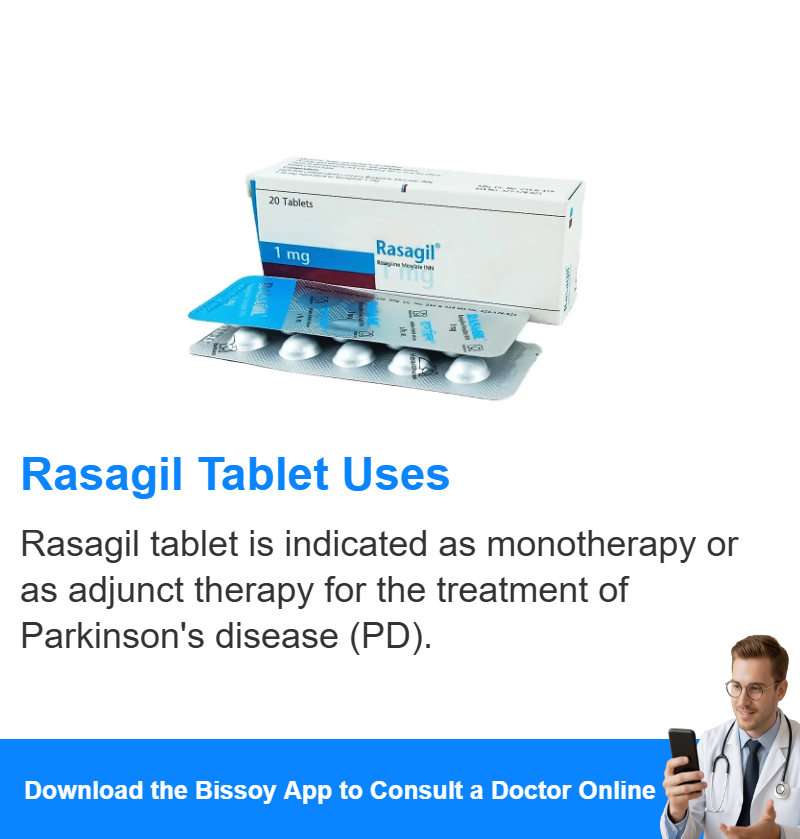
Rasagil Tablet 1 mg is a selective, irreversible inhibitor of monoamine oxidase-B (MAO-B), used primarily in the treatment of Parkinson's disease. By inhibiting the breakdown of dopamine, rasagiline helps increase and prolong dopamine activity in the brain, which is deficient in Parkinson's patients. It is often used as monotherapy in early stages or as an adjunct to levodopa in advanced stages.

Uses

Rasagil Tablet 1 mg is primarily used in the management of Parkinson’s disease to help improve motor symptoms such as tremors, rigidity, and bradykinesia. It can be prescribed as monotherapy in early Parkinson’s disease or as an adjunctive therapy with levodopa in more advanced cases to enhance motor control and reduce the wearing-off effect of levodopa.

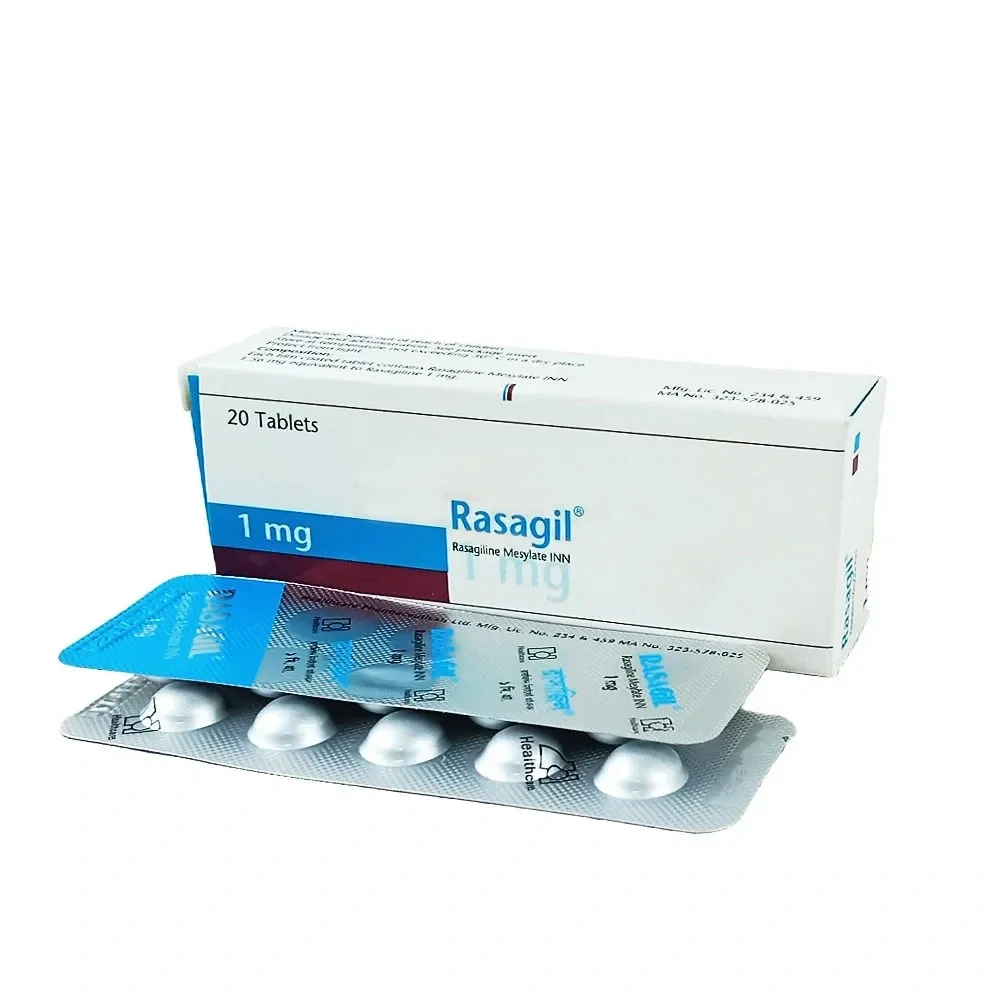
Brand Name Rasagil
Type Tablet
Weight 1 mg
Generic Rasagiline
Manufacturer Healthcare Pharmaceuticals Ltd.
Available in English বাংলা

Mechanism of Action

Rasagil Tablet 1 mg selectively inhibits monoamine oxidase type B (MAO-B), an enzyme responsible for the breakdown of dopamine in the brain. By inhibiting MAO-B, rasagiline increases the concentration of dopamine in the striatum, which helps alleviate the motor symptoms of Parkinson's disease. Unlike non-selective MAO inhibitors, rasagiline selectively targets MAO-B without significantly affecting the metabolism of serotonin or norepinephrine at therapeutic doses.

How Long Does It Take to Work?

The onset of action for rasagiline can be seen within a few weeks of starting therapy. Patients often experience improvement in motor symptoms within 2 to 4 weeks of consistent dosing, though it may take longer in some cases. When used in conjunction with levodopa, rasagiline may enhance the effects of levodopa more rapidly.

Absorption

Rasagil Tablet 1 mg is well absorbed after oral administration, with a bioavailability of about 36%. Peak plasma concentrations are typically reached within 0.5 to 1 hour after ingestion. Food does not significantly affect its absorption, though a high-fat meal may slightly delay peak concentration.

Route of Elimination

Rasagil Tablet 1 mg is metabolized primarily by the liver through the enzyme CYP1A2. It is excreted mainly as inactive metabolites, with about 60% of the dose eliminated through urine and around 20% through feces. Less than 1% of the drug is excreted unchanged in the urine.

Dosage

For monotherapy in early Parkinson’s disease, the recommended dosage is 1 mg taken orally once daily. When used as an adjunct to levodopa, the dosage is typically 0.5 mg to 1 mg once daily. Dose adjustments may be necessary for patients with hepatic impairment or when used in combination with other medications.

Administration

Rasagil Tablet 1 mg is administered orally, usually as a tablet taken once daily, with or without food. It should be taken at the same time each day to maintain consistent plasma levels. The dose may vary depending on whether it is used as monotherapy or in combination with levodopa.

Side Effects

Common side effects of rasagiline include headache, joint pain, indigestion, and flu-like symptoms. When used with levodopa, patients may experience more frequent dyskinesias. Other potential side effects include orthostatic hypotension, nausea, and hallucinations, especially in elderly patients. Serious but rare side effects include serotonin syndrome when combined with certain drugs.

Toxicity

Overdose of rasagiline may result in hypertensive crisis, serotonin syndrome, and severe dyskinesia. There is no specific antidote for rasagiline overdose, and treatment is primarily supportive. In case of overdose, patients should be closely monitored for cardiovascular and neurological symptoms.

Precautions

Rasagil Tablet 1 mg should be used with caution in patients with hepatic impairment, as it is primarily metabolized by the liver. It should also be avoided in patients taking other monoamine oxidase inhibitors (MAOIs) due to the risk of hypertensive crisis or serotonin syndrome. Additionally, caution should be exercised when prescribing rasagiline to patients with cardiovascular disease or in elderly patients prone to orthostatic hypotension.

Interaction

Rasagil Tablet 1 mg has potential interactions with medications that affect serotonin levels, such as SSRIs, SNRIs, and tricyclic antidepressants, increasing the risk of serotonin syndrome. It should also not be used in combination with non-selective MAO inhibitors, sympathomimetic agents, or dextromethorphan. Smoking can induce CYP1A2, potentially reducing the efficacy of rasagiline.

Disease Interaction

Rasagil Tablet 1 mg should be used with caution in patients with moderate to severe hepatic impairment due to reduced clearance and an increased risk of adverse effects. It is contraindicated in patients with pheochromocytoma or other conditions predisposing to hypertensive crises.

Drug Interaction

Rasagil Tablet 1 mg interacts with drugs metabolized by CYP1A2, such as ciprofloxacin, which can increase rasagiline plasma levels. Combining rasagiline with SSRIs, SNRIs, or other serotonergic drugs may increase the risk of serotonin syndrome. It should also be avoided with dextromethorphan and pseudoephedrine due to the potential for hypertensive reactions.

Food Interactions

Rasagil Tablet 1 mg has a low risk of dietary interactions compared to non-selective MAO inhibitors. However, patients are advised to avoid foods high in tyramine (such as aged cheeses and cured meats) if they are taking higher than recommended doses, as this can lead to hypertensive episodes.

Pregnancy Use

There is limited data on the use of rasagiline during pregnancy. Animal studies have shown adverse effects on fetal development, and the drug should be used in pregnant women only if the potential benefits justify the potential risks. It is classified as Pregnancy Category C.

Lactation Use

It is unknown whether rasagiline is excreted in human breast milk. Given the lack of data, caution should be exercised when administering rasagiline to nursing mothers, and the decision to continue breastfeeding or discontinue the drug should be made based on the clinical context.

Acute Overdose

Acute overdose of rasagiline may lead to symptoms such as severe hypertension, dyskinesias, and serotonin syndrome. Immediate medical intervention is required, with symptomatic and supportive care as the mainstay of treatment. In cases of hypertensive crisis, medications such as nitroprusside may be needed.

Contraindication

Rasagil Tablet 1 mg is contraindicated in patients with known hypersensitivity to the drug or its components. It should not be used in combination with other MAO inhibitors, opioids, or sympathomimetic agents due to the risk of hypertensive crises. Rasagil Tablet 1 mg is also contraindicated in patients with pheochromocytoma.

Use Direction

Rasagil Tablet 1 mg should be taken orally, once daily, with or without food. The tablet should be swallowed whole, and the dose should not exceed 1 mg per day to minimize the risk of adverse effects. Dosage adjustments may be required in patients with hepatic impairment or when used with certain other medications.

Storage Conditions

Rasagil Tablet 1 mg should be stored at room temperature, between 15°C and 25°C (59°F and 77°F), in a dry place away from direct sunlight and moisture. It should be kept out of reach of children and should not be used after the expiration date on the packaging.

Volume of Distribution

Rasagil Tablet 1 mg has a relatively low volume of distribution, approximately 87 liters. This indicates moderate tissue distribution, primarily affecting the brain where MAO-B inhibition is necessary for its therapeutic effects in Parkinson’s disease.

Half Life

The half-life of rasagiline is about 0.6 to 2 hours, but its effect on MAO-B inhibition is long-lasting due to the irreversible nature of the enzyme inhibition. This allows for once-daily dosing despite the relatively short half-life.

Clearance

Rasagil Tablet 1 mg is cleared primarily through hepatic metabolism by the CYP1A2 enzyme, and its metabolites are excreted in both urine and feces. Patients with impaired liver function may have reduced clearance, necessitating dose adjustments.

See in details version Rasagil Tablet 1 mg also Rasagil Tablet 1 mg in bangla

Social card

Uses

Some Frequently Asked Questions About Rasagil Tablet 1 mg

*** Taking medicines without doctor's advice can cause long-term problems.
Prof. Dr. Riaz Uddin Ahmad

Prof. Dr. Riaz Uddin Ahmad

Skin, Sex, Allergy & Leprosy Specialist

Call Doctor
Dr. Md. Hedayet Ali Khan

Dr. Md. Hedayet Ali Khan

Burn, Plastic, Hand, Micro & Cosmetic Surgeon

Call Doctor
Related Medicines