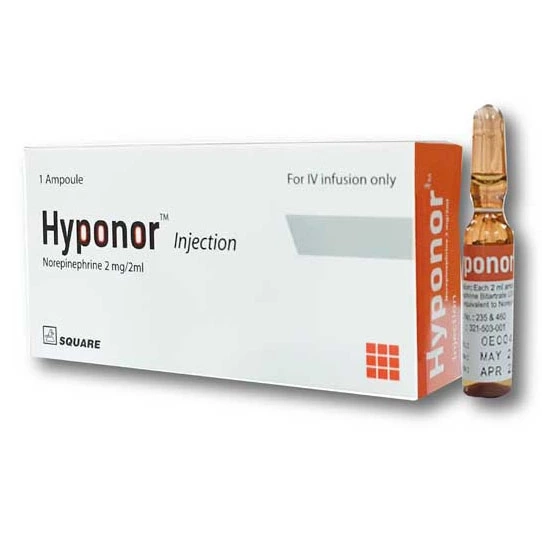
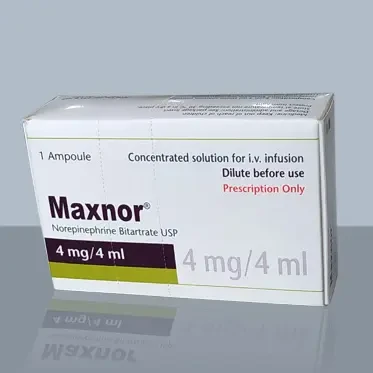
Introduction
Precursor of epinephrine that is secreted by the adrenal medulla and is a widespread central and autonomic neurotransmitter. Norepinephrine is the principal transmitter of most postganglionic sympathetic fibers and of the diffuse projection system in the brain arising from the locus ceruleus. It is also found in plants and is used pharmacologically as a sympathomimetic.
Uses
Norepinephrine is a sympathomimetic used in the control of blood pressure during various hypotensive states and as an adjunct treatment during cardiac arrest.
Mainly used to treat patients in vasodilatory shock states such as septic shock and neurogenic shock and has shown a survival benefit over dopamine. Also used as a vasopressor medication for patients with critical hypotension.
Associated Conditions
Pharmacodynamics
Noradrenaline acts on both alpha-1 and alpha-2 adrenergic receptors to cause vasoconstriction. Its effect in-vitro is often limited to the increasing of blood pressure through antagonising alpha-1 and alpha-2 receptors and causing a resultant increase in systemic vascular resistance.
Mechanism of Action
Norepinephrine functions as a peripheral vasoconstrictor by acting on alpha-adrenergic receptors. It is also an inotropic stimulator of the heart and dilator of coronary arteries as a result of it's activity at the beta-adrenergic receptors.
Toxicity
In high dose and especially when it is combined with other vasopressors, it can lead to limb ischemia and limb death.
Food Interactions
No interactions found.