Introduction
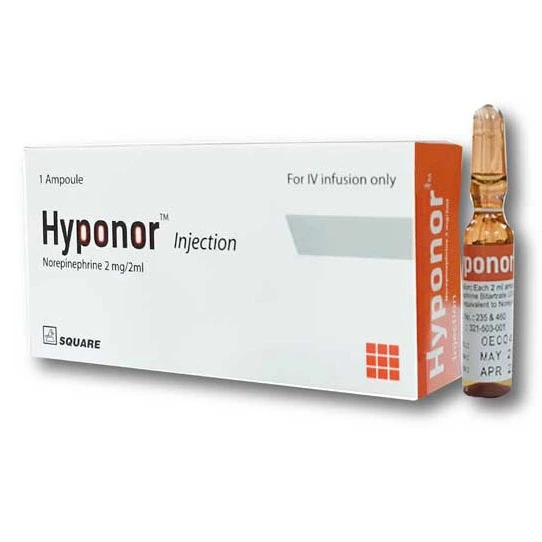
Hyponor IV Infusion 2 mg/2 ml, also known as noradrenaline, is a catecholamine neurotransmitter and hormone produced in the adrenal medulla and central nervous system. It plays a critical role in the body’s response to stress, regulating blood pressure, heart rate, and various other physiological processes.
Uses
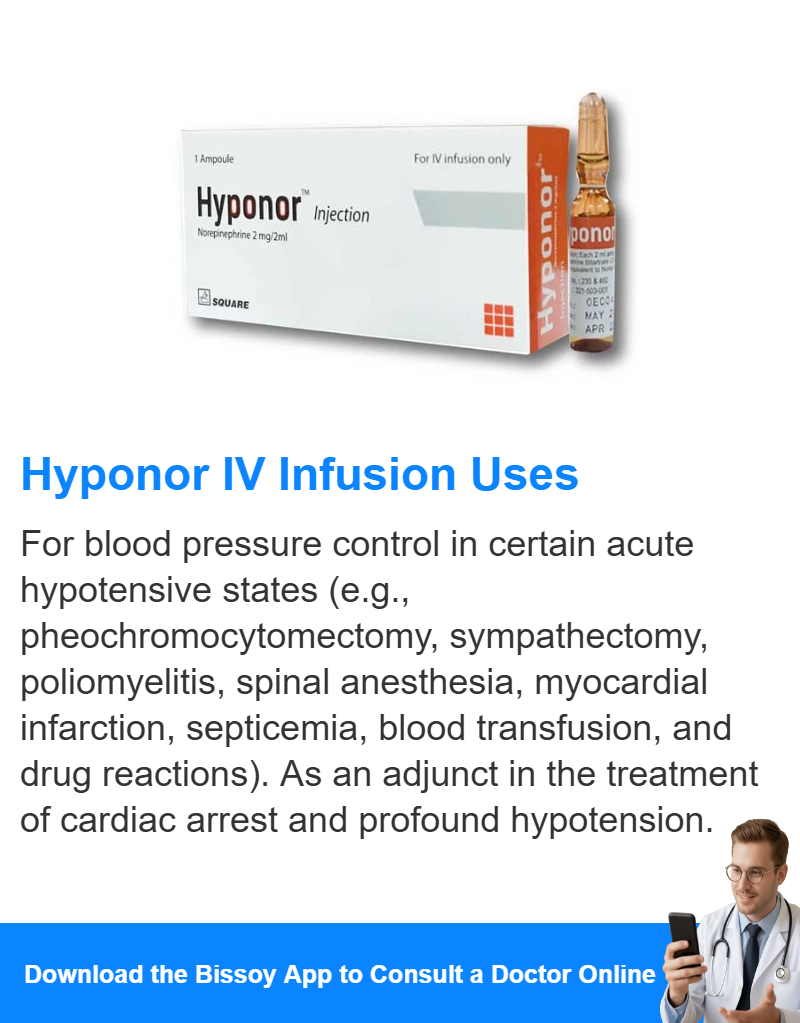
Hyponor IV Infusion 2 mg/2 ml is primarily used as a medication in acute care settings to manage severe hypotension (low blood pressure), especially in cases of shock. It is often used in critical care environments, such as in intensive care units (ICUs), to maintain blood pressure and improve perfusion to vital organs.
| Brand Name | Hyponor |
|---|---|
| Type | IV Infusion |
| Weight | 2 mg/2 ml |
| Generic | Norepinephrine |
| Manufacturer | Square Pharmaceuticals Ltd. |
| Available in | English বাংলা |
Mechanism of Action
Hyponor IV Infusion 2 mg/2 ml acts primarily on alpha-adrenergic receptors and, to a lesser extent, beta-adrenergic receptors. Its main effect is vasoconstriction, which increases peripheral vascular resistance and consequently raises blood pressure. It also has some positive inotropic effects on the heart, enhancing cardiac output.
How Long Does It Take to Work?
The onset of action for norepinephrine is typically within 1 to 2 minutes when administered intravenously. Its effects on blood pressure can be observed rapidly, making it useful for urgent stabilization of patients with severe hypotension.
Absorption
Hyponor IV Infusion 2 mg/2 ml is not administered orally because it is poorly absorbed from the gastrointestinal tract. It is usually given intravenously to achieve rapid and controlled effects.
Route of Elimination
Hyponor IV Infusion 2 mg/2 ml is metabolized primarily in the liver and kidneys. The metabolic products are conjugated with sulfate or glucuronide and excreted in the urine. Its action is terminated by reuptake into nerve endings and metabolism by monoamine oxidase (MAO) and catechol-O-methyltransferase (COMT).
Dosage
The dosage of norepinephrine is individualized based on the patient's condition and response. It is typically administered as a continuous intravenous infusion, with dosages ranging from 0.01 to 3 mcg/kg/min, adjusted to achieve the desired blood pressure response. Dosage should be carefully monitored and titrated to avoid adverse effects.
Administration
Hyponor IV Infusion 2 mg/2 ml is administered intravenously through a central line due to its potent vasoconstrictive effects, which can cause tissue necrosis if extravasation occurs. The infusion rate is adjusted based on the patient's blood pressure and clinical response.
Side Effects
Common side effects of norepinephrine include hypertension, tachycardia, headache, and anxiety. Other potential side effects are peripheral ischemia, arrhythmias, and tissue necrosis at the infusion site.
Toxicity
Overdose or excessive administration of norepinephrine can lead to severe hypertension, bradycardia, and myocardial ischemia. It may also cause significant vasoconstriction leading to tissue damage. Immediate medical attention is required in cases of suspected overdose.
Precautions
Precautions include monitoring blood pressure and heart rate frequently during administration. Hyponor IV Infusion 2 mg/2 ml should be used cautiously in patients with preexisting hypertension, ischemic heart disease, or peripheral vascular disease. Proper infusion site management is essential to prevent extravasation and tissue damage.
Interaction
Hyponor IV Infusion 2 mg/2 ml can interact with other medications, including those that affect blood pressure or cardiac function. It may have additive effects with other vasopressors and should be used cautiously with monoamine oxidase inhibitors (MAOIs) and tricyclic antidepressants.
Disease Interaction
Use of norepinephrine should be cautious in patients with cardiovascular conditions such as coronary artery disease, arrhythmias, or severe peripheral vascular disease due to its vasoconstrictive effects and potential for exacerbating these conditions.
Drug Interaction
Hyponor IV Infusion 2 mg/2 ml may interact with other antihypertensive agents, potentially reducing their effectiveness. Concurrent use with other drugs that affect the adrenergic system, such as beta-blockers or alpha-agonists, should be monitored closely.
Food Interactions
There are no significant food interactions with norepinephrine. However, the overall nutritional status of the patient should be considered, as severe malnutrition or electrolyte imbalances can affect the medication's efficacy and safety.
Pregnancy Use
Hyponor IV Infusion 2 mg/2 ml should be used during pregnancy only if the potential benefits outweigh the risks. It is classified as Category C by the FDA, indicating that risk cannot be ruled out. Consult a healthcare provider for guidance on its use in pregnant patients.
Lactation Use
The use of norepinephrine during lactation should be approached with caution. It is not known whether norepinephrine is excreted in breast milk, so healthcare providers should weigh the benefits and risks when prescribing it to lactating women.
Acute Overdose
Acute overdose of norepinephrine can lead to severe hypertension, bradycardia, and possible myocardial ischemia. Treatment involves discontinuing the infusion and providing supportive care, including blood pressure management and symptomatic treatment.
Contraindication
Hyponor IV Infusion 2 mg/2 ml is contraindicated in patients with known hypersensitivity to the drug or in those with certain types of shock where vasopressor therapy might be inappropriate, such as hypovolemic shock without adequate fluid resuscitation.
Use Direction
Follow the prescribed dosage and infusion rate carefully. Monitor blood pressure and heart rate regularly and adjust the infusion rate as needed to achieve the desired therapeutic effect while minimizing adverse effects.
Storage Conditions
Hyponor IV Infusion 2 mg/2 ml should be stored in a cool, dry place, away from light and heat. It should be kept in its original container and not used if the solution is discolored or contains particulates.
Volume of Distribution
The volume of distribution for norepinephrine is approximately 0.2 to 0.3 L/kg. This reflects its distribution primarily in the intravascular space and its limited tissue penetration due to its catecholamine structure.
Half Life
The half-life of norepinephrine is relatively short, approximately 1 to 2 minutes, due to rapid metabolism and clearance. This necessitates continuous infusion for sustained therapeutic effects.
Clearance
Hyponor IV Infusion 2 mg/2 ml is cleared from the body through hepatic metabolism and renal excretion. Its clearance is influenced by liver and kidney function, which can affect its pharmacokinetics and dosage requirements.
See in details version Hyponor IV Infusion 2 mg/2 ml also Hyponor IV Infusion 2 mg/2 ml in bangla
Social card
Some Frequently Asked Questions About Hyponor IV Infusion 2 mg/2 ml



Dr. Md. Shafiqul Islam Leon
Urology (Kidneys, Bladder, Ureters, Prostate) Specialist & Surgeon
