Introduction
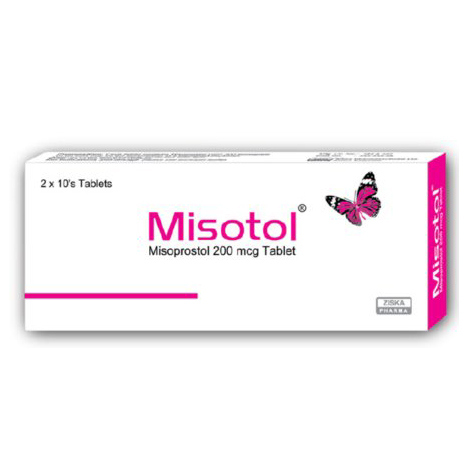
Misoprostol is a prostaglandin analog used to reduce the risk of NSAID related ulcers, manage miscarriages, prevent post partum hemorrhage, and also for first trimester abortions. The stimulation of prostaglandin receptors in the stomach reduces gastric acid secretion, while stimulating these receptors in the uterus and cervix can increase the strength and frequency of contractions and decrease cervical tone.
Uses
Misoprostol is a prostaglandin E1 analogue used to reduce the risk of NSAID-induced gastric ulcers.
Misoprostol is indicated as a tablet to reduce the risk of NSAID induced gastric ulcers but not duodenal ulcers in high risk patients. Misoprostol is also formulated in combination with diclofenac to treat symptoms of osteoarthritis or rheumatoid arthritis in patients with a high risk of developing gastric ulcers. Misoprostol is used off label for the management of miscarriages, prevention of post partum hemorrhage, and is also used alone or in combination with mifepristone in other countries for first trimester abortions.
Associated Conditions
Pharmacodynamics
Misoprostol is a prostaglandin E1 analog used to reduce the risk of NSAID induced gastric ulcers by reducing secretion of gastric acid from parietal cells. Misoprostol is also used to manage miscarriages and used alone or in combination with mifepristone for first trimester abortions. An oral dose of misoprostol has an 8 minute onset of action and a duration of action of approximately 2 hours, a sublingual dose has an 11 minute onset of action and a duration of action of approximately 3 hours, a vaginal dose has a 20 minute onset of action and a duration of action of approximately 4 hours, and a rectal dose has a 100 minute onset of action and a duration of action of approximately 4 hours.
Mechanism of Action
Misoprostol is a synthetic prostaglandin E1 analog that stimulates prostaglandin E1 receptors on parietal cells in the stomach to reduce gastric acid secretion. Mucus and bicarbonate secretion are also increased along with thickening of the mucosal bilayer so the mucosa can generate new cells.
Misoprostol binds to smooth muscle cells in the uterine lining to increase the strength and frequency of contractions as well as degrade collagen and reduce cervical tone.
Absorption
For an 800µg oral dose of misoprostol, the AUC was 2.0192±0.8032h*ng/mL, the Cmax was 2.6830±1.2161ng/mL, and a tmax of 0.345±0.186h. For a 800µg sublingual dose of misoprostol, the AUC was 3.2094±1.0417h*ng/mL, the Cmax was 2.4391±1.1567ng/mL, and a tmax of 0.712±0.415h. For a 800µg buccal dose of misoprostol, the AUC was 2.0726±0.3578h*ng/mL, the Cmax was 1.3611±0.3436ng/mL, and a tmax of 1.308±0.624h.
Volume of Distribution
Data regarding the volume of distribution of misoprostol is scarce.
The apparent volume of distribution of the active metabolite of misoprostol was in subjects with normal renal function was 13.6±8.0L/kg, with mild renal impairment was 17.3±23.0L/kg, with moderate renal impairment was 14.3±6.8L/kg, and with end stage renal disease was 11.0±9.6L/kg.
Protein Binding
Misoprostol is 13,14 Its active metabolite, misoprostol acid, is 81-89% protein bound in serum.
Route of Elimination
As much as 73.2±4.6% of a radiolabelled oral dose of misoprostol is recovered in the urine.
Half Life
The half life of an 800µg oral dose is 1.0401±0.5090h, for a sublingual dose is 0.8542±0.1170h, and for a buccal dose is 0.8365±0.1346h.
Clearance
Because of the rapid de-esterification of misoprostol before or during absorption, it is usually undetectable in plasma. Misoprostol's active metabolite, misoprostol acid, has a total body clearance of 0.286L/kg/min. Subjects with mild renal impairment had a total body clearance of 0.226±0.073L/kg/min, subjects with moderate renal impairment had a total body clearance of 0.270±0.103L/kg/min, and subjects with end stage renal disease had a total body clearance of 0.105±0.052L/kg/min.
Toxicity
The oral LD50 in rats is 81mg/kg and in mice is 27mg/kg. The intraperitoneal LD50 in rats is 40mg/kg and in mice is 70mg/kg.
Patients experiencing an overdose may present with sedation, tremor, convulsions, dyspnea, abdominal pain, diarrhea, fever, palpitations, hypotension, and bradycardia. Hemodialysis is not expected to be useful in the treatment of misoprostol overdose but oral activated charcoal may help reduce absorption. In the event of an overdose, treat symptoms with supportive therapy. This may include removal of undissolved tablets from the vagina or buccal cavity, intravenous fluid replacement, acetaminophen, diazepam, haloperidol, or intramuscular diclofenac depending on the symptoms that present.
Food Interactions
- Take with food. Food decreases incidence of diarrhea.
Dosage
Prophylaxis of NSAID-induced gastric and duodenal ulcer: 200 mcg 2-4 times daily taken with NSAID. If this dose cannot be tolerated, a dose of 100 mcg can be used. Misoprostol should be taken for the duration of NSAID therapy as prescribed by the physician.
Induction of labor: Place 25 mcg in the posterior fornix of the vagina. Repeat after every 6 hours if necessary until the maximum dosage of 200 mcg total misoprostol is reached. Fetal heart rate and uterus contractions should be monitored. Alternatively, 100 mcg taken orally. If cervical ripening or active labor does not occur, repeated dose of 100-200 mcg of oral misoprostol is given every 4 hourly until labor is established (as evidenced by a Bishop score of 7 or more). Maximum number of dose is 6. Maternal vital signs, fetal heart rate and contractions should be monitored. Oxytocin can be started 4 hours after last dose of misoprostol. Physician should be notified for signs of fetal distress or tetanic uterine contractions. Oral misoprostol therapy should be monitored by Physician.
Prevention of postpartum hemorrhage: 600 mcg orally immediately following delivery.
Treatment of postpartum hemorrhage: 600 mcg orally or 1000 mcg per rectally.