English · বাংলা

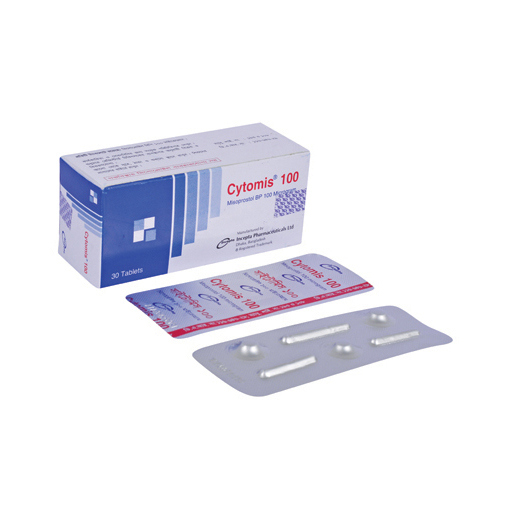
Cytomis Tablet

সাইটোমিস ট্যাবলেট

Brand Name Cytomis
Type Tablet
Weight 100 mcg
Generic Misoprostol
Manufacturer Incepta Pharmaceuticals Ltd.
Price Unit: ৳ 8.00 (10 x 3: ৳ 240.00) Strip: ৳ 24.00

About Cytomis

Cytomis Tablet (Incepta Pharmaceuticals Ltd.) is a brand medicine containing the generic Misoprostol . Current listed price in Bangladesh: Unit: ৳ 8.00 (10 x 3: ৳ 240.00) Strip: ৳ 24.00.

Medical information for Cytomis Tablet 100 mcg

Uses, dosage, side effects, and safety details below apply to Cytomis Tablet 100 mcg (generic: Misoprostol). This is general information — consult a doctor before use.

Introduction

Cytomis Tablet 100 mcg is a prostaglandin analog used to reduce the risk of NSAID related ulcers, manage miscarriages, prevent post partum hemorrhage, and also for first trimester abortions. The stimulation of prostaglandin receptors in the stomach reduces gastric acid secretion, while stimulating these receptors in the uterus and cervix can increase the strength and frequency of contractions and decrease cervical tone.

Uses

Cytomis Tablet 100 mcg is a prostaglandin E1 analogue used to reduce the risk of NSAID-induced gastric ulcers.

Cytomis Tablet 100 mcg is indicated as a tablet to reduce the risk of NSAID induced gastric ulcers but not duodenal ulcers in high risk patients. Cytomis Tablet 100 mcg is also formulated in combination with diclofenac to treat symptoms of osteoarthritis or rheumatoid arthritis in patients with a high risk of developing gastric ulcers. Cytomis Tablet 100 mcg is used off label for the management of miscarriages, prevention of post partum hemorrhage, and is also used alone or in combination with mifepristone in other countries for first trimester abortions.

Associated Conditions

  • Gastric Ulcer
  • Incomplete Abortion
  • Missed Abortion
  • Postpartum Haemorrhage (PPH)
  • Induction of cervix ripening therapy
  • Medically induced abortion

Pharmacodynamics

Cytomis Tablet 100 mcg is a prostaglandin E1 analog used to reduce the risk of NSAID induced gastric ulcers by reducing secretion of gastric acid from parietal cells. Cytomis Tablet 100 mcg is also used to manage miscarriages and used alone or in combination with mifepristone for first trimester abortions. An oral dose of misoprostol has an 8 minute onset of action and a duration of action of approximately 2 hours, a sublingual dose has an 11 minute onset of action and a duration of action of approximately 3 hours, a vaginal dose has a 20 minute onset of action and a duration of action of approximately 4 hours, and a rectal dose has a 100 minute onset of action and a duration of action of approximately 4 hours.

Mechanism of Action

Cytomis Tablet 100 mcg is a synthetic prostaglandin E1 analog that stimulates prostaglandin E1 receptors on parietal cells in the stomach to reduce gastric acid secretion. Mucus and bicarbonate secretion are also increased along with thickening of the mucosal bilayer so the mucosa can generate new cells.

Cytomis Tablet 100 mcg binds to smooth muscle cells in the uterine lining to increase the strength and frequency of contractions as well as degrade collagen and reduce cervical tone.

Absorption

For an 800µg oral dose of misoprostol, the AUC was 2.0192±0.8032h*ng/mL, the Cmax was 2.6830±1.2161ng/mL, and a tmax of 0.345±0.186h. For a 800µg sublingual dose of misoprostol, the AUC was 3.2094±1.0417h*ng/mL, the Cmax was 2.4391±1.1567ng/mL, and a tmax of 0.712±0.415h. For a 800µg buccal dose of misoprostol, the AUC was 2.0726±0.3578h*ng/mL, the Cmax was 1.3611±0.3436ng/mL, and a tmax of 1.308±0.624h.

Volume of Distribution

Data regarding the volume of distribution of misoprostol is scarce.

The apparent volume of distribution of the active metabolite of misoprostol was in subjects with normal renal function was 13.6±8.0L/kg, with mild renal impairment was 17.3±23.0L/kg, with moderate renal impairment was 14.3±6.8L/kg, and with end stage renal disease was 11.0±9.6L/kg.

Protein Binding

Cytomis Tablet 100 mcg is 13,14 Its active metabolite, misoprostol acid, is 81-89% protein bound in serum.

Route of Elimination

As much as 73.2±4.6% of a radiolabelled oral dose of misoprostol is recovered in the urine.

Half Life

The half life of an 800µg oral dose is 1.0401±0.5090h, for a sublingual dose is 0.8542±0.1170h, and for a buccal dose is 0.8365±0.1346h.

Clearance

Because of the rapid de-esterification of misoprostol before or during absorption, it is usually undetectable in plasma. Cytomis Tablet 100 mcg's active metabolite, misoprostol acid, has a total body clearance of 0.286L/kg/min. Subjects with mild renal impairment had a total body clearance of 0.226±0.073L/kg/min, subjects with moderate renal impairment had a total body clearance of 0.270±0.103L/kg/min, and subjects with end stage renal disease had a total body clearance of 0.105±0.052L/kg/min.

Toxicity

The oral LD50 in rats is 81mg/kg and in mice is 27mg/kg. The intraperitoneal LD50 in rats is 40mg/kg and in mice is 70mg/kg.

Patients experiencing an overdose may present with sedation, tremor, convulsions, dyspnea, abdominal pain, diarrhea, fever, palpitations, hypotension, and bradycardia. Hemodialysis is not expected to be useful in the treatment of misoprostol overdose but oral activated charcoal may help reduce absorption. In the event of an overdose, treat symptoms with supportive therapy. This may include removal of undissolved tablets from the vagina or buccal cavity, intravenous fluid replacement, acetaminophen, diazepam, haloperidol, or intramuscular diclofenac depending on the symptoms that present.

Food Interactions

  • Take with food. Food decreases incidence of diarrhea.

Dosage

Benign gastric and duodenal ulceration and NSAID associated ulceration: 800 mcg daily (in 2-4 divided doses) with breakfast or main meals and at bedtime; treatment should be continued for at least 4 weeks and may be continued for up to 8 weeks if required.

Prophylaxis of NSAID-induced gastric and duodenal ulcer: 200 mcg 2-4 times daily taken with NSAID. If this dose cannot be tolerated, a dose of 100 mcg can be used. Cytomis Tablet 100 mcg should be taken for the duration of NSAID therapy as prescribed by the physician.

Induction of labor: Place 25 mcg in the posterior fornix of the vagina. Repeat after every 6 hours if necessary until the maximum dosage of 200 mcg total misoprostol is reached. Fetal heart rate and uterus contractions should be monitored. Alternatively, 100 mcg taken orally. If cervical ripening or active labor does not occur, repeated dose of 100-200 mcg of oral misoprostol is given every 4 hourly until labor is established (as evidenced by a Bishop score of 7 or more). Maximum number of dose is 6. Maternal vital signs, fetal heart rate and contractions should be monitored. Oxytocin can be started 4 hours after last dose of misoprostol. Physician should be notified for signs of fetal distress or tetanic uterine contractions. Oral misoprostol therapy should be monitored by Physician.

Prevention of postpartum hemorrhage: 600 mcg orally immediately following delivery.

Treatment of postpartum hemorrhage: 600 mcg orally or 1000 mcg per rectally.
Frequently Asked Questions About Cytomis Tablet 100 mcg

1. What is misoprostol?

Cytomis Tablet 100 mcg is a synthetic prostaglandin E1 analog used to protect the stomach lining, induce labor, or manage reproductive health conditions.

2. What is misoprostol used for?

It is used to:

  • Prevent gastric ulcers caused by NSAIDs
  • Induce labor
  • Treat postpartum hemorrhage
  • Induce abortion (with mifepristone)
  • Manage miscarriage
  • 3. How does misoprostol work?

    It mimics prostaglandin E1, increasing mucus and bicarbonate secretion in the stomach, stimulating uterine contractions, and softening the cervix.

    4. Is misoprostol a prescription drug?

    Yes, it requires a prescription from a healthcare provider.

    5. Who can take misoprostol?

    It’s suitable for adults needing ulcer prevention or women for obstetric/gynecologic uses, but not for pregnant women unless intended for labor or abortion.

    6. How is misoprostol taken?

    It is taken orally (tablets), vaginally, sublingually, or rectally, depending on the purpose.

    7. What is the typical dosage of misoprostol?

    Dosage varies:

  • Ulcer prevention: 200 mcg 4 times daily with food
  • Labor induction: 25-50 mcg vaginally every 4-6 hours
  • Abortion (with mifepristone): 400-800 mcg vaginally or buccally
  • 8. How long does misoprostol take to work?

    For abortion or miscarriage, effects begin within 1-4 hours; for labor, contractions may start within 30 minutes to hours.

    9. Can misoprostol be used long-term?

    Yes, for ulcer prevention with NSAIDs; otherwise, it’s typically a short-term treatment.

    10. Does misoprostol treat infections?

    No, it doesn’t treat infections; it addresses specific physiological conditions.

    11. What are the common side effects of misoprostol?

    Common side effects include:

  • Diarrhea
  • Abdominal pain
  • Nausea
  • Fever or chills (especially in obstetric use)
  • 12. Can misoprostol cause bleeding?

    Yes, heavy bleeding is common when used for abortion, miscarriage, or postpartum hemorrhage.

    13. Does misoprostol affect fertility?

    No, it doesn’t impact long-term fertility after use for abortion or miscarriage.

    14. Can misoprostol be taken with food?

    For ulcer prevention, it should be taken with food to reduce stomach upset; other uses don’t require food.

    15. What happens if I miss a dose of misoprostol?

    For ulcer prevention, take it as soon as remembered unless near the next dose; for single-use (e.g., abortion), follow your doctor’s protocol.

    16. Can I overdose on misoprostol?

    Yes, overdose may cause severe diarrhea, uterine hyperstimulation, or low blood pressure; seek medical help if suspected.

    17. Is misoprostol safe during pregnancy?

    It’s contraindicated unless intended to induce labor, abortion, or manage complications, as it causes uterine contractions.

    18. Can breastfeeding mothers take misoprostol?

    It passes into breast milk in small amounts; use cautiously and consult a doctor, especially after postpartum use.

    19. Does misoprostol interact with other medications?

    Yes, it interacts with:

  • Antacids (may reduce efficacy)
  • Oxytocin (enhanced uterine effects)
  • NSAIDs (no significant interaction)
  • 20. Can I drink alcohol while taking misoprostol?

    Avoid alcohol; it may worsen stomach irritation or bleeding risk.

    21. Is misoprostol safe for people with kidney disease?

    Yes, it’s generally safe, but consult a doctor in severe cases as it’s excreted by the kidneys.

    22. Can misoprostol be used in liver disease?

    Yes, it’s metabolized minimally by the liver, but use caution in severe liver impairment.

    23. How should misoprostol be stored?

    Store tablets at room temperature, away from moisture and heat.

    24. Does misoprostol expire?

    Yes, check the expiration date; expired tablets may lose potency.

    25. Can misoprostol cause fever?

    Yes, fever or chills are common, especially with obstetric or gynecologic use.

    26. Is misoprostol the same as mifepristone?

    No, mifepristone blocks progesterone to terminate pregnancy; misoprostol induces contractions—they’re often used together.

    27. Can misoprostol treat ulcers?

    Yes, it prevents and heals NSAID-induced gastric ulcers by protecting the stomach lining.

    28. Does misoprostol cause diarrhea?

    Yes, diarrhea is a frequent side effect due to its effect on intestinal smooth muscle.

    29. Can misoprostol help with constipation?

    No, it’s more likely to cause diarrhea than relieve constipation.

    30. Is misoprostol gluten-free?

    Most formulations are gluten-free, but confirm with the manufacturer.

    31. Can misoprostol tablets be crushed?

    Yes, if needed for oral use, but follow medical advice; vaginal or buccal use requires intact tablets.

    32. What if I’m allergic to misoprostol?

    Allergic reactions (e.g., rash, swelling) are rare but serious; stop use and seek help.

    33. Can misoprostol cause uterine rupture?

    Yes, in rare cases, especially with prior uterine surgery or high doses during labor induction.

    34. Does misoprostol affect blood pressure?

    It may cause transient low blood pressure in overdose or severe reactions.

    35. Can misoprostol treat postpartum hemorrhage?

    Yes, it’s used off-label (600-1000 mcg rectally) to control excessive bleeding after childbirth.

    36. Is misoprostol safe for children?

    It’s not typically used in children unless for specific medical needs under strict supervision.

    37. Can misoprostol cause cramping?

    Yes, cramping is common, especially in obstetric or gynecologic uses due to uterine contractions.

    38. Does misoprostol need refrigeration?

    No, store at room temperature unless otherwise specified.

    39. Can misoprostol be used for arthritis?

    No, it doesn’t treat arthritis but protects against NSAID-related stomach damage in arthritis patients.

    40. What’s the difference between misoprostol and dinoprostone?

    Both are prostaglandins; misoprostol is synthetic and versatile, while dinoprostone is used mainly for cervical ripening.

    41. Can misoprostol cause headaches?

    Yes, headaches are a possible side effect, though less common.

    42. Is misoprostol available as a generic?

    Yes, generic misoprostol is widely available, alongside brands like Cytotec.

    43. Can misoprostol be taken at night?

    Yes, timing depends on use; for ulcers, it’s taken with meals, for abortion, per protocol.

    44. Does misoprostol affect the liver?

    It has minimal liver metabolism and rarely affects liver function.

    45. Can misoprostol be used for cervical ripening?

    Yes, it softens and dilates the cervix before labor or procedures like IUD insertion.

    46. What should I do if I experience severe bleeding?

    Seek immediate medical help, especially after abortion or miscarriage use.

    47. Can misoprostol cause fatigue?

    Yes, fatigue may occur, often linked to cramping or bleeding.

    48. Does misoprostol interact with caffeine?

    No significant interaction, but caffeine may worsen stomach discomfort.

    49. Can misoprostol be stopped abruptly?

    For ulcer prevention, consult a doctor; for single-use (e.g., abortion), it’s not an issue.

    Medical review

    Last reviewed: 24 Jul 2026

    Medically reviewed by:

    This is general information, not personal medical advice. Consult a doctor before taking any medicine.

    Social card

    Uses
    Taking medicines without doctor's advice can cause long-term problems.
    Dr. Md. Abdul Hakim

    Dr. Md. Abdul Hakim

    Orthopedics (Bone, Joint, Trauma, Sports Injury) Specialist & Surgeon

    Call Doctor
    Prof. Dr. M. Fakhrul Islam

    Prof. Dr. M. Fakhrul Islam

    Urology (Kidney, Prostate, Bladder) Specialist & Surgeon

    Call Doctor
    Related Medicines