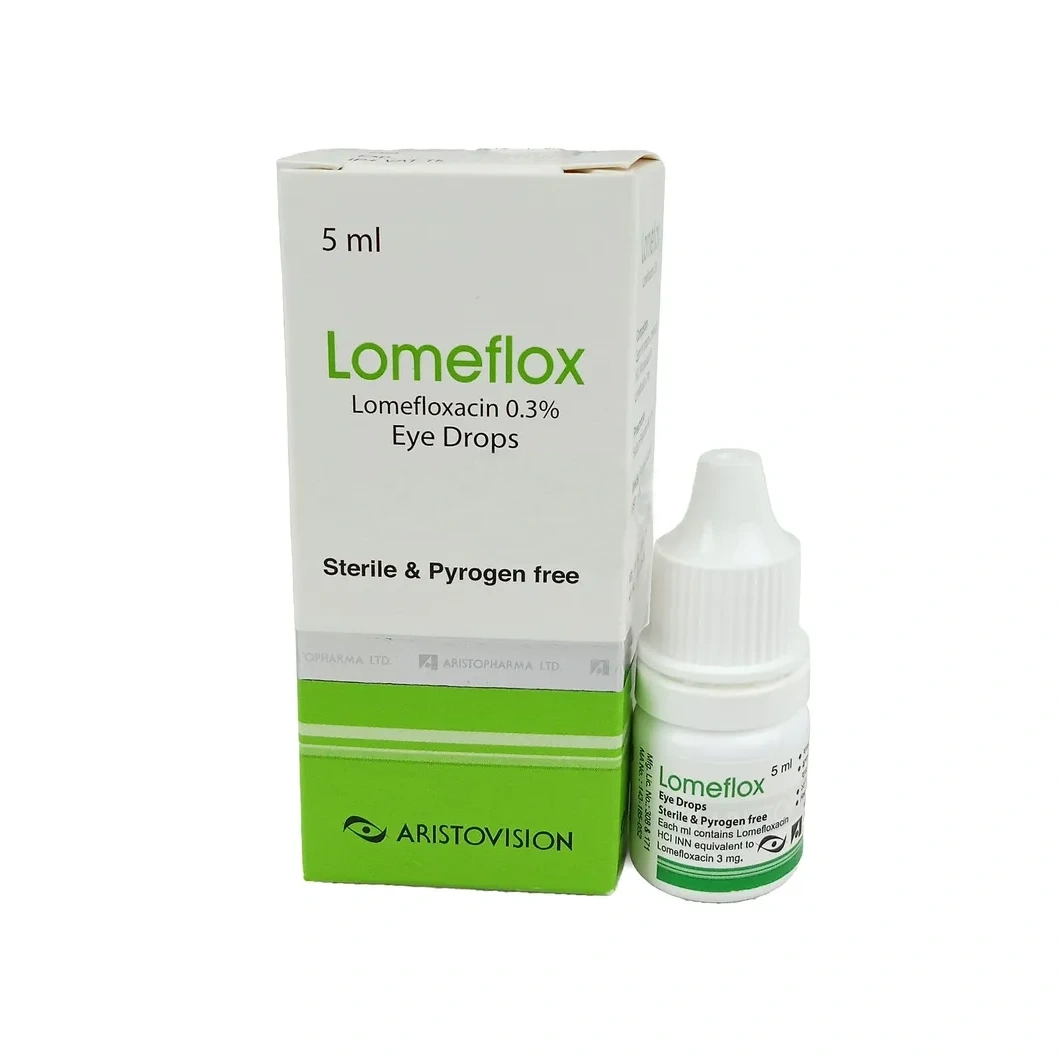
Introduction
Lomefloxacin is a fluoroquinolone antibiotic, used to treat bacterial infections including bronchitis and urinary tract infections (UTIs). Additionally, it has been employed for the prophylaxis of UTIs prior to surgery as well.
Uses
Lomefloxacin is a fluoroquinolone used to prevent and treat a wide variety of infections in the body.
For the treatment of bacterial infections of the respiratory tract (chronic bronchitis) and urinary tract, and as a pre-operative prophylactic to prevent urinary tract infection caused by: S.pneumoniae, H.influenzae, S.aureus, P.aeruginosa, E. cloacae, P. mirabilis, C. civersus, S. asprphyticus, E.coli, and K.pneumoniae.
Associated Conditions
Pharmacodynamics
Lomefloxacin is a fluoroquinolone antibiotic used to treat chronic bronchitis, as well as complicated and uncomplicated urinary tract infections. It is also used as a prophylactic or preventative treatment to prevent urinary tract infections in patients undergoing transrectal or transurethral surgical procedures. Flouroquinolones such as lomefloxacin possess excellent activity against gram-negative aerobic bacteria such as E.coli and Neisseria gonorrhoea as well as gram-positive bacteria including S. pneumoniae and Staphylococcus aureus. They also posses effective activity against shigella, salmonella, campylobacter, gonococcal organisms, and multi drug resistant pseudomonas and enterobacter.
Mechanism of Action
Lomefloxacin is a bactericidal fluoroquinolone agent with activity against a wide range of gram-negative and gram-positive organisms. The bactericidal action of lomefloxacin results from interference with the activity of the bacterial enzymes DNA gyrase and topoisomerase IV, which are needed for the transcription and replication of bacterial DNA. DNA gyrase appears to be the primary quinolone target for gram-negative bacteria. Topoisomerase IV appears to be the preferential target in gram-positive organisms. Interference with these two topoisomerases results in strand breakage of the bacterial chromosome, supercoiling, and resealing. As a result DNA replication and transcription is inhibited.
Absorption
Rapid and nearly complete with approximately 95% to 98% of a single oral dose being absorbed.
Protein Binding
10%
Route of Elimination
The urinary excretion of lomefloxacin was virtually complete within 72 hours after cessation of dosing, with approximately 65% of the dose being recovered as parent drug and 9% as its glucuronide metabolite.
Half Life
8 hours
Clearance
- 271 mL/min/1.73 m2 [creatinine clearance of 110 mL/min/1.73 m2]
- 31 mL/min/1.73 m2 [creatinine clearance of 0 mL/min/1.73 m2]
Toxicity
Adverse reactions include peripheral neuropathy, nervousness, agitation, anxiety, and phototoxic events (rash, itching, burning) due to sunlight exposure.
Food Interactions
- Avoid multivalent ions. Separate the administration polyvalent ions, including magnesium and aluminum-containing antacids, from lomefloxacin by at least 4 hours before and 2 hours after lomefloxacin dosing.
- Take with or without food. The rate and extent of absorption may be reduced when lomefloxacin is taken with food.