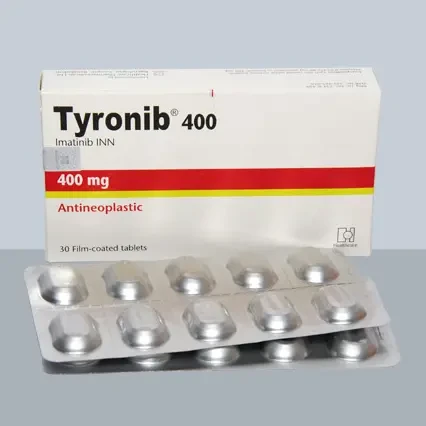
Introduction
Imatinib is a small molecule kinase inhibitor used to treat certain types of cancer. It is occasionally referred to as CGP57148B or STI571 (especially in older publications). It is used in treating chronic myelogenous leukemia (CML), gastrointestinal stromal tumors (GISTs) and a number of other malignancies.
It is the first member of a new class of agents that act by inhibiting particular tyrosine kinase enzymes, instead of non-specifically inhibiting rapidly dividing cells.
Uses
Imatinib is a tyrosine kinase inhibitor used to treat a number of leukemias, myelodysplastic/myeloproliferative disease, systemic mastocytosis, hypereosinophilic syndrome, dermatofibrosarcoma protuberans, and gastrointestinal stromal tumors.
For the treatment of Philadelphia chromosome positive chronic myeloid leukemia (Ph+ CML), Ph+ acute lymphoblastic leukaemia, myelodysplastic/myeloproliferative diseases, aggressive systemic mastocytosis, hypereosinophilic syndrome and/or chronic eosinophilic leukemia (CEL), dermatofibrosarcoma protuberans, and malignant gastrointestinal stromal tumors (GIST).
Associated Conditions
Pharmacodynamics
Imatinib is an antineoplastic agent and a 2-phenylaminopyrimidine derivative that is used to treat chronic myelogenous leukemia. It works as a specific inhibitor of a number of tyrosine kinase enzymes. Chronic myelogenous leukemia is associated with the Philadelphia chromosome promoting the generation of BCR-ABL mutation, which results from the combination of two genes, known as BCR and ABL. BCR-ABL generates a fusion protein that acts as a constitutively active tyrosine kinase and imatinib works to inhibit this constitutive enzymatic activity.
Mechanism of Action
Imatinib mesylate is a protein-tyrosine kinase inhibitor that inhibits the Bcr-Abl tyrosine kinase, the constitutive abnormal tyrosine kinase created by the Philadelphia chromosome abnormality in chronic myeloid leukemia (CML). It inhibits proliferation and induces apoptosis in Bcr-Abl positive cell lines as well as fresh leukemic cells from Philadelphia chromosome positive chronic myeloid leukemia. Imatinib also inhibits the receptor tyrosine kinases for platelet derived growth factor (PDGF) and stem cell factor (SCF) - called c-kit. Imatinib was identified in the late 1990s by Dr Brian J. Druker. Its development is an excellent example of rational drug design. Soon after identification of the bcr-abl target, the search for an inhibitor began. Chemists used a high-throughput screen of chemical libraries to identify the molecule 2-phenylaminopyrimidine. This lead compound was then tested and modified by the introduction of methyl and benzamide groups to give it enhanced binding properties, resulting in imatinib.
Absorption
The pharmacokinetics in CML and GIST patients are similar. Imatinib is well absorbed with mean absolute bioavailability is 98% and maximum plasma levels achieved within 2-4 hours of dosing
Protein Binding
95% protein bound, mostly to albumin and alpha-1-acid glycoprotein.
Route of Elimination
Imatinib elimination is predominately in the feces, mostly as metabolites. 81% of the dose is eliminated within 7 days, in feces (68% of the dose) and urine (13% of the dose). Unchanged imatinib accounted for 25% of the dose (5% urine, 20% faces), the remainder being metabolites.
Half Life
Following oral administration in healthy volunteers, the elimination half-lives of imatinib and its major active metabolite, the N-demethyl derivative (CGP74588) are approximately 18 and 40 hours, respectively.
Clearance
- 8 L/h [50-year-old CML and GIST patient weighing 50 kg]
- 14 L/h [50-year-old CML and GIST patient weighing 100 kg]
Toxicity
The most frequently reported adverse reactions (>30%) were edema, nausea, vomiting, muscle cramps, musculoskeletal pain, diarrhea, rash, fatigue and abdominal pain.
Food Interactions
- Avoid grapefruit products. Grapefruit inhibits CYP3A4 metabolism, which can increase serum levels of imatinib.
- Exercise caution with St. John's Wort. This herb induces CYP3A4 metabolism, which may reduce the serum concentration of imatinib.
- Take with a full glass of water. Taking imatinib with water may reduce gastric irritation.
- Take with food. Food reduces gastric irritation.
Dosage
Adults with Ph+ CML AP or BC: 600 mg/day
Pediatrics with Ph+ CML CP: 340 mg/m2/day
Adults with Ph+ ALL: 600 mg/day
Pediatrics with Ph+ ALL: 340 mg/m2/day
Adults with MDS/MPD: 400 mg/day
Adults with ASM: 100 mg/day or 400 mg/day
Adults with HES/CEL: 100 mg/day or 400 mg/day
Adults with DFSP: 800 mg/day
Adults with metastatic and/or unresectable GIST: 400 mg/day
Adjuvant treatment of adults with GIST: 400 mg/day
Patients with mild to moderate hepatic impairment: 400 mg/day
Patients with severe hepatic impairment: 300 mg/day
All doses of Imatinib should be taken with a meal and a large glass of water. Doses of 400 mg or 600 mg should be administered once daily, whereas a dose of 800 mg should be administered as 400 mg twice a day. Imatinib can be dissolved in water or apple juice for patients having difficulty swallowing. Daily dosing of 800 mg and above should be accomplished using the 400-mg tablet to reduce exposure to iron.