Introduction
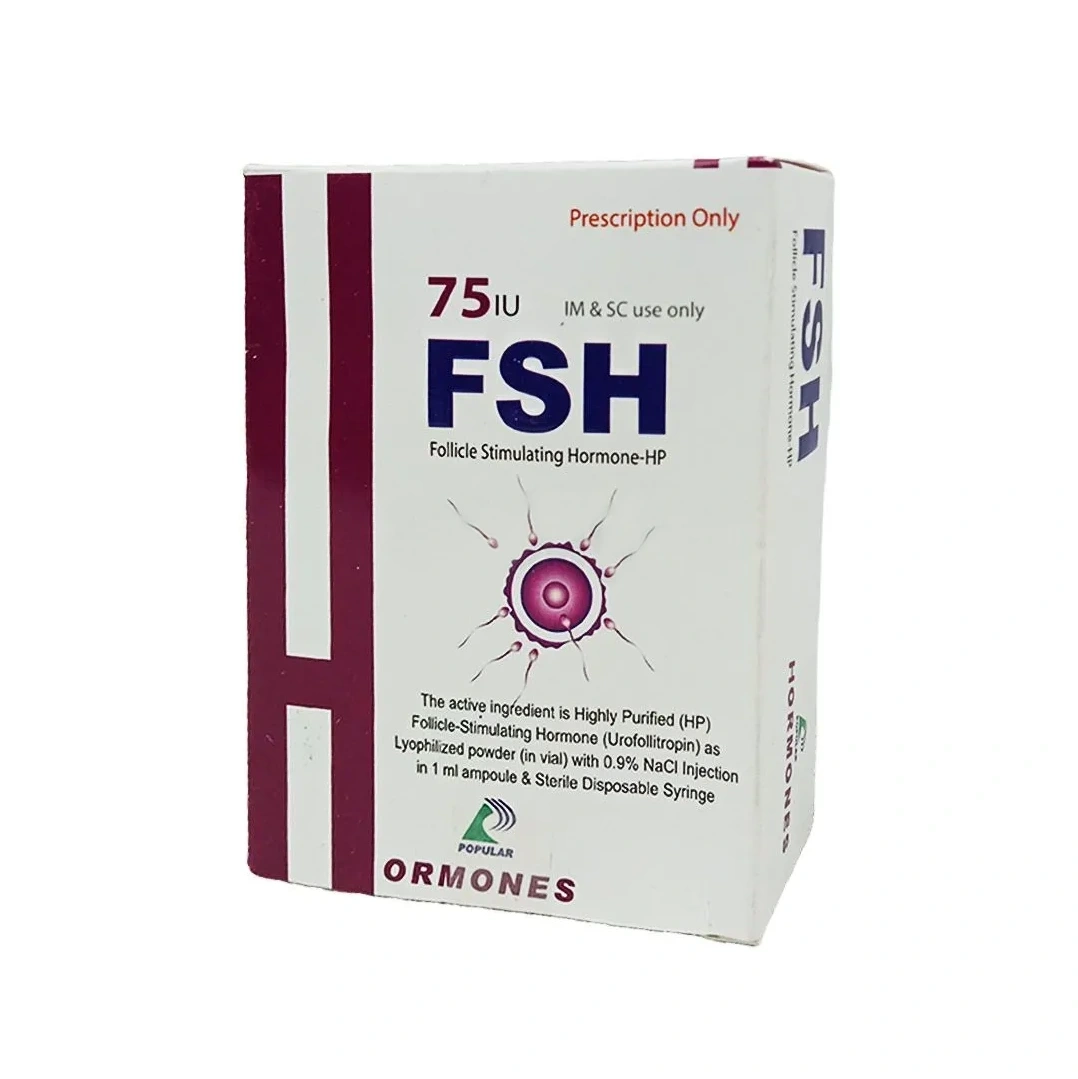
Urofollitropin is a urinary-derived follicle-stimulating hormone (FSH) that is extracted and purified from human urine samples. It consists of two non-covalently linked, non-identical glycoproteins designated as the alpha- and beta- subunits. The alpha- and beta- subunits have 92 and 111 amino acids. The alpha subunit is glycosylated at Asn 51 and Asn 78 while the beta subunit is glycosylated at Asn 7 and Asn 24. Urofollitropin is typically used injected subcutaneously in combination with human chorionic gonadotropin (hCG) to induce ovulation. Urofollitropin may also be used to cause the ovary to produce several follicles, which can then be harvested for use in gamete intrafallopian transfer (GIFT) or in vitro fertilization (IVF).
Uses
Urofollitropin is a form of purified human follicle stimulating hormone used to treat infertility in females by inducing follicle development in women without primary ovarian failure.
For treatment of female infertility
Associated Conditions
Pharmacodynamics
Used for the treatment of female infertility, urofollitropin or follicle stimulating hormone (FSH) stimulates ovarian follicular growth in women who do not have primary ovarian failure. FSH, the active component of urofollitropin is the primary hormone responsible for follicular recruitment and development.
Mechanism of Action
FSH binds to the follicle stimulating hormone receptor which is a G-coupled transmembrane receptor. Binding of the FSH to its receptor seems to induce phosphorylation and activation of the PI3K (Phosphatidylinositol-3-kinase) and Akt signaling pathway, which is known to regulate many other metabolic and related survival/maturation functions in cells.
Absorption
74%
Volume of Distribution
Time to peak in plasma: IM: 17 hours (single dose), 11 hours (multiple doses) SubQ: 21 hours (single dose), 10 hours (multiple doses)
Route of Elimination
Via liver and kidneys
Half Life
Circulation half life of 3-4 hours, elimination half life of 35-40 hours
Food Interactions
No interactions found.