Introduction

Follicle Stimulating Hormone (FSH) is a glycoprotein hormone that plays a critical role in reproductive processes. Urofollitropin is a form of FSH derived from the urine of postmenopausal women. It is used in assisted reproductive technologies to stimulate follicular development in women and sperm production in men.

Uses

Urofollitropin is primarily used for:

  • Female Infertility: To stimulate ovarian follicle development in women undergoing assisted reproductive technologies such as in vitro fertilization (IVF).
  • Male Infertility: To treat hypogonadotropic hypogonadism in men, stimulating spermatogenesis in cases where there is a deficiency of endogenous FSH.
  • Hypogonadism: In cases of hypogonadotropic hypogonadism, it aids in the normalization of reproductive hormone levels and restoration of normal reproductive function.
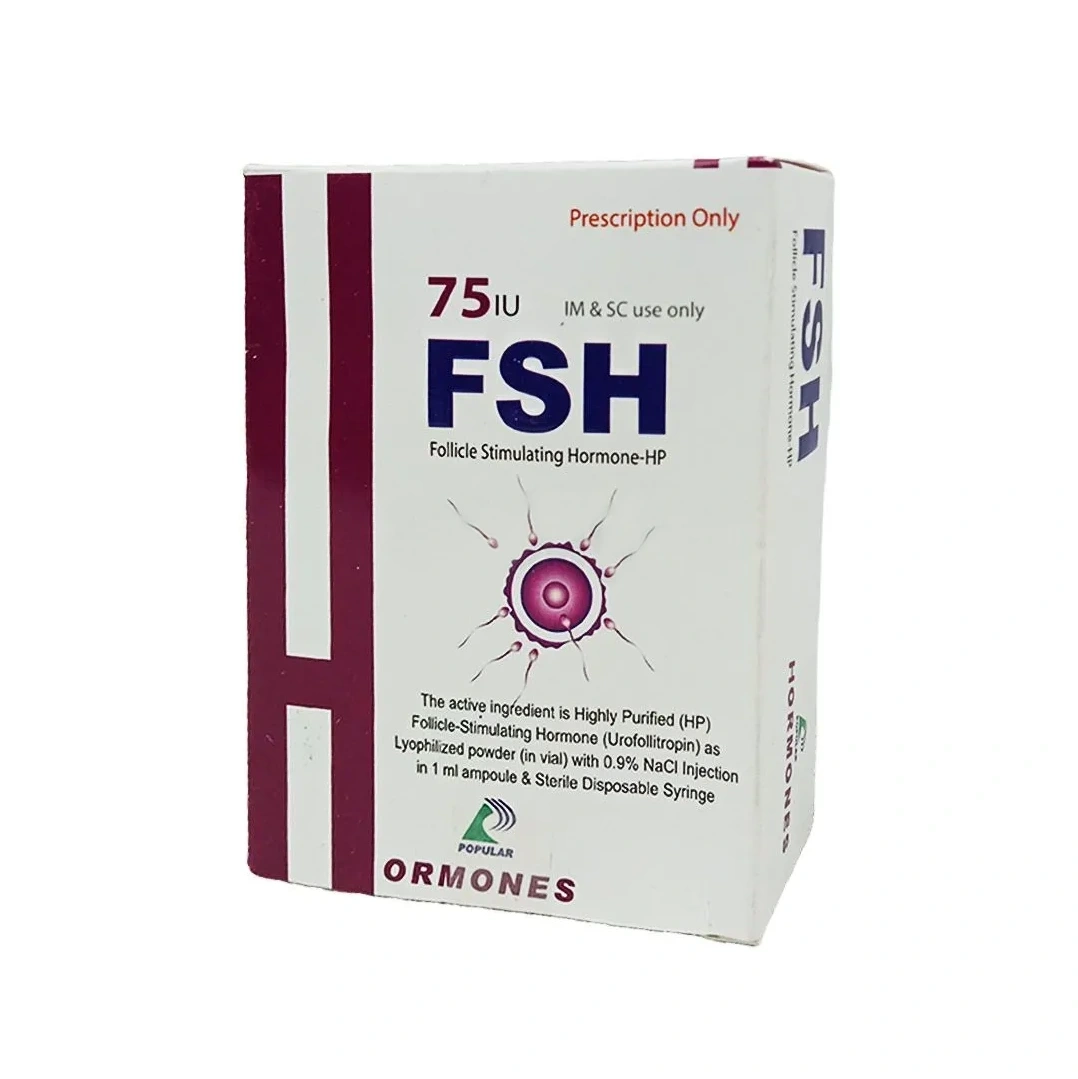
Brand Name FSH
Type IM/SC Injection
Weight 75 IU/vial
Generic Follicle Stimulating Hormone [Urofollitropin]
Manufacturer Popular Pharmaceuticals Ltd.
Available in English বাংলা

Mechanism of Action

Urofollitropin mimics the action of endogenous FSH by binding to FSH receptors on the surface of ovarian and testicular cells. In women, it stimulates the growth and maturation of ovarian follicles, leading to increased estrogen production. In men, it promotes spermatogenesis and stimulates the Sertoli cells in the testes.

How Long Does It Take to Work?

In women, follicular response to urofollitropin can typically be observed within 7 to 14 days of treatment, depending on the individual and the specific protocol used. In men, sperm production may take several months to become evident, as spermatogenesis is a prolonged process.

Absorption

Urofollitropin is administered via injection and is absorbed through the subcutaneous or intramuscular route. The drug's absorption is generally complete and rapid following injection, leading to peak plasma concentrations within a few hours.

Route of Elimination

Urofollitropin is primarily eliminated through the kidneys. The hormone is metabolized in the liver and excreted in the urine. The majority of the drug is excreted within 24 hours of administration.

Dosage

The dosage of urofollitropin varies based on the patient's condition and treatment goals:

  • For Women: The typical starting dose is 75 to 150 IU administered subcutaneously daily. Dosage adjustments are made based on follicular response, typically increased every few days until an optimal response is achieved.
  • For Men: The usual dose is 150 IU to 300 IU administered subcutaneously three times per week. Dosing is adjusted based on patient response and monitoring of sperm production.

Administration

Urofollitropin is administered via subcutaneous or intramuscular injection. In women, injections are usually given in the abdomen or thigh. In men, injections are commonly given in the thigh. Proper injection techniques and sites are crucial for minimizing adverse effects.

Side Effects

Common side effects include:

  • Women: Abdominal pain, ovarian hyperstimulation syndrome (OHSS), headache, nausea, and fatigue.
  • Men: Injection site reactions, headache, and abdominal discomfort.

Toxicity

Overdose or prolonged use of urofollitropin can lead to ovarian hyperstimulation syndrome (OHSS) in women, which can be severe and may require medical intervention. In men, excessive doses may lead to undesirable effects such as gynecomastia or abnormal hormone levels.

Precautions

Precautions include:

  • Women: Monitor for signs of OHSS and adjust doses accordingly. Regular ultrasound monitoring of follicular development is recommended.
  • Men: Monitor for hormone imbalances and adjust dosage if necessary. Regular assessment of sperm production is advised.

Interaction

Interactions with other medications include:

  • Women: There are no well-documented interactions with other medications. However, concurrent use with other reproductive hormones should be monitored closely.
  • Men: Similar to women, interactions are not well-documented, but concurrent use with other hormonal treatments should be managed carefully.

Disease Interaction

Considerations for disease interactions include:

  • Women: Use with caution in patients with ovarian cysts, endometriosis, or uterine abnormalities. Regular monitoring is required to assess response and avoid complications.
  • Men: Use with caution in patients with pre-existing hormonal imbalances or testicular disorders. Regular monitoring of hormone levels is recommended.

Drug Interaction

Drug interactions are minimal, but patients should inform their healthcare provider of all medications and supplements they are taking. This ensures that potential interactions are identified and managed appropriately.

Food Interactions

There are no significant food interactions with urofollitropin. Patients are generally advised to maintain a balanced diet to support overall health and treatment efficacy.

Pregnancy Use

Urofollitropin is not indicated for use during pregnancy. It is intended for use in individuals who are trying to conceive and should not be used in pregnant women.

Lactation Use

The safety of urofollitropin during lactation is not well established. It is recommended to consult a healthcare provider if treatment is needed while breastfeeding.

Acute Overdose

Acute overdose may lead to severe ovarian hyperstimulation syndrome (OHSS) in women. Symptoms include severe abdominal pain, rapid weight gain, and shortness of breath. Immediate medical attention is required in such cases.

Contraindication

Urofollitropin is contraindicated in:

  • Pregnant women
  • Individuals with primary ovarian insufficiency
  • Patients with hypersensitivity to urofollitropin or any of its components

Use Direction

Use urofollitropin according to the prescribed dosage and administration route. Regular monitoring by a healthcare provider is essential to ensure effective and safe treatment.

Storage Conditions

Store urofollitropin in the refrigerator at 2°C to 8°C (36°F to 46°F). Do not freeze. Protect from light and keep the medication in its original container.

Volume of Distribution

The volume of distribution for urofollitropin is not well-defined, as it varies based on individual physiological factors and the route of administration.

Half Life

The half-life of urofollitropin is approximately 30 to 60 hours, depending on the dose and individual patient factors.

Clearance

Urofollitropin is primarily cleared through the kidneys. The clearance rate can be affected by renal function and other individual patient factors.

See in details version FSH IM/SC Injection 75 IU/vial also FSH IM/SC Injection 75 IU/vial in bangla

Social card

Uses

Some Frequently Asked Questions About FSH IM/SC Injection 75 IU/vial

*** Taking medicines without doctor's advice can cause long-term problems.
Dr. Mehran Hossain

Dr. Mehran Hossain

Skin, Allergy, Hair, Nail, Sexual Diseases Specialist & Dermato-Surgeon

Call Doctor
Dr. Md. Abdul Baten Molla

Dr. Md. Abdul Baten Molla

Ear, Nose, Throat Specialist & Head Neck Surgeon

Call Doctor
Dr Riazul Haque Reza

Dr Riazul Haque Reza

Orthopedic Specialist & Surgeon

Call Doctor
Related Medicines