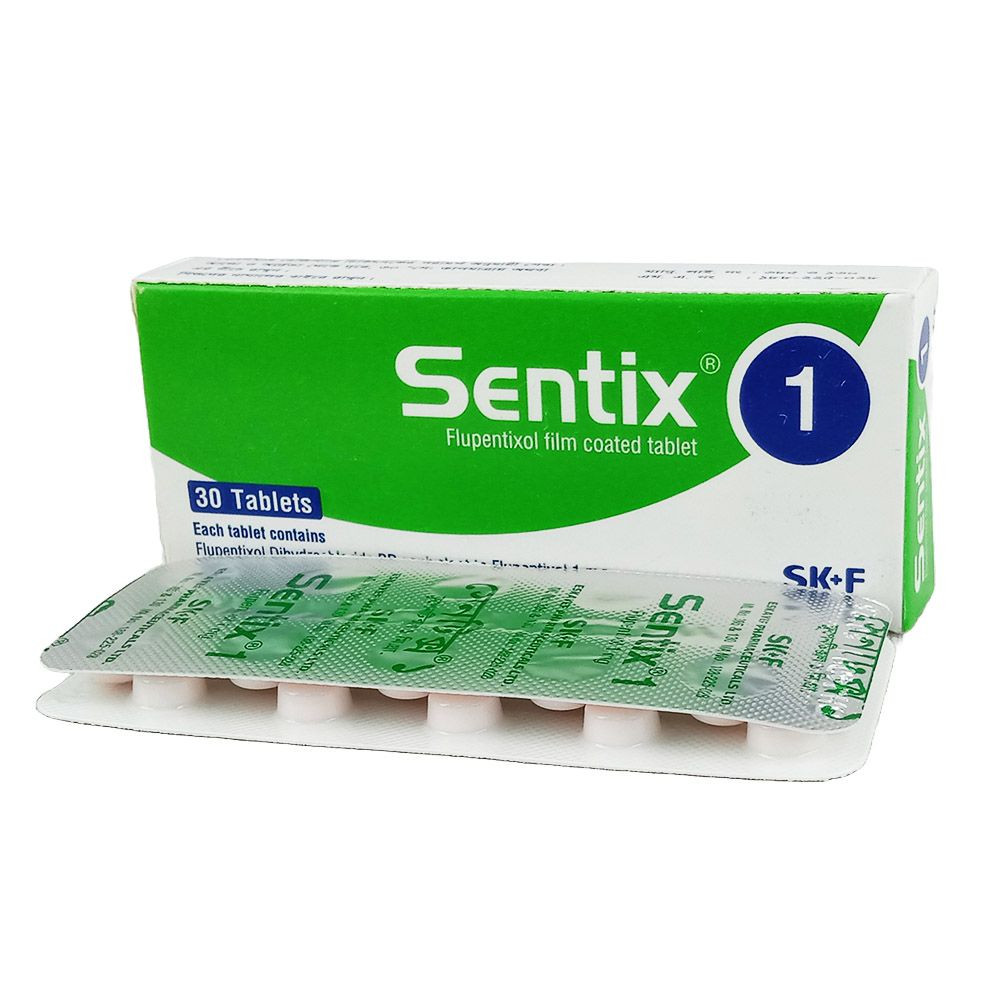
Introduction
Flupentixol is a thioxanthene antipsychotic that acts primarily as an antagonist of dopamine D1 and D2 receptors. The pharmacologically active cis(Z) isomer is available as oral tablets and long-acting intramuscular injections, including the decanoate formulation for sustained release. Flupentixol is used to treat chronic schizophrenia, particularly in patients without prominent agitation or hyperactivity. It is also used to manage depression, anxiety, and asthenia, either alone or in combination with melitracen.
Uses
Flupentixol is a thioxanthene neuroleptic used to treat schizophrenia and depression.
Flupentixol is indicated for maintenance therapy of chronic schizophrenic patients whose main manifestations do not include excitement, agitation or hyperactivity.
It is indicated for the management of depression in adult patients who may, or may not, also be showing signs of anxiety.
Flupentixol in combination with melitracen is indicated to manage symptoms of anxiety, depression, and asthenia in adults.
Associated Conditions
Pharmacodynamics
Flupentixol is an antipsychotic agent with anxiolytic and mild sedative actions. It exerts weak anticholinergic and adrenergic effects. It possesses antiemetic actions. As flupentixol works by antagonizing dopamine actions, it can cause extrapyramidal effects, mostly at doses greater than 10 mg. In clinical trials, flupentixol-induced extrapyramidal effects have been managed with anti-Parkinsonian drugs. Drug esterification in the intramuscular formulation of the drug results in slow release of the drug from the injection site and a prolonged duration of action. Flupentixol has been investigated for use in mild to moderate depression: compared to other antidepressant agents, flupentixol has a rapid onset of action, where antidepressive effects were observed within the first two to three days after administration.
As with other antipsychotic agents, flupentixol can cause QTc prolongation and increase the risk of arrhythmias. In clinical trials, flupentixol was associated with the risk of cardiovascular disease, cerebrovascular adverse events, stroke, and venous thromboembolism. Flupentixol can elevate the levels of prolactin; however, the clinical significance of hyperprolactinemia caused by neuroleptic drugs is unclear. Long-term hyperprolactinemia, when associated with hypogonadism, may lead to decreased bone mineral density in both female and male subjects.
Interestingly, recent studies show that flupentixol exhibits anti-tumour properties alone or synergistically with other anticancer drugs like gefitinib. One study demonstrated that in vitro, flupentixol docks to the ATP binding pocket of phosphatidylinositol 3-kinase (PI3K), a lipid kinase that activates signalling pathways that are often hyperactivated in some cancers. Flupentixol inhibited the PI3K/AKT pathway and survival of lung cancer cells in vitro and in vivo.
Mechanism of Action
The mechanism of action of flupentixol is not completely understood. The antipsychotic actions are mainly thought to arise from cis(Z)-flupentixol, the active stereoisomer, acting as an antagonist at both dopamine D1 and D2 receptors with equal affinities. Schizophrenia is a mental illness characterized by positive (such as hallucinations and delusions) and negative (such as affect flattening and apathy) symptoms. While several neurotransmitter systems are implicated in the pathophysiologic processes leading to the development of symptoms, the dopamine and glutamate systems have been extensively studied. It is generally understood that positive symptoms of schizophrenia arise from a dysregulated striatal dopamine pathway, leading to hyperstimulation of D2 receptors. Many antipsychotic agents work by blocking D2 receptors as antagonists; similarly, cis(Z)-flupentixol, the active stereoisomer, is an antagonist at D2 receptors. However, there is now evidence that antipsychotic agents can work by blocking other dopamine receptor subtypes, such as D1, D3, or D4 receptors. One study showed that cis(Z)-flupentixol is an antagonist at both dopamine D1 and D2 receptors with equal affinities, and binds to D3 and D4 receptors with lower affinities. It also binds to alpha-1 adrenoceptors. Antidepressant effects of flupentixol are understood to be mediated by antagonism at 5-HT2A receptors, which are commonly downregulated following repeated antidepressant treatment. Flupentixol also binds to 5-HT2C receptors.
Absorption
Following oral administration, flupentixol is readily absorbed from the gastrointestinal tract, with oral bioavailability of about 40%. Tmax ranges from three to eight hours. Steady-state plasma levels are achieved in about seven days and following once-daily oral administration of 5 mg flupentixol, the mean minimum steady-state level was about 1.7 ng/mL (3.9 nmol/L).
From the site of intramuscular injection, esterified flupentixol diffuses slowly from the oil solution and is slowly released into the extracellular fluid and the circulation to be distributed to different tissues. Peak drug concentrations are reached between four and seven days following intramuscular injection. Intramuscularly administered flupentixol is detectable in the blood three weeks after injection and reaches steady-state concentrations after about three months of repeated administration.
Volume of Distribution
The apparent volume of distribution is about 14.1 L/kg. Following administration, the highest levels of flupentixol are found in the lungs, liver, and spleen. Lower concentrations of the drug are found in the blood and brain.
Protein Binding
Flupentixol is 99% bound to plasma proteins.
Route of Elimination
Fecal excretion is more predominant than renal excretion. In the feces, flupentixol is recovered in the feces mainly as the unchanged form, as well as its lipophilic metabolites, such as dealkyl-flupentixol. Flupentixol is recovered in the urine as the unchanged form as well as its hydrophilic sulfoxide and glucuronide metabolites.
Half Life
The elimination half-life is about 35 hours following oral administration and three weeks following intramuscular administration.
Clearance
Following oral administration, the mean systemic clearance is about 0.29 L/min.
Toxicity
The oral LD50 is 423 mg/kg in mice and 791 mg/kg in rats. The intravenous LD50 is 37 mg/kg in rats.[L31873]
Flupentixol overdose is characterized by sedation, frequently preceded by extreme agitation, excitement, confusion, somnolence, coma, convulsions, and hyperthermia or hypothermia. Extrapyramidal symptoms or respiratory and circulatory collapse may be observed. ECG changes, QT prolongation, Torsades de Pointes, cardiac arrest and ventricular arrhythmias have been reported from the combined use of drugs known to affect the heart with large doses of flupentixol. In case of overdose, symptomatic treatment should be initiated with airway management. In case of severe hypotension, epinephrine should not be used: instead, intravenous vasopressor drugs, such as levarterenol, can be used. Antiparkinsonian medication should be administered only if extrapyramidal symptoms develop. Gastric lavage should be initiated in the case of flupentixol tablet overdose. Further injections of flupentixol should be discontinued in case of an intramuscularly-administered drug overdose until the patient shows signs of relapse, in which the dosage can subsequently be decreased.
Neuroleptic malignant syndrome is associated with neuroleptic drugs, which should be responded to with immediate discontinuation of the drug and initiation of symptomatic treatment and medical monitoring.
Food Interactions
- Avoid alcohol. Flupentixol can enhance the sedative effects of alcohol.
- Take with or without food. Food has negligible effects on drug pharmacokinetics.