Introduction
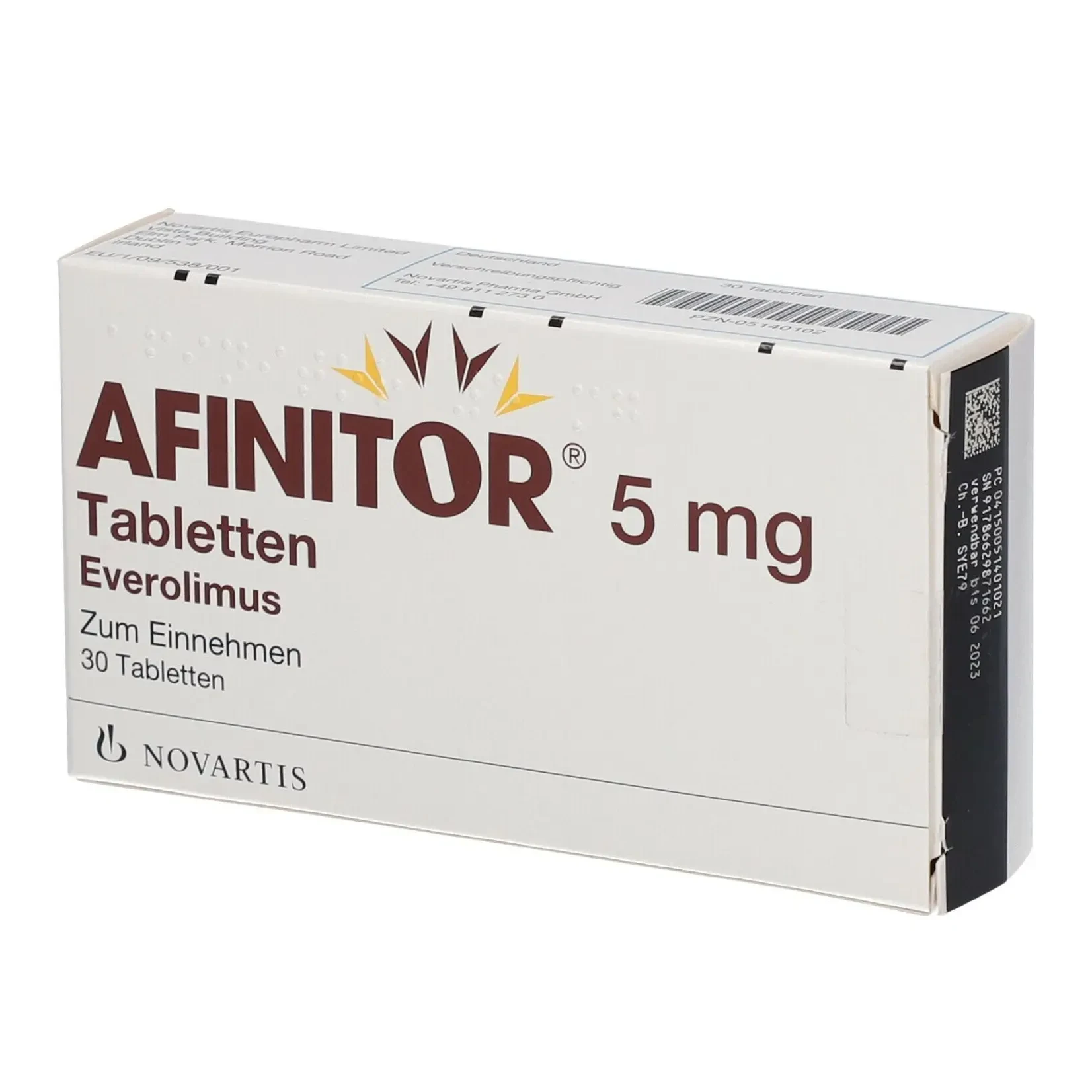
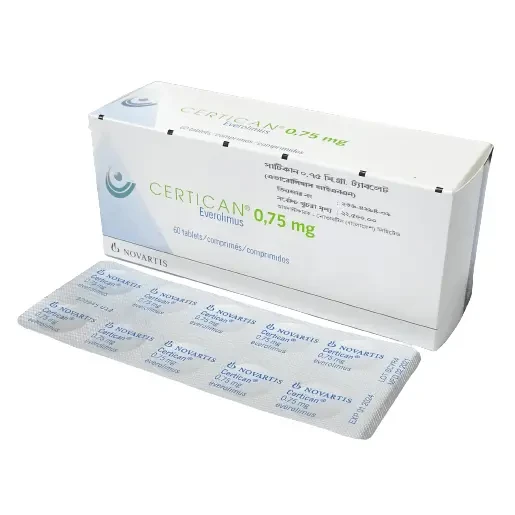
Everolimus is a derivative of Rapamycin (sirolimus), and works similarly to Rapamycin as an mTOR (mammalian target of rapamycin) inhibitor. It is currently used as an immunosuppressant to prevent rejection of organ transplants. In a similar fashion to other mTOR inhibitors Everolimus' effect is solely on the mTORC1 protein and not on the mTORC2 protein.
Uses
Everolimus is a mammalian target of rapamycin (mTOR) kinase inhibitor used to treat various types of malignancies.
Everolimus is indicated for the treatment of postmenopausal women with advanced hormone receptor-positive, HER2-negative breast cancer (advanced HR+ BC) in combination with exemestane, after failure of treatment with letrozole or anastrozole. Indicated for the treatment of adult patients with progressive neuroendocrine tumors of pancreatic origin (PNET) with unresectable, locally advanced or metastatic disease. Indicated for the treatment of adult patients with advanced renal cell carcinoma (RCC) after failure of treatment with sunitinib or sorafenib. Indicated for the treatment of adult patients with renal angiomyolipoma and tuberous sclerosis complex (TSC), not requiring immediate surgery. Indicated in pediatric and adult patients with tuberous sclerosis complex (TSC) for the treatment of subependymal giant cell astrocytoma (SEGA) that requires therapeutic intervention but cannot be curatively resected.
Associated Conditions
Mechanism of Action
Everolimus is a mTOR inhibitor that binds with high affinity to the FK506 binding protein-12 (FKBP-12), thereby forming a drug complex that inhibits the activation of mTOR. This inhibition reduces the activity of effectors downstream, which leads to a blockage in the progression of cells from G1 into S phase, and subsequently inducing cell growth arrest and apoptosis. Everolimus also inhibits the expression of hypoxia-inducible factor, leading to a decrease in the expression of vascular endothelial growth factor. The result of everolimus inhibition of mTOR is a reduction in cell proliferation, angiogenesis, and glucose uptake.
Absorption
In patients with advanced solid tumors, peak everolimus concentrations are reached 1 to 2 hours after administration of oral doses ranging from 5 mg to 70 mg. Following single doses, Cmax is dose-proportional between 5 mg and 10 mg. At doses of 20 mg and higher, the increase in Cmax is less than dose-proportional, however AUC shows dose-proportionality over the 5 mg to 70 mg dose range. Steady-state was achieved within 2 weeks following once-daily dosing. Dose Proportionality in Patients with SEGA (subependymal giant-cell astrocytomas) and TSC (tuberous sclerosis complex): In patients with SEGA and TSC, everolimus Cmin was approximately dose-proportional within the dose range from 1.35 mg/m2 to 14.4 mg/m2.
Volume of Distribution
The blood-to-plasma ratio of everolimus is 17% to 73%.
Protein Binding
~ 74% in both healthy patients and those with moderate hepatic impairment.
Route of Elimination
After a single dose of radiolabeled everolimus was given to transplant patients receiving cyclosporine, the majority (80%) of radioactivity was recovered from the feces and only a minor amount (5%) was excreted in urine.
Half Life
~30 hours.
Clearance
Following a 3 mg radiolabeled dose of everolimus, 80% of the radioactivity was recovered from the feces, while 5% was excreted in the urine.
Toxicity
IC50 of 0.63 nM.
Food Interactions
- Avoid grapefruit products. Grapefruit inhibits the metabolism of everolimus through the CYP3A4 pathway and, therefore, may increase serum levels of everolimus.
- Avoid St. John's Wort. Coadministration of St. John's Wort with everolimus may reduce serum levels of everolimus by inducing CYP3A4 and P-glycoprotein (PGP).
- Take at the same time every day.
- Take with a full glass of water.
- Take with or without food. Take consistently with regard to food as food may reduce the AUC and Cmax of everolimus.
Dosage
Hormone Receptor-Positive, HER2-Negative Breast Cancer: The recommended dosage of Everolimus is 10 mg orally once daily until disease progression or unacceptable toxicity.
Neuroendocrine Tumors (NET): The recommended dosage of Everolimus is 10 mg orally once daily until disease progression or unacceptable toxicity.
Renal Cell Carcinoma (RCC): The recommended dosage of Everolimus is 10 mg orally once daily until disease progression or unacceptable toxicity.
Tuberous Sclerosis Complex (TSC): Associated Renal Angiomyolipoma: The recommended dosage of Everolimus is 10 mg orally once daily until disease progression or unacceptable toxicity.
Tuberous Sclerosis Complex (TSC)-Associated Subependymal Giant Cell Astrocytoma (SEGA): The recommended starting dosage of Everolimus is 4.5 mg/m2 orally once daily until disease progression or unacceptable toxicity.
Tuberous Sclerosis Complex (TSC)-Associated Partial-Onset Seizures: The recommended starting dosage of Everolimus is 5 mg/m2 orally once daily until disease progression or unacceptable toxicity.