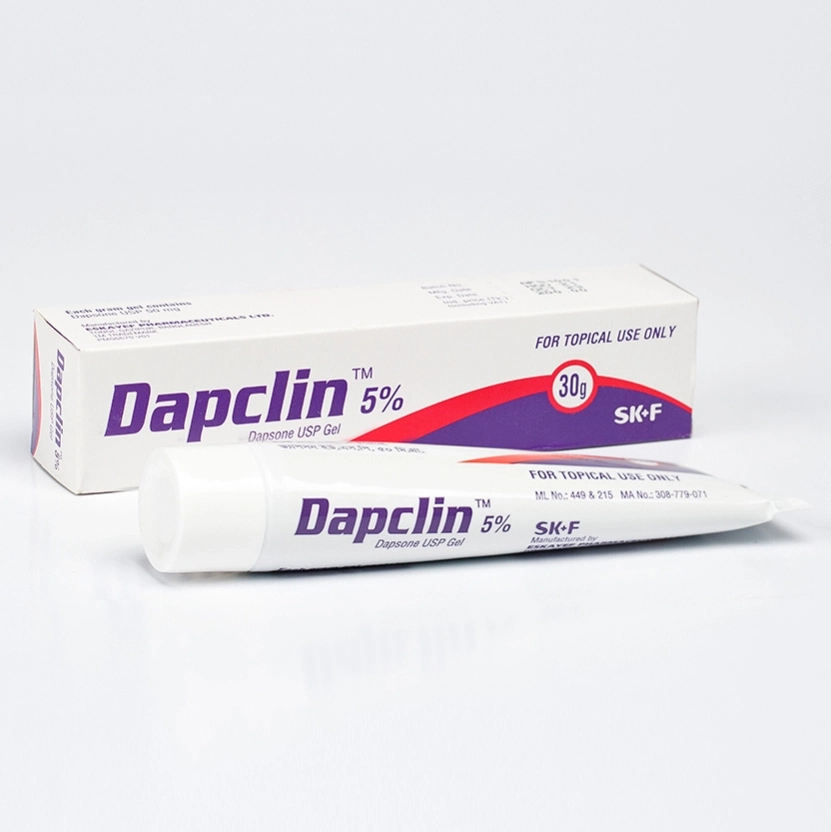
1. What is Dapsone?
Dapsone is an antibiotic and anti-inflammatory medication primarily used to treat leprosy, dermatitis herpetiformis, and certain bacterial infections. It is also used as a second-line treatment for Pneumocystis jirovecii pneumonia (PCP) in immunocompromised patients.
2. How does Dapsone work?
Dapsone works by inhibiting bacterial synthesis of dihydrofolic acid, a component essential for bacterial DNA replication and cell division. This bacteriostatic effect prevents the growth and spread of bacteria. It also has anti-inflammatory properties, which reduce skin irritation and inflammation.
3. What are the common uses of Dapsone?
Dapsone is commonly prescribed for:
- Leprosy (Hansen’s disease)
- Dermatitis herpetiformis
- Pneumocystis jirovecii pneumonia (PCP)
- Acne vulgaris
- Autoimmune skin conditions
4. Is Dapsone an antibiotic or anti-inflammatory drug?
Dapsone serves as both an antibiotic and an anti-inflammatory drug. It treats bacterial infections by stopping bacterial growth and reduces skin inflammation in autoimmune skin conditions.
5. How is Dapsone administered?
Dapsone is usually taken orally in tablet form. In some cases, it is available as a topical gel for treating acne. The dosage and duration depend on the condition being treated and the patient’s medical history.
6. What is the typical dosage of Dapsone?
The recommended dosage varies:
- For leprosy: 50-100 mg once daily
- For dermatitis herpetiformis: 50-300 mg daily, depending on severity
- For Pneumocystis jirovecii pneumonia: 100 mg once daily for prevention
It’s essential to follow the doctor's instructions for dosage.
7. What are the side effects of Dapsone?
Common side effects include:
- Nausea
- Vomiting
- Dizziness
- Headache
- Skin rash
Severe side effects may include hemolytic anemia, liver damage, or Dapsone hypersensitivity syndrome.
8. What is Dapsone hypersensitivity syndrome?
Dapsone hypersensitivity syndrome is a rare but potentially life-threatening reaction that typically occurs 4-6 weeks after starting the drug. Symptoms include fever, skin rash, liver inflammation, and organ dysfunction. Immediate medical attention is necessary if symptoms occur.
9. Can Dapsone be used during pregnancy?
Dapsone is typically avoided during pregnancy unless absolutely necessary. It can cross the placenta and cause hemolysis in newborns, particularly in mothers with glucose-6-phosphate dehydrogenase (G6PD) deficiency.
10. Can Dapsone be used while breastfeeding?
Small amounts of Dapsone can pass into breast milk. Although generally considered safe, monitoring the infant for symptoms of hemolysis or jaundice is recommended.
11. How long does it take for Dapsone to work?
For leprosy and dermatitis herpetiformis, noticeable improvements may take several weeks to months. In acne treatment, results are typically visible within 8-12 weeks of consistent use.
12. Is Dapsone effective against acne?
Yes, Dapsone gel is used to treat moderate to severe acne. It reduces inflammation and clears clogged pores, making it effective in managing acne lesions.
13. Can Dapsone be used in children?
Dapsone can be prescribed to children for conditions like leprosy or Pneumocystis jirovecii pneumonia. The dosage is adjusted based on the child’s weight and health condition.
14. What precautions should be taken before using Dapsone?
Before starting Dapsone, it is essential to inform your doctor about:
- Any allergies to Dapsone or sulfa drugs
- G6PD deficiency
- Liver or kidney disease
- Ongoing infections
Regular blood tests may be required during treatment.
15. Can Dapsone cause anemia?
Yes, Dapsone can cause hemolytic anemia, especially in people with G6PD deficiency. It is important to monitor blood cell levels through regular blood tests.
16. How should Dapsone be stored?
Store Dapsone at room temperature (20-25°C), away from moisture and light. Keep it in its original packaging and out of reach of children.
17. What should I do if I miss a dose of Dapsone?
If you miss a dose, take it as soon as you remember. If it is close to the next scheduled dose, skip the missed dose. Do not double the dose to catch up.
18. Can Dapsone interact with other medications?
Yes, Dapsone may interact with:
- Rifampin
- Trimethoprim
- Folic acid antagonists
- Anticonvulsants
Inform your doctor about all medications you are taking.
19. Is Dapsone used to treat malaria?
While Dapsone has some antimalarial properties, it is not commonly used as a primary treatment for malaria. Other medications like chloroquine are preferred.
20. Can Dapsone cause allergic reactions?
Yes, allergic reactions such as rash, itching, or swelling may occur. Severe reactions like Dapsone hypersensitivity syndrome are rare but require immediate medical attention.
21. How long should Dapsone be taken for leprosy?
Leprosy treatment with Dapsone typically lasts for 6-12 months, often combined with other antibiotics like rifampin and clofazimine.
22. Can Dapsone be used for fungal infections?
No, Dapsone is not effective against fungal infections. It is specifically used to treat bacterial infections and inflammatory skin conditions.
23. Can Dapsone be used in HIV patients?
Yes, Dapsone is commonly used as a prophylactic treatment to prevent Pneumocystis jirovecii pneumonia (PCP) in HIV-positive patients with low CD4 counts.
24. What should be done in case of Dapsone overdose?
In case of overdose, seek emergency medical attention. Symptoms of overdose may include severe nausea, dizziness, or difficulty breathing.
25. Can Dapsone be stopped suddenly?
No, it is important to follow your doctor’s advice. Suddenly stopping Dapsone may worsen the condition or lead to bacterial resistance.
26. Is it safe to consume alcohol while taking Dapsone?
It is generally advised to avoid alcohol while taking Dapsone, as it may increase the risk of liver damage and worsen side effects like dizziness and nausea.
27. Can Dapsone be used for urinary tract infections (UTIs)?
No, Dapsone is not typically used for treating urinary tract infections. It is more effective for skin infections, leprosy, and specific bacterial infections.
28. What is the role of Dapsone in combination therapy for leprosy?
In leprosy treatment, Dapsone is usually combined with rifampin and clofazimine as part of a multidrug therapy (MDT) regimen to prevent antibiotic resistance.
29. Does Dapsone cause photosensitivity?
Yes, Dapsone may increase skin sensitivity to sunlight, leading to sunburn or rash. It is advisable to use sunscreen and wear protective clothing during sun exposure.
30. Can Dapsone be used to treat skin infections caused by Staphylococcus or Streptococcus?
Dapsone is not the first-line treatment for bacterial skin infections caused by Staphylococcus or Streptococcus. Other antibiotics like penicillin or cephalosporins are preferred.
31. What is the difference between oral and topical Dapsone?
Oral Dapsone is used to treat systemic infections like leprosy, while topical Dapsone (in gel form) is typically used for acne treatment and other localized skin conditions.
32. Can Dapsone be used to treat rheumatoid arthritis?
Although not a primary treatment, Dapsone has shown some effectiveness in treating autoimmune conditions like rheumatoid arthritis due to its anti-inflammatory properties.
33. What is the recommended monitoring while on Dapsone therapy?
Patients on Dapsone require regular blood tests to monitor:
- Hemoglobin levels (to detect anemia)
- White blood cell count
- Liver function
- Signs of methemoglobinemia
34. Can Dapsone cause nerve damage?
Dapsone does not typically cause nerve damage. However, untreated leprosy can lead to nerve damage, which may persist despite treatment.
35. What happens if Dapsone is taken for a long time?
Long-term use of Dapsone may increase the risk of hemolysis, liver damage, or neuropathy. Regular monitoring and follow-ups with a healthcare provider are essential.
36. Can Dapsone cause gastrointestinal issues?
Yes, gastrointestinal symptoms such as nausea, vomiting, and abdominal pain are common side effects of Dapsone. Taking it with food may help reduce these symptoms.
37. Is Dapsone a sulfa drug?
Yes, Dapsone is classified as a sulfone drug, which is a derivative of sulfa drugs. Patients allergic to sulfa medications may also react to Dapsone.
38. How does Dapsone affect patients with G6PD deficiency?
In individuals with glucose-6-phosphate dehydrogenase (G6PD) deficiency, Dapsone can cause severe hemolytic anemia. A G6PD test is usually performed before starting treatment.
39. Can Dapsone cause changes in skin color?
Prolonged use of Dapsone may lead to skin discoloration or a bluish-gray tint, a condition called methemoglobinemia. Immediate medical attention is required if symptoms appear.
40. Can Dapsone be used for fungal skin infections?
No, Dapsone is not effective against fungal infections. Antifungal medications are recommended for treating fungal skin infections.
41. What is the duration of treatment with Dapsone for dermatitis herpetiformis?
Dapsone treatment for dermatitis herpetiformis may last several months to years, depending on the patient’s response. A gluten-free diet is often recommended alongside Dapsone.
42. Does Dapsone cause dizziness or drowsiness?
Yes, dizziness and drowsiness are potential side effects of Dapsone. Avoid driving or operating machinery if you experience these symptoms.
43. Can Dapsone affect fertility?
There is no conclusive evidence that Dapsone directly affects fertility in men or women. However, consult your doctor if you are planning to conceive while on Dapsone.
44. Is Dapsone safe for elderly patients?
Dapsone can be used in elderly patients but with caution. Due to age-related changes in liver and kidney function, dose adjustments and regular monitoring are often necessary.
45. What is the relationship between Dapsone and Hansen’s disease?
Hansen’s disease, commonly known as leprosy, is one of the primary conditions treated with Dapsone. It is part of the standard multidrug therapy for leprosy worldwide.
46. Can Dapsone cause weight loss?
Weight loss is not a common side effect of Dapsone. However, in some cases, severe gastrointestinal issues may lead to unintended weight loss. Notify your doctor if this occurs.
47. What should I do in case of an allergic reaction to Dapsone?
In case of symptoms like rash, swelling, difficulty breathing, or severe dizziness, discontinue Dapsone and seek emergency medical attention immediately.
48. Can Dapsone be used for prophylaxis in organ transplant patients?
Yes, Dapsone is sometimes used as a prophylactic drug to prevent Pneumocystis jirovecii pneumonia (PCP) in organ transplant recipients or immunocompromised patients.
49. Can Dapsone cause liver damage?
Yes, Dapsone may cause liver damage in some individuals. Signs of liver issues include yellowing of the skin or eyes, dark urine, and persistent abdominal pain. Liver function tests are recommended during treatment.
50. What should I do if I accidentally take too much Dapsone?
If you suspect a Dapsone overdose, seek immediate medical attention. Symptoms of overdose may include dizziness, headache, shortness of breath, and bluish skin discoloration (cyanosis).