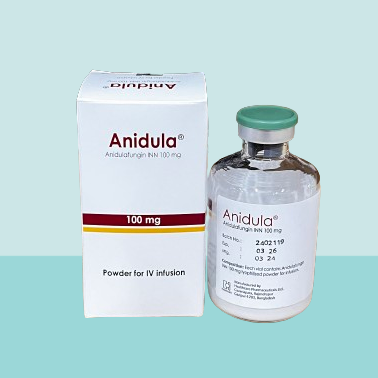
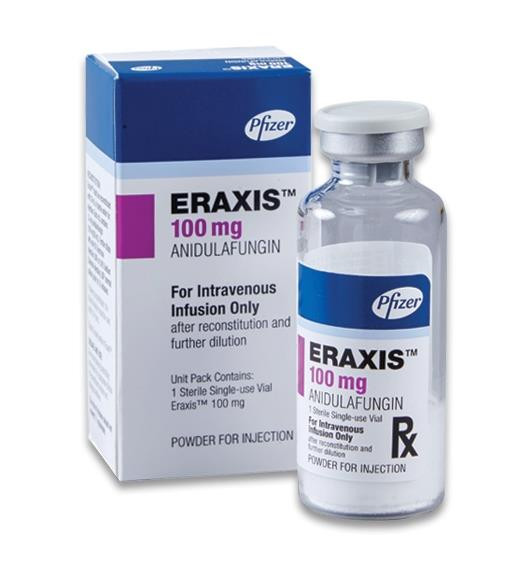
Introduction
Anidulafungin or Eraxis is an anti-fungal drug manufactured by Pfizer that gained approval by the Food and Drug Administration (FDA) in February 21, 2006; it was previously known as LY303366. There is preliminary evidence that it has a similar safety profile to caspofungin.
Uses
Anidulafungin is an antifungal used in the treatment of several types of candida infections.
For use in the treatment of the following fungal infections: Candidemia and other forms of Candida infections (intra-abdominal abscess, and peritonitis), Aspergillus infections, and esophageal candidiasis. Also considered an alternative treatment for oropharyngeal canaidiasis.
Associated Conditions
Pharmacodynamics
Anidulafungin is a semi-synthetic lipopeptide synthesized from a fermentation product of Aspergillus nidulans. Anidulafungin is an echinocandin, a class of antifungal drugs that inhibits the synthesis of 1,3-β-D-glucan, an essential component of fungal cell walls. Anidulafungin is active in vitro against many Candida, as well as some Aspergillus. Like other echinocandins, anidulafungin is not active against Cryptococcus neoformans, Trichosporon, Fusarium, or zygomycetes.
Mechanism of Action
Anidulafungin is a semi-synthetic echinocandin with antifungal activity. Anidulafungin inhibits glucan synthase, an enzyme present in fungal, but not mammalian cells. This results in inhibition of the formation of 1,3-β-D-glucan, an essential component of the fungal cell wall, ultimately leading to osmotic instability and cell death.
Volume of Distribution
- 30 to 50 L
Protein Binding
84%
Route of Elimination
Less than 1% of the administered radioactive dose was excreted in the urine. Anidulafungin is not hepatically metabolized.
Half Life
40-50 hours
Clearance
- 1 L/h
Toxicity
During clinical trials a single 400 mg dose of anidulafungin was inadvertently administered as a loading dose. No clinical adverse events were reported. The maximum non-lethal dose of anidulafungin in rats was 50 mg/kg, a dose which is equivalent to 10 times the recommended daily dose for esophageal candidiasis (50mg/day).
Food Interactions
No interactions found.
Dosage
Patients with renal and hepatic impairment: No dosing adjustments are required for patients with mild, moderate, or severe hepatic impairment. No dosing adjustments are required for patients with any degree of renal insufficiency, including those on dialysis.
Other special population: No dosing adjustments are required for adult patients based on gender, weight, ethnicity, HIV positivity, or elderly.
| Adults | Pediatric (1 Month of Age and Older) |
| Candidemia and other forms of Candida infections | |
| 200 mg loading dose on Day 1, followed by 100 mg once daily maintenance dose thereafter for at least 14 days after the last positive culture | 3 mg/kg (not to exceed 200 mg) loading dose on Day 1, followed by 1.5 mg/kg (not to exceed 100 mg) once daily maintenance dose thereafter for at least 14 days after the last positive culture |
| Esophageal Candidiasis | |
| 100 mg loading dose on Day 1, followed by 50 mg once daily maintenance dose thereafter for a minimum of 14 days and for at least 7 days following resolution of symptoms | Not approved |