Introduction
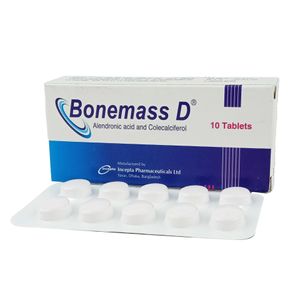
Alendronic acid is a second generation bisphosphonate that is used for the treatment of some forms of osteoperosis and Paget's disease. It functions by preventing resorption of bone.
Uses
Alendronic acid is a bisphosphonate drug that prevents osteoclastic bone resorption which is used for the prevention and treatment of osteoporosis.
Alendronic acid is indicated for the treatment and prevention of osteoporosis in men and postmenopausal women, treatment of glucocorticoid-induced osteoporosis, and Paget's disease of bone. However, alendronic acid is not indicated for use in pediatric populations or patients with a creatinine clearance Label.
Associated Conditions
Pharmacodynamics
Alendronic acid tablets have a very low oral bioavialability. After administration it distributes into soft tissue and bone or is excreted in the urine. Alendronic acid does not undergo metabolism.
Mechanism of Action
Alendronic acid binds to bone hydroxyapatite. Bone resorption causes local acidification, releasing alendronic acid which is that taken into osteoclasts by fluid-phase endocytosis. Endocytic vesicles are acidified, releasing alendronic acid to the cytosol of osteoclasts where they induce apoptosis. Inhibition of osteoclasts results in decreased bone resorption which is shown through decreased urinary calcium, deoxypyridinoline and cross-linked N-telopeptidases of type I collagen.
Absorption
Mean oral bioavailability of alendronic acid in women is 0.64% and in men is 0.59%. Bioavailability of alendronic acid decreases by up to 40% if it is taken within an hour of a meal.
Volume of Distribution
28L.
Protein Binding
78%. Studies in rats show that plasma protein binding increases with decreasing alendronic acid plasma concentration and increasing pH.
Route of Elimination
Administration of radiolabeled alendronic acid results in 50% recovery in urine within 72 hours. No alendronic acid is recovered in the feces. Men excrete less alendronic acid than women, though race and advanced age do not affect elimination.
Half Life
Due to alendronic acid being incorporated into the skeleton, the terminal half life is estimated to be over 10 years.
Clearance
71mL/min.
Toxicity
In clinical studies, ≥3% of patients experience abdominal pain, acid regurgitation, constipation, diarrhea, dyspepsia, musculoskeletal pain, and nausea.
No information for treatment of overdose is available, however patients should be given milk or antacids to bind alendronic acid and vomiting should not be induced. Patients may experience hypocalcemia, hypophosphatemia, and upper gastrointestinal events..
There are currently no studies for safety and efficacy in pregnancy, though studies in pregnant rats show fetal and maternal complications at 4 times the clinical dose and pregnant rabbits do not show complications at as high as 10 times the clincal dose.
Excretion in breast milk, and therefore safety in lactation, is unknown.
Alendronic acid has been studied for use in pediatric patients. The oral bioavailability is similar to that in adult patients, but an increase in the portion of patients experiencing vomiting.
There is no significant difference in efficacy or safety of alendronic acid in geriatric populations, though there is potential for even greater sensitivity in patients at a further advanced age than those in the study.
Alendronic acid is not recommended for patients with creatinine clearance Label.
Food Interactions
- Administer vitamin supplements. Patients may require supplemental vitamin D.
- Avoid multivalent ions. Calcium, antacids, and divalent ions may interfere with the absorption of this medication.
- Take before a meal. Take 30-60 minutes before breakfast.
- Take with a full glass of water.
Dosage
Prevention of Osteoporosis in Postmenopausal Women: The recommended dosage is one 35 mg tablet once weekly or one 5 mg tablet once daily.
Treatment to Increase Bone Mass in Men with Osteoporosis: The recommended dosage is one 70 mg tablet once weekly or one bottle of 70 mg oral solution once weekly or one 10 mg tablet once daily.
Treatment of Glucocorticoid-Induced Osteoporosis: The recommended dosage is one 5 mg tablet once daily, except for postmenopausal women not receiving estrogen, for whom the recommended dosage is one 10 mg tablet once daily.
Treatment of Paget's Disease of Bone: The recommended treatment regimen is 40 mg once a day for six months.