Introduction

Bonemas Tablet 70 mg, also known as alendronate, is a bisphosphonate used primarily to treat and prevent osteoporosis in postmenopausal women and men at risk of fractures. It is also used in the management of Paget's disease of bone and other conditions that lead to bone loss. Bonemas Tablet 70 mg works by inhibiting bone resorption, helping to maintain or increase bone density and reduce the risk of fractures.

Uses

Bonemas Tablet 70 mg is used for:

  • Treatment and prevention of osteoporosis in postmenopausal women and men.
  • Reduction of fracture risk, particularly hip and vertebral fractures, in patients with osteoporosis.
  • Treatment of Paget’s disease of bone, a condition that leads to abnormal bone destruction and regrowth.
  • Management of glucocorticoid-induced osteoporosis in patients receiving long-term steroid therapy.

Brand Name Bonemas
Type Tablet
Weight 70 mg
Generic Alendronic acid
Manufacturer Incepta Pharmaceuticals Ltd.
Available in English বাংলা

Mechanism of Action

Bonemas Tablet 70 mg inhibits the activity of osteoclasts, the cells responsible for breaking down bone tissue during the process of bone resorption. By inhibiting osteoclast-mediated bone resorption, alendronic acid helps to maintain or increase bone mineral density, leading to stronger bones and a reduction in the risk of fractures. It binds to hydroxyapatite crystals in bone, making the bone more resistant to breakdown.

How Long Does It Take to Work?

Bonemas Tablet 70 mg begins to affect bone turnover within days to weeks of starting treatment. However, significant increases in bone mineral density and reductions in fracture risk may take several months to become apparent. Most patients will need to take alendronic acid for several years to achieve full benefit.

Absorption

Bonemas Tablet 70 mg is poorly absorbed from the gastrointestinal tract, with oral bioavailability typically less than 1%. Absorption is further reduced by food, beverages, and certain medications, so it is recommended to take alendronic acid on an empty stomach with plain water.

Route of Elimination

Bonemas Tablet 70 mg is not metabolized by the liver. It is primarily excreted unchanged by the kidneys. Any alendronic acid that is absorbed is either incorporated into bone, where it may remain for many years, or excreted unchanged in the urine.

Dosage

Treatment of Osteoporosis in Postmenopausal Women: The recommended dosage is one 70 mg tablet once weekly or one bottle of 70 mg oral solution once weekly or one 10 mg tablet once daily.

Prevention of Osteoporosis in Postmenopausal Women: The recommended dosage is one 35 mg tablet once weekly or one 5 mg tablet once daily.

Treatment to Increase Bone Mass in Men with Osteoporosis: The recommended dosage is one 70 mg tablet once weekly or one bottle of 70 mg oral solution once weekly or one 10 mg tablet once daily.

Treatment of Glucocorticoid-Induced Osteoporosis: The recommended dosage is one 5 mg tablet once daily, except for postmenopausal women not receiving estrogen, for whom the recommended dosage is one 10 mg tablet once daily.

Treatment of Paget's Disease of Bone: The recommended treatment regimen is 40 mg once a day for six months.

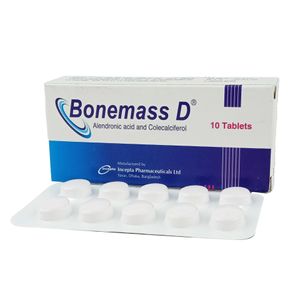
The typical dosages for alendronic acid include:

  • Osteoporosis treatment (postmenopausal women and men): 70 mg once weekly or 10 mg daily.
  • Osteoporosis prevention: 35 mg once weekly or 5 mg daily.
  • Paget’s disease: 40 mg once daily for 6 months.
Dosage adjustments may be necessary for patients with renal impairment.

Administration

Bonemas Tablet 70 mg should be taken with a full glass of plain water at least 30 minutes before the first food, beverage, or other medications of the day. Patients should remain upright (sitting or standing) for at least 30 minutes after taking the medication to prevent esophageal irritation. It should not be taken with other beverages, food, or medications as this can significantly reduce absorption.

Side Effects

Common side effects of alendronic acid include:

  • Gastrointestinal discomfort (nausea, abdominal pain, dyspepsia)
  • Esophagitis, esophageal ulcer, or erosions
  • Musculoskeletal pain
  • Headache
Serious but less common side effects include osteonecrosis of the jaw and atypical femoral fractures, particularly in patients on long-term therapy.

Toxicity

Bonemas Tablet 70 mg has a low potential for toxicity when taken as prescribed, but overdose can lead to hypocalcemia, gastrointestinal irritation, and esophageal inflammation or ulceration. Supportive treatment includes administration of milk or antacids to bind the drug and prevent further absorption. In severe cases, intravenous calcium may be required.

Precautions

Patients with esophageal disorders (e.g., Barrett's esophagus, achalasia) or inability to remain upright for at least 30 minutes after administration should avoid alendronic acid due to the risk of esophageal irritation. Caution is advised in patients with renal impairment, hypocalcemia, or vitamin D deficiency, as these conditions should be corrected before starting treatment. Periodic monitoring of renal function and serum calcium is recommended during treatment.

Interaction

Bonemas Tablet 70 mg may interact with:

  • Calcium supplements and antacids: These can interfere with absorption and should not be taken within 30 minutes to 1 hour of alendronic acid.
  • NSAIDs: Concomitant use may increase the risk of gastrointestinal irritation or ulcers.
  • Aminoglycosides: These can prolong the hypocalcemic effect of alendronic acid.

Disease Interaction

Bonemas Tablet 70 mg should be used with caution in patients with:

  • Renal impairment (eGFR < 35 mL/min)
  • Esophageal disorders
  • Hypocalcemia or vitamin D deficiency
Patients with severe renal impairment should avoid alendronic acid due to the risk of accumulation and associated side effects.

Drug Interaction

Bonemas Tablet 70 mg interacts with:

  • Calcium supplements, antacids, and iron salts: These reduce the absorption of alendronic acid and should be taken at least 30 minutes to 1 hour apart.
  • NSAIDs: Concomitant use increases the risk of gastrointestinal adverse effects, such as ulcers.
  • Parathyroid hormone analogs: May have additive effects on bone turnover.
No significant interactions with systemic antibiotics have been reported, but care should be taken when administering with other medications affecting the gastrointestinal tract.

Food Interactions

Food, particularly calcium-rich foods such as milk or dairy products, and beverages like coffee and orange juice can significantly reduce the absorption of alendronic acid. It is recommended to take the drug with plain water on an empty stomach, and to wait at least 30 minutes before consuming any food or other beverages.

Pregnancy Use

Bonemas Tablet 70 mg is categorized as pregnancy category C by the FDA, meaning that risk to the fetus cannot be ruled out. Animal studies have shown potential for fetal harm, but there are no adequate and well-controlled studies in pregnant women. The use of alendronic acid during pregnancy should be avoided unless the potential benefits justify the risk to the fetus.

Lactation Use

It is not known whether alendronic acid is excreted in human breast milk. Due to the potential for serious adverse reactions in nursing infants, a decision should be made whether to discontinue breastfeeding or to discontinue the drug, taking into account the importance of the drug to the mother.

Acute Overdose

In case of acute overdose, symptoms such as hypocalcemia, hypophosphatemia, and gastrointestinal symptoms like nausea and stomach upset may occur. Treatment is mainly supportive, with the administration of milk or antacids to bind the drug. In severe cases, intravenous calcium may be administered to counteract hypocalcemia. Esophageal irritation or ulceration may require specific treatment.

Contraindication

Bonemas Tablet 70 mg is contraindicated in patients with:

  • Hypocalcemia
  • Esophageal abnormalities that delay esophageal emptying (e.g., stricture or achalasia)
  • Inability to stand or sit upright for at least 30 minutes
  • Severe renal impairment (eGFR < 35 mL/min)
  • Known hypersensitivity to alendronic acid or any of its components

Use Direction

Bonemas Tablet 70 mg should be taken first thing in the morning, with a full glass of plain water (6-8 oz), at least 30 minutes before eating, drinking, or taking other medications. Patients should not lie down for at least 30 minutes after taking the drug to reduce the risk of esophageal irritation. If a dose is missed, it should be skipped, and the next dose should be taken as scheduled.

Storage Conditions

Bonemas Tablet 70 mg should be stored at room temperature, between 20°C and 25°C (68°F and 77°F). It should be kept in its original packaging, protected from moisture and heat. The medication should be kept out of reach of children and not used after the expiration date.

Volume of Distribution

Bonemas Tablet 70 mg has a small volume of distribution, largely confined to bone tissue where it binds to hydroxyapatite crystals. It is rapidly distributed to bone and has a low affinity for soft tissues.

Half-Life

The terminal half-life of alendronic acid in bone is estimated to be more than 10 years, due to its slow release from the bone matrix. However, its half-life in plasma is much shorter, around 1 to 2 hours following oral administration.

Clearance

Bonemas Tablet 70 mg is primarily cleared by the kidneys, with no hepatic metabolism. Patients with renal impairment may have reduced clearance, and dose adjustments may be necessary for those with moderately impaired renal function.

See in details version Bonemas Tablet 70 mg also Bonemas Tablet 70 mg in bangla

Social card

Uses

Some Frequently Asked Questions About Bonemas Tablet 70 mg

*** Taking medicines without doctor's advice can cause long-term problems.
Dr. Syedul Alam Quraishi

Dr. Syedul Alam Quraishi

Cardiology & Medicine Specialist

Call Doctor
Dr. Md. Tariqul Islam

Dr. Md. Tariqul Islam

Ear, Nose, Throat Specialist & Head Neck Cancer Surgeon

Call Doctor
Dr. Md. Rais Uddin Mondol

Dr. Md. Rais Uddin Mondol

Cardiology, Heart Diseases, Rheumatic Fever, Hypertension & Medicine Specialist

Call Doctor
Related Medicines