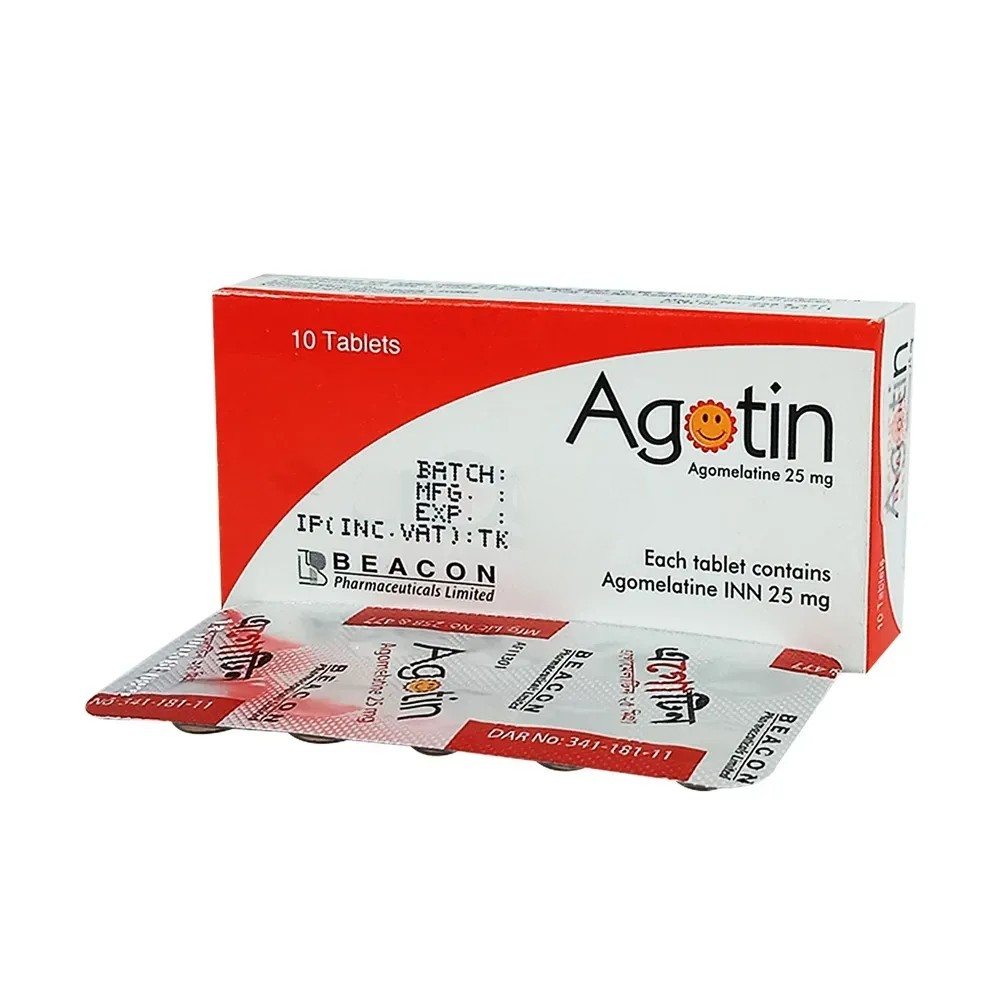
Introduction
Agomelatine is structurally closely related to melatonin. Agomelatine is a potent agonist at melatonin receptors and an antagonist at serotonin-2C (5-HT2C) receptors, tested in an animal model of depression. Agomelatine was developed in Europe by Servier Laboratories Ltd. and submitted to the European Medicines Agency (EMA) in 2005. The Committee for Medical Products for Human Use (CHMP) recommended refusal of marketing authorization on 27 July 2006. The major concern was that efficacy had not been sufficiently shown. In 2006 Servier sold the rights to develop Agomelatine in the US to Novartis.
The development for the US market was discontinued in October 2011. It is currently sold in Australia under the Valdoxan trade name.
Uses
Agomelatine is indicated to treat major depressive episodes in adults.
Associated Conditions
Pharmacodynamics
Agomelatine resynchronises circadian rhythms in animal models of delayed sleep phase syndrome and other circadian rhythm disruptions. It increases noradrenaline and dopamine release specifically in the frontal cortex and has no influence on the extracellular levels of serotonin. Agomelatine has shown an antidepressant-like effect in animal depression models, (learned helplessness test, despair test, and chronic mild stress) circadian rhythm desynchronisation, and in stress and anxiety models. In humans, agomelatine has positive phase shifting properties; it induces a phase advance of sleep, body temperature decline and melatonin onset. Controlled studies in humans have shown that agomelatine is as effective as the SSRI antidepressants paroxetine and sertraline in the treatment of major depression
Mechanism of Action
The novel antidepressant agent, agomelatine, behaves as an agonist at melatonin receptors (MT1 and MT2) and as an antagonist at serotonin (5-HT)(2C) receptors.
Absorption
Bioavailability is less than 5%.
Protein Binding
> 95%
Half Life
<2 hours
Dosage
Children under 18 years: Should be given only on medical advice.
Use in children and adolescents: Agomelatine is not recommended in the treatment of depression in patients <18 years since safety and efficacy of agomelatine have not been established in this age group. In clinical trials among children and adolescents treated with other antidepressants, suicide-related behavior (suicide attempt and suicidal thoughts), and hostility (predominantly aggression, oppositional behavior and anger) were more frequently observed compared to those treated with placebo.
Use in the elderly: The efficacy and safety of agomelatine (25 to 50 mg/day) have been established in elderly patients with MDD (aged <75 years). As efficacy has not been established in every elder patients aged >75 years agomelatine should not be used in this patient group.