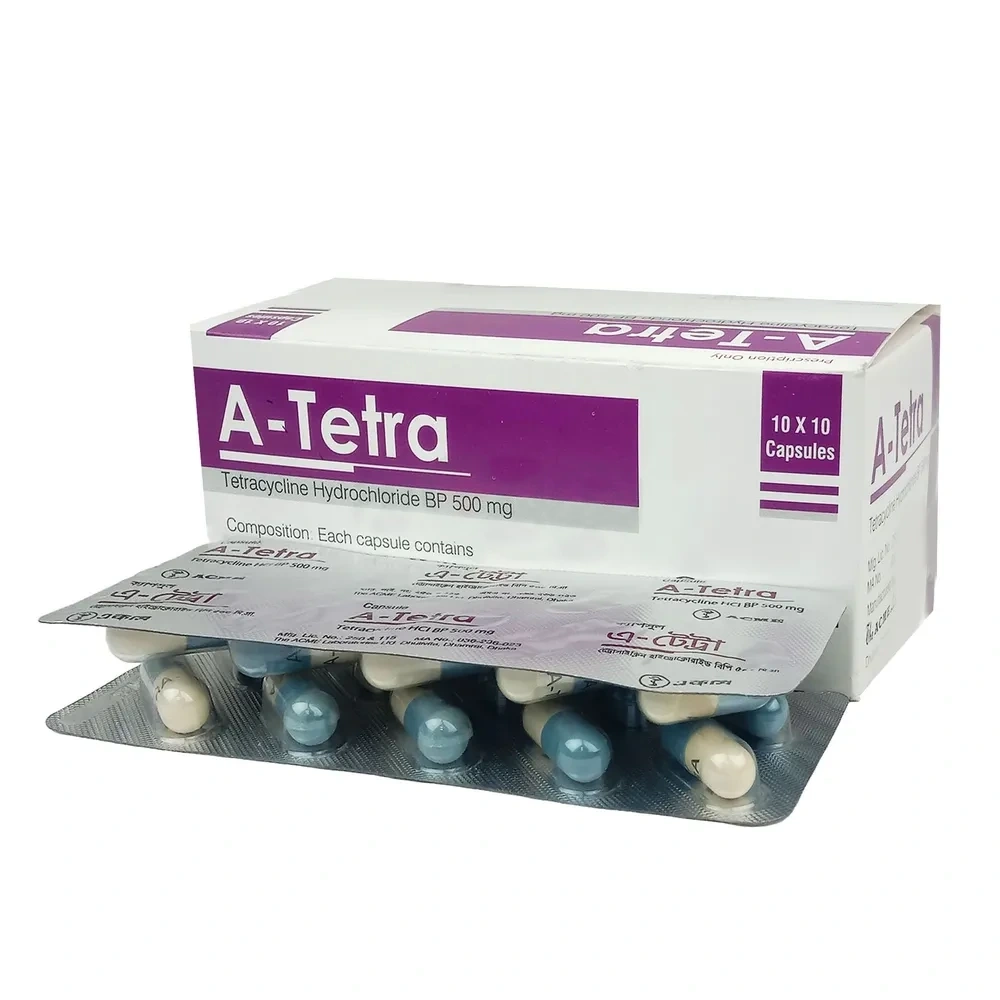
1. What is Tetrasina Capsule 500 mg?
Tetrasina Capsule 500 mg is an antibiotic used to treat a variety of bacterial infections by inhibiting bacterial protein synthesis.
2. How does Tetrasina Capsule 500 mg work?
Tetrasina Capsule 500 mg works by inhibiting the growth of bacteria. It prevents bacteria from producing proteins necessary for their growth and reproduction, thus halting the infection.
3. What types of infections can Tetrasina Capsule 500 mg treat?
Tetrasina Capsule 500 mg is used to treat various bacterial infections, including respiratory tract infections, urinary tract infections, acne, Lyme disease, and certain sexually transmitted infections (STIs) like chlamydia.
4. How should I take Tetrasina Capsule 500 mg?
Tetrasina Capsule 500 mg is usually taken orally in tablet or capsule form, with a full glass of water. It's best taken on an empty stomach, one hour before or two hours after meals, to maximize absorption.
5. What is the usual dosage of Tetrasina Capsule 500 mg?
The usual dosage of Tetrasina Capsule 500 mg varies depending on the condition being treated. It is typically 250-500 mg every 6 hours for adults, but your doctor will prescribe the exact dosage.
6. Can Tetrasina Capsule 500 mg be taken with food?
Although it is best taken on an empty stomach, Tetrasina Capsule 500 mg can be taken with food if it causes stomach upset. However, avoid taking it with dairy products, as they may reduce the drug's effectiveness.
7. What are the common side effects of Tetrasina Capsule 500 mg?
Common side effects of Tetrasina Capsule 500 mg include:
- Nausea
- Vomiting
- Diarrhea
- Stomach upset
- Photosensitivity (increased sensitivity to sunlight)
8. Can Tetrasina Capsule 500 mg cause allergic reactions?
Yes, allergic reactions to Tetrasina Capsule 500 mg are possible. Signs of an allergic reaction include rash, itching, swelling, and difficulty breathing. Seek immediate medical attention if any of these occur.
9. Can Tetrasina Capsule 500 mg be used in children?
Tetrasina Capsule 500 mg is not recommended for children under 8 years old because it can cause permanent discoloration of teeth and affect bone growth.
10. Is Tetrasina Capsule 500 mg safe during pregnancy?
Tetrasina Capsule 500 mg is classified as a Category D drug for pregnancy, meaning it may cause harm to the fetus. It should be used only if the potential benefit outweighs the risk. Consult your doctor before using it during pregnancy.
11. Can Tetrasina Capsule 500 mg be used while breastfeeding?
Tetrasina Capsule 500 mg passes into breast milk and may affect the infant. It is generally not recommended during breastfeeding unless prescribed by a healthcare provider.
12. Can Tetrasina Capsule 500 mg treat acne?
Yes, Tetrasina Capsule 500 mg is commonly used to treat moderate to severe acne, especially when caused by bacterial infections.
13. How long does it take for Tetrasina Capsule 500 mg to work?
It typically takes a few days to see improvement, but the full effect of Tetrasina Capsule 500 mg may take up to several weeks, depending on the condition being treated.
14. Can Tetrasina Capsule 500 mg cause diarrhea?
Yes, diarrhea is a common side effect of Tetrasina Capsule 500 mg. If the diarrhea becomes severe or contains blood, contact your doctor immediately.
15. Can I drink alcohol while taking Tetrasina Capsule 500 mg?
It is advisable to avoid alcohol while taking Tetrasina Capsule 500 mg, as alcohol can interfere with the effectiveness of the medication and may worsen side effects like stomach upset.
16. Can I take Tetrasina Capsule 500 mg with other medications?
Yes, but certain medications, such as antacids, iron supplements, and some antidiarrheal drugs, may interact with Tetrasina Capsule 500 mg and affect its absorption. Always consult your doctor or pharmacist before combining medications.
17. What should I do if I miss a dose of Tetrasina Capsule 500 mg?
If you miss a dose, take it as soon as you remember. If it's almost time for your next dose, skip the missed dose and continue with your regular dosing schedule. Do not take two doses at once.
18. What are the contraindications of Tetrasina Capsule 500 mg?
Tetrasina Capsule 500 mg should not be used in people who are allergic to tetracyclines, or those with severe kidney or liver disease. It is also contraindicated in pregnant women and young children under 8 years old.
19. Can Tetrasina Capsule 500 mg cause sensitivity to sunlight?
Yes, Tetrasina Capsule 500 mg can make your skin more sensitive to sunlight. You should avoid prolonged sun exposure and wear sunscreen while taking this medication.
20. Can Tetrasina Capsule 500 mg cause tooth discoloration?
Yes, Tetrasina Capsule 500 mg can cause permanent tooth discoloration if used during tooth development in children under 8 years old.
21. What should I avoid while taking Tetrasina Capsule 500 mg?
While taking Tetrasina Capsule 500 mg, avoid:
- Sun exposure or tanning beds
- Dairy products (such as milk, cheese, or yogurt) within 2 hours of taking the medication
- Antacids or supplements containing calcium, iron, or magnesium
22. How should I store Tetrasina Capsule 500 mg?
Store Tetrasina Capsule 500 mg at room temperature, away from moisture and heat. Keep it out of reach of children.
23. Can Tetrasina Capsule 500 mg cause nausea?
Yes, nausea is a common side effect of Tetrasina Capsule 500 mg. Taking the medication with a full glass of water and on an empty stomach can help reduce nausea.
24. Can Tetrasina Capsule 500 mg be used for dental infections?
Yes, Tetrasina Capsule 500 mg can be used to treat bacterial infections, including some dental infections, when prescribed by a dentist or doctor.
25. How does Tetrasina Capsule 500 mg compare to other antibiotics?
Tetrasina Capsule 500 mg is broad-spectrum and effective against a wide range of bacterial infections. However, other antibiotics may be preferred depending on the specific infection, the resistance pattern of the bacteria, and patient factors.
26. Can I take Tetrasina Capsule 500 mg with other antibiotics?
It is important to consult your doctor before combining Tetrasina Capsule 500 mg with other antibiotics. Some antibiotics may interfere with each other’s effectiveness.
27. Can Tetrasina Capsule 500 mg be used for sinus infections?
Tetrasina Capsule 500 mg can be used to treat sinus infections caused by bacterial infections, but other antibiotics may be preferred depending on the bacteria involved.
28. Can I use Tetrasina Capsule 500 mg for a cold or the flu?
No, Tetrasina Capsule 500 mg is not effective against viral infections like the common cold or flu. It is only effective against bacterial infections.
29. Can Tetrasina Capsule 500 mg cause liver damage?
In rare cases, Tetrasina Capsule 500 mg can cause liver damage, especially in people with preexisting liver conditions. Symptoms of liver problems may include yellowing of the skin or eyes.
30. Can Tetrasina Capsule 500 mg cause an upset stomach?
Yes, an upset stomach is a common side effect of Tetrasina Capsule 500 mg. Taking the medication with food can help alleviate this symptom.
31. How long can I take Tetrasina Capsule 500 mg?
The duration of Tetrasina Capsule 500 mg treatment depends on the type and severity of the infection. Follow your doctor's instructions and complete the full course of treatment, even if you feel better.
32. Can Tetrasina Capsule 500 mg cause headaches?
Yes, headaches are a possible side effect of Tetrasina Capsule 500 mg. If headaches persist or become severe, consult your doctor.
33. Can Tetrasina Capsule 500 mg cause skin rash?
A rash is a possible side effect of Tetrasina Capsule 500 mg. If the rash is severe or accompanied by other symptoms like swelling, seek medical attention immediately.
34. Can Tetrasina Capsule 500 mg be used for urinary tract infections?
Yes, Tetrasina Capsule 500 mg can be used to treat urinary tract infections (UTIs) caused by susceptible bacteria.
35. Can I take Tetrasina Capsule 500 mg if I have kidney disease?
If you have kidney disease, your doctor may adjust the dose of Tetrasina Capsule 500 mg. It's important to inform your doctor about any kidney problems.
36. Can Tetrasina Capsule 500 mg cause vomiting?
Yes, vomiting is a potential side effect of Tetrasina Capsule 500 mg. If vomiting is severe or persistent, contact your healthcare provider.
37. Does Tetrasina Capsule 500 mg interact with birth control pills?
Tetrasina Capsule 500 mg may reduce the effectiveness of birth control pills. Use a backup contraceptive method while taking this antibiotic.
38. Can I take Tetrasina Capsule 500 mg for a sore throat?
Tetrasina Capsule 500 mg may be used for bacterial infections causing a sore throat, such as streptococcal infections. It is not effective for viral sore throats.
39. Is Tetrasina Capsule 500 mg safe for long-term use?
Long-term use of Tetrasina Capsule 500 mg may lead to antibiotic resistance and other complications. It should be used under the supervision of a healthcare provider.
40. Can Tetrasina Capsule 500 mg cause dizziness?
Dizziness is a potential side effect of Tetrasina Capsule 500 mg. If dizziness occurs, avoid driving or operating heavy machinery.
41. Can I take Tetrasina Capsule 500 mg for eye infections?
Tetrasina Capsule 500 mg may be used for eye infections caused by bacterial agents. However, there are other antibiotics specifically formulated for eye infections.
42. Can Tetrasina Capsule 500 mg cause changes in appetite?
Changes in appetite, such as loss of appetite, can occur with Tetrasina Capsule 500 mg, but they are not common side effects.
43. Can Tetrasina Capsule 500 mg treat pneumonia?
Tetrasina Capsule 500 mg can be used to treat bacterial pneumonia caused by susceptible organisms, but other antibiotics may be more commonly prescribed.
44. Does Tetrasina Capsule 500 mg require a prescription?
Yes, Tetrasina Capsule 500 mg is a prescription medication, and it should be used only under the supervision of a healthcare provider.
45. Can I use Tetrasina Capsule 500 mg for a skin infection?
Yes, Tetrasina Capsule 500 mg can treat certain skin infections caused by bacteria, including acne and other superficial bacterial infections.
46. Can I take Tetrasina Capsule 500 mg if I have a yeast infection?
Tetrasina Capsule 500 mg is not effective against yeast infections. Antifungal medications are required to treat yeast infections.
47. Can I get a yeast infection from taking Tetrasina Capsule 500 mg?
Yes, prolonged use of antibiotics like Tetrasina Capsule 500 mg can disrupt the balance of bacteria in the body, leading to yeast infections.
48. Can Tetrasina Capsule 500 mg cause hearing problems?
Hearing loss is a rare but possible side effect of Tetrasina Capsule 500 mg, especially with prolonged or high-dose use.
49. Can Tetrasina Capsule 500 mg be used for food poisoning?
If food poisoning is caused by a bacterial infection, Tetrasina Capsule 500 mg may be effective, but other antibiotics may be more appropriate depending on the cause.
50. Is it necessary to finish the entire course of Tetrasina Capsule 500 mg?
Yes, it is important to finish the entire course of Tetrasina Capsule 500 mg even if you feel better to ensure that the infection is fully treated and to prevent resistance.