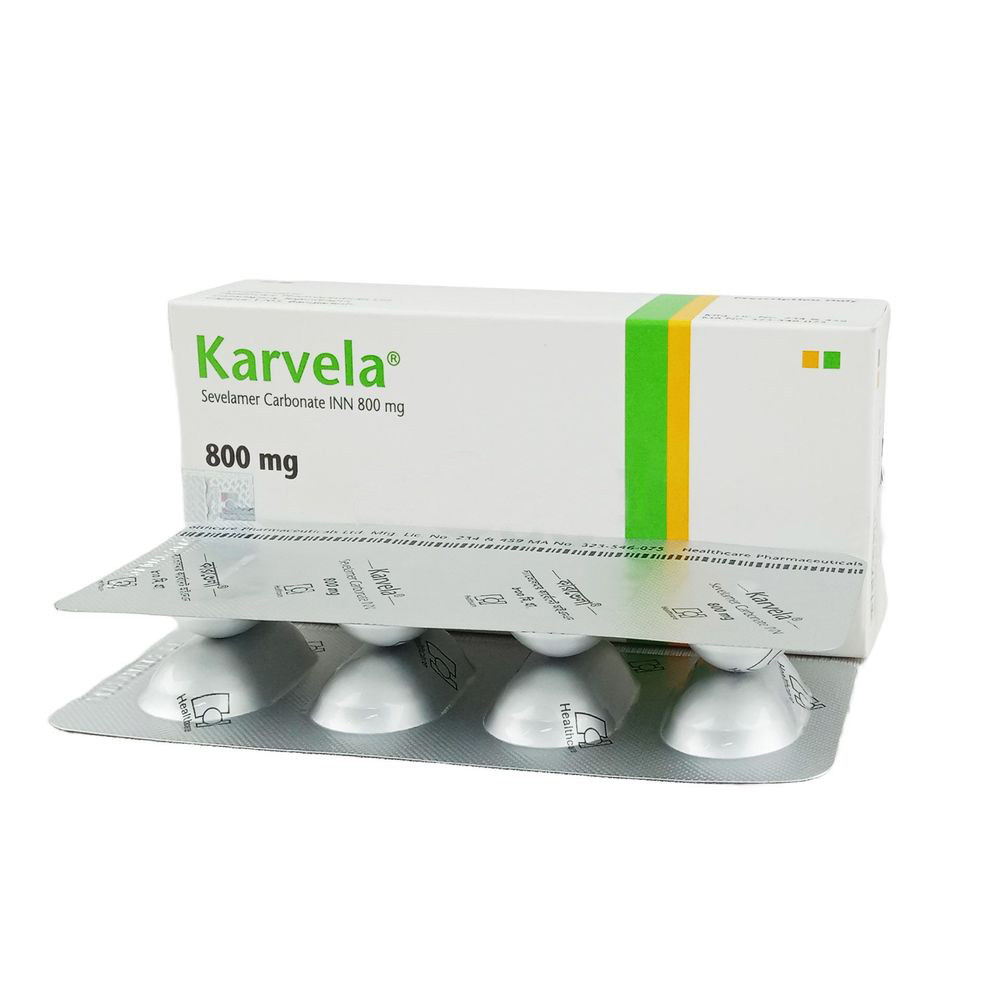
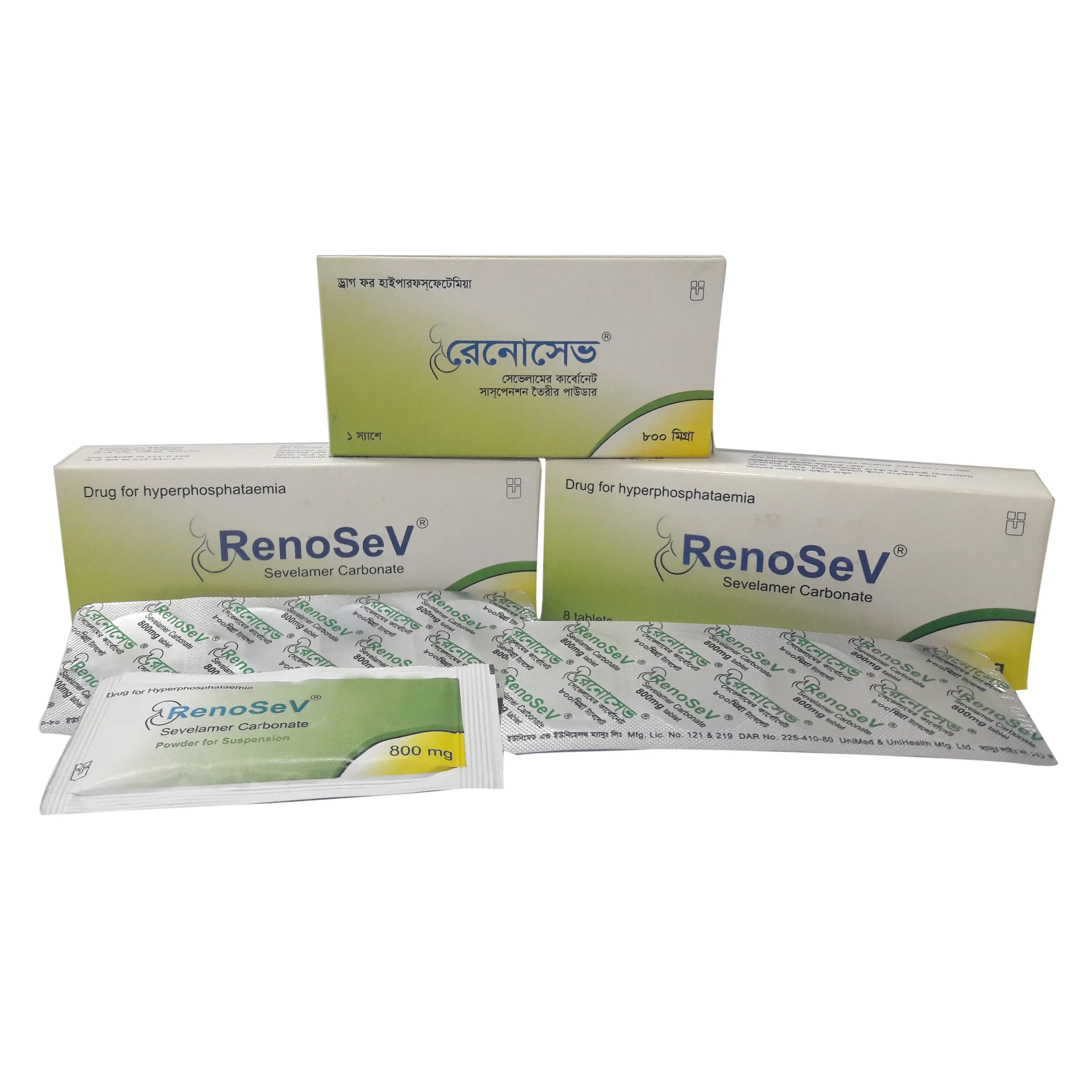
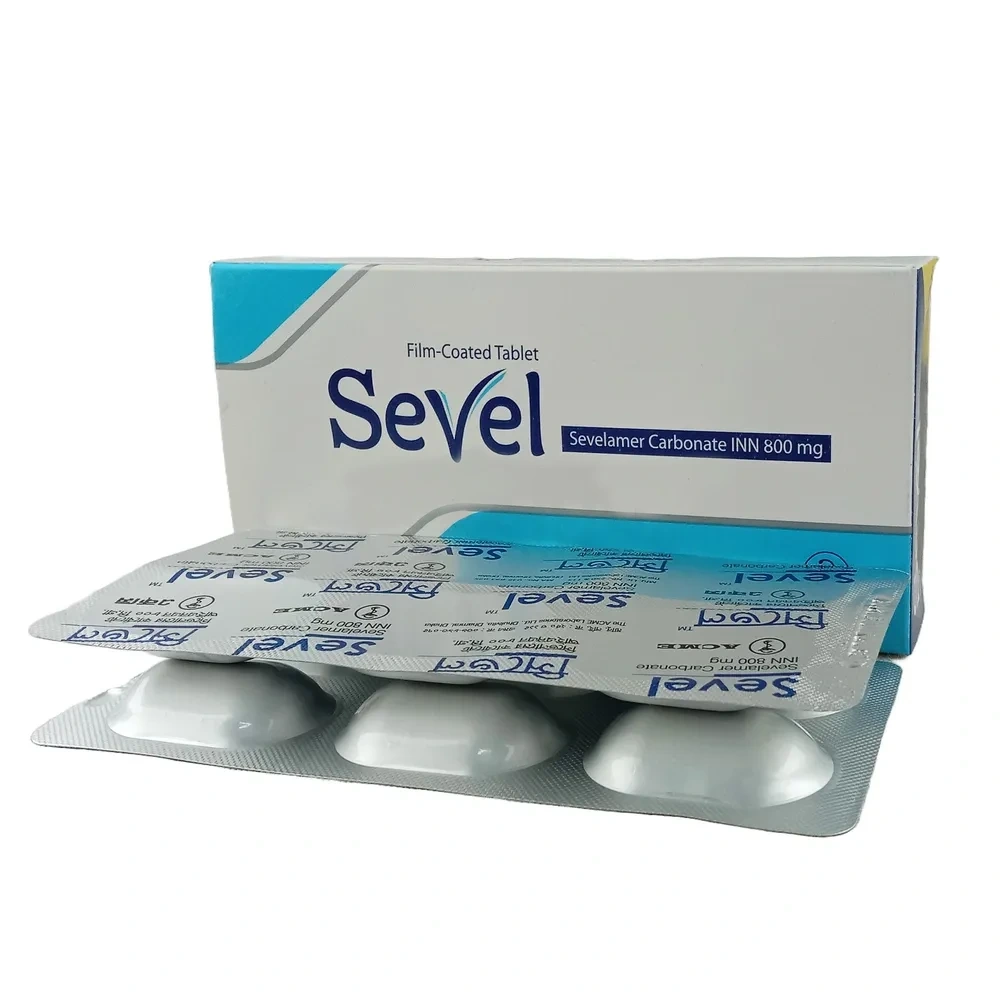
Introduction

Renvela Tablet 800 mg is a non-absorbed phosphate binder used to control hyperphosphatemia (high phosphate levels) in patients with chronic kidney disease (CKD), particularly those on dialysis. It helps prevent complications such as bone disease and cardiovascular issues caused by high phosphate levels.

Uses

Renvela Tablet 800 mg is used to treat hyperphosphatemia in patients with end-stage renal disease (ESRD) who are on dialysis. It is also indicated in non-dialysis patients with CKD who have elevated phosphate levels that cannot be managed through dietary restriction alone.

Brand Name Renvela
Type Tablet
Weight 800 mg
Generic Sevelamer Carbonate
Manufacturer Sanofi Bangladesh Ltd. (Mfg. by: Genzyme Corporation)
Available in English বাংলা

Mechanism of Action

Renvela Tablet 800 mg works by binding phosphate in the gastrointestinal tract, preventing its absorption into the bloodstream. The bound phosphate is then excreted in the feces, thereby lowering serum phosphate levels. Sevelamer does not contain calcium or metal ions, which reduces the risk of hypercalcemia compared to other phosphate binders.

How Long Does It Take to Work?

The effects of Renvela Tablet 800 mg on serum phosphate levels can be seen within 1-2 weeks of starting therapy. However, the full therapeutic effect may take longer, depending on individual patient response and dosage adjustments.

Absorption

Renvela Tablet 800 mg is not systemically absorbed. Its action is limited to the gastrointestinal tract, where it binds to dietary phosphate, preventing absorption into the bloodstream.

Route of Elimination

Renvela Tablet 800 mg and the phosphate it binds are excreted via the feces. Since the drug is not absorbed, it does not undergo metabolism or renal excretion.

Dosage

Starting dose: The recommended starting dose of Sevelamer Carbonate is 2.4 g (Three Sevelamer 800 mg tablets or Three Sevelamer 800 mg sachets of powder for oral suspension) or 4.8 g (Six Sevelamer 800 mg tablets or Six Sevelamer 800 mg sachets of powder for oral suspension) per day based on clinical needs and serum phosphorus level. Sevelamer Carbonate tablet or suspension must be taken three times per day with meals.

For patients previously on phosphate binders (Sevelamer Hydrochloride or calcium based), Sevelamer Carbonate should be given on a gram for gram basis with monitoring of serum phosphorus levels to ensure optimal daily doses.

Titration and Maintenance: Serum phosphorus levels must be monitored and the dose of Sevelamer Carbonate titrated every 2-4 weeks until an acceptable serum phosphorus level is reached, with regular monitoring thereafter. Patients taking Sevelamer Carbonate should adhere to their prescribed diets. In clinical practice, treatment will be continuous based on the need to control serum phosphorus levels and the daily dose is expected to be an average of approximately 6 g per day.

Paediatric population: The safety and efficacy of Sevelamer Carbonate has not been established in children below the age of 18 years. Sevelamer Carbonate is not recommended in children below the age of 18 years.
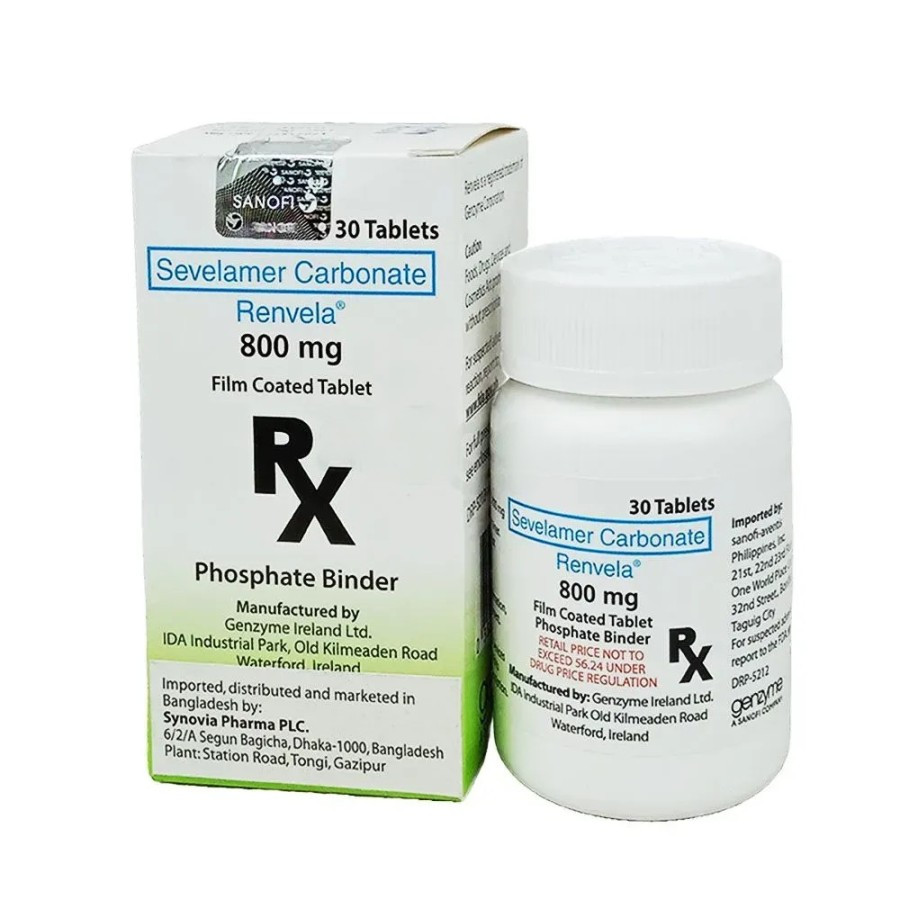
The starting dose of Renvela Tablet 800 mg depends on the serum phosphate level. Typical dosing is:

  • For serum phosphate levels ≥ 5.5 and < 7.5 mg/dL: 800 mg three times daily with meals.
  • For serum phosphate levels ≥ 7.5 mg/dL: 1600 mg three times daily with meals.

Doses should be adjusted based on serum phosphate levels, with a target range of 3.5-5.5 mg/dL. The maximum recommended dose is 14 g/day.

Administration

Renvela Tablet 800 mg should be taken with meals to maximize its phosphate-binding capacity. The tablets should be swallowed whole with water, and the powder formulation should be mixed with water before administration. Patients should follow their prescribed dosage and timing to ensure efficacy.

Side Effects

Common side effects of Renvela Tablet 800 mg include:

  • Gastrointestinal upset (e.g., nausea, vomiting, diarrhea, constipation, abdominal pain)
  • Indigestion
  • Bloating

More severe but less common side effects include bowel obstruction, perforation, or ileus, which may require medical attention.

Toxicity

There is minimal systemic toxicity associated with Renvela Tablet 800 mg due to its non-absorption. However, excessive dosing could lead to overbinding of dietary phosphate, potentially causing hypophosphatemia (low phosphate levels) and associated symptoms such as muscle weakness, respiratory failure, and neurological issues.

Precautions

Renvela Tablet 800 mg should be used with caution in patients with swallowing disorders, severe gastrointestinal motility disorders, or a history of gastrointestinal surgery. Careful monitoring is required to prevent hypophosphatemia. Additionally, patients on long-term therapy should be monitored for vitamin deficiencies, particularly fat-soluble vitamins (A, D, E, K).

Interaction

Renvela Tablet 800 mg may interfere with the absorption of certain medications, particularly those that require an acidic environment for absorption (e.g., levothyroxine, ciprofloxacin, and anti-seizure medications). These medications should be taken at least 1-3 hours before or after Renvela Tablet 800 mg to avoid reduced efficacy.

Disease Interaction

Patients with chronic gastrointestinal disorders, such as motility disorders or active gastrointestinal disease, may experience worsened symptoms while taking Renvela Tablet 800 mg. It should also be used cautiously in patients at risk for bowel obstruction.

Drug Interaction

Renvela Tablet 800 mg may reduce the absorption of medications like ciprofloxacin, mycophenolate mofetil, and anti-seizure medications such as phenytoin. Close monitoring and dose adjustments of these medications may be necessary when co-administered with Renvela Tablet 800 mg.

Food Interactions

Renvela Tablet 800 mg should be taken with meals, as this maximizes its ability to bind phosphate in the gastrointestinal tract. It is not known to have specific interactions with any particular food types, but patients should maintain a balanced diet as recommended by their healthcare provider.

Pregnancy Use

Renvela Tablet 800 mg is categorized as Pregnancy Category C, meaning risk cannot be ruled out. There is limited data on its use in pregnancy, so it should only be used if the potential benefits outweigh the risks. Animal studies have not shown any teratogenic effects, but human data is lacking.

Lactation Use

It is not known whether Renvela Tablet 800 mg is excreted in human milk, as the drug is not systemically absorbed. However, due to its lack of absorption, it is unlikely to pose a risk to the breastfeeding infant.

Acute Overdose

Due to the non-absorbed nature of Renvela Tablet 800 mg, acute overdose is unlikely to cause systemic toxicity. However, an excessive dose could lead to gastrointestinal side effects such as severe constipation, bowel obstruction, or hypophosphatemia. Treatment for overdose involves symptomatic and supportive care.

Contraindication

Renvela Tablet 800 mg is contraindicated in patients with bowel obstruction or hypersensitivity to the drug or its components. It should also be avoided in patients with a high risk of gastrointestinal complications.

Use Direction

Renvela Tablet 800 mg should be taken exactly as prescribed by a healthcare provider, typically with meals. Patients should avoid crushing or chewing the tablets, and should ensure that the powder formulation is mixed thoroughly with water before consumption.

Storage Conditions

Store Renvela Tablet 800 mg at room temperature, away from moisture and heat. Keep the medication in its original container, tightly closed, and out of reach of children.

Volume of Distribution

Renvela Tablet 800 mg is not absorbed and therefore does not have a true volume of distribution in the body. Its activity is confined to the gastrointestinal tract.

Half-Life

As Renvela Tablet 800 mg is not absorbed into the bloodstream, it does not have a systemic half-life. It remains in the gastrointestinal tract and is excreted in the feces along with bound phosphate.

Clearance

Renvela Tablet 800 mg is not systemically cleared through the liver or kidneys, as it remains in the gastrointestinal tract. It is excreted unchanged in the feces, along with the phosphate it has bound.

See in details version Renvela Tablet 800 mg also Renvela Tablet 800 mg in bangla

Social card

Uses

Some Frequently Asked Questions About Renvela Tablet 800 mg

*** Taking medicines without doctor's advice can cause long-term problems.
Prof. Dr. Md. Ruhul Amin

Prof. Dr. Md. Ruhul Amin

Child Diseases & Child Pulmonology Specialist

Call Doctor
Dr. Debashis Chakraborty

Dr. Debashis Chakraborty

Neonatal & Pediatric Diseases Specialist Surgeon

Call Doctor
Dr. Kazi Atiqur Rahman

Dr. Kazi Atiqur Rahman

Cardiology (Heart Diseases, Hypertension & Rheumatic Fever) Specialist

Call Doctor
Related Medicines