Introduction
The chemical compound calcium acetate is the calcium salt of acetic acid. It has been commonly referred to as the acetate of lime. The anhydrous form is very hygroscopic, therefore the monohydrate is the common form.
Uses
Calcium acetate is a phosphate binder used in patients with end-stage renal disease (ESRD) to prevent elevated phosphate levels and resulting ectopic calcification and secondary hyperparathyroidism.
Calcium acetate is one of a number of calcium salts used to treat hyperphosphatemia (too much phosphate in the blood) in patients with kidney disease.
Associated Conditions
Pharmacodynamics
Patients with advanced renal insufficiency (creatinine clearance less than 30 ml/min) exhibit phosphate retention and some degree of hyperphosphatemia. The retention of phosphate plays a pivotal role in causing secondary hyperparathyroidism associated with osteodystrophy, and soft-tissue calcification. The mechanism by which phosphate retention leads to hyperparathyroidism is not clearly delineated. Therapeutic efforts directed toward the control of hyperphosphatemia include reduction in the dietary intake of phosphate, inhibition of absorption of phosphate in the intestine with phosphate binders, and removal of phosphate from the body by more efficient methods of dialysis. The rate of removal of phosphate by dietary manipulation or by dialysis is insufficient. Dialysis patients absorb 40% to 80% of dietary phosphorus. Therefore, the fraction of dietary phosphate absorbed from the diet needs to be reduced by using phosphate binders in most renal failure patients on maintenance dialysis. Calcium acetate when taken with meals combines with dietary phosphate to form insoluble calcium phosphate which is excreted in the feces. Maintenance of serum phosphorus below 6.0 mg/dl is generally considered as a clinically acceptable outcome of treatment with phosphate binders. Calcium acetate is highly soluble at neutral pH, making the calcium readily available for binding to phosphate in the proximal small intestine.
Mechanism of Action
Calcium acetate and other calcium salts are phosphate binders. They work by binding with the phosphate in the food you eat, so that it is eliminated from the body without being absorbed.
Absorption
40% is absorbed in the fasting state and approximately 30% is absorbed in the nonfasting state following oral administration.
Route of Elimination
Calcium acetate when taken with meals, combines with dietary phosphate to form insoluble calcium phosphate which is excreted in the feces.
Toxicity
Oral, rat: LD50 = 4280 mg/kg. Symptoms of overdose include mild hypercalcemia (constipation; loss of appetite; nausea and vomiting), and severe hypercalcemia (confusion; full or partial loss of consciousness; incoherent speech).
Food Interactions
- Take with food. When taken with food, calcium acetate forms an insoluble complex with the phosphorus from food, reducing phosphorus serum concentrations.
Dosage
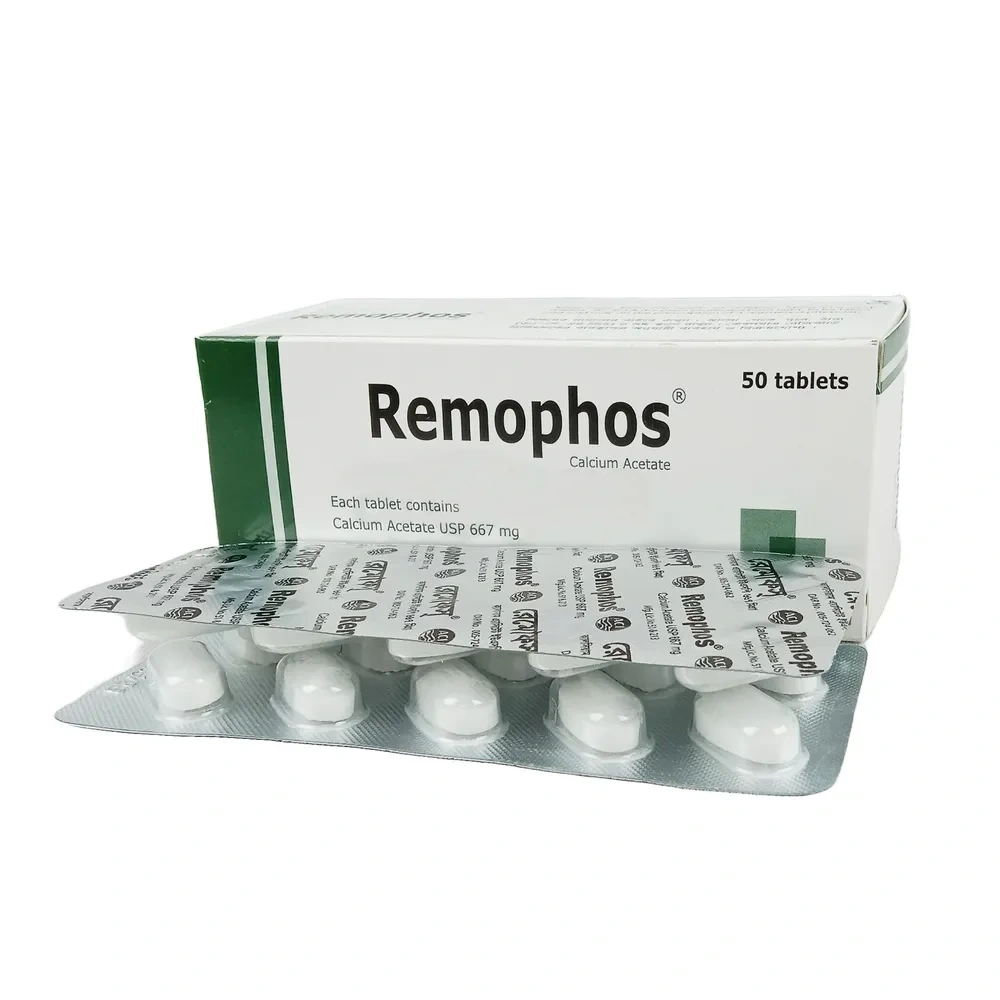
Pediatric Use: The safety and efficacy of Remophos Tablet 667 mg have not been established.
Geriatric Use: In clinical studies, no overall differences in safety or effectiveness were observed between the geriatric and younger subjects, and other reported clinical experience has not identified differences in responses between the elderly and younger patients, but greater sensitivity of some older individuals cannot be ruled out.