Introduction
Calcium acetate is a calcium salt of acetic acid used primarily as a phosphate binder in patients with chronic kidney disease (CKD) to manage hyperphosphatemia. It helps to lower phosphate levels in the blood by binding dietary phosphate in the gastrointestinal tract.
Uses
Calcium acetate is used for:
- Managing hyperphosphatemia in patients with chronic kidney disease who are on dialysis.
- As a supplement to increase calcium levels in patients with calcium deficiencies.
- In some cases, for treating certain types of kidney stones, though its primary use is as a phosphate binder.
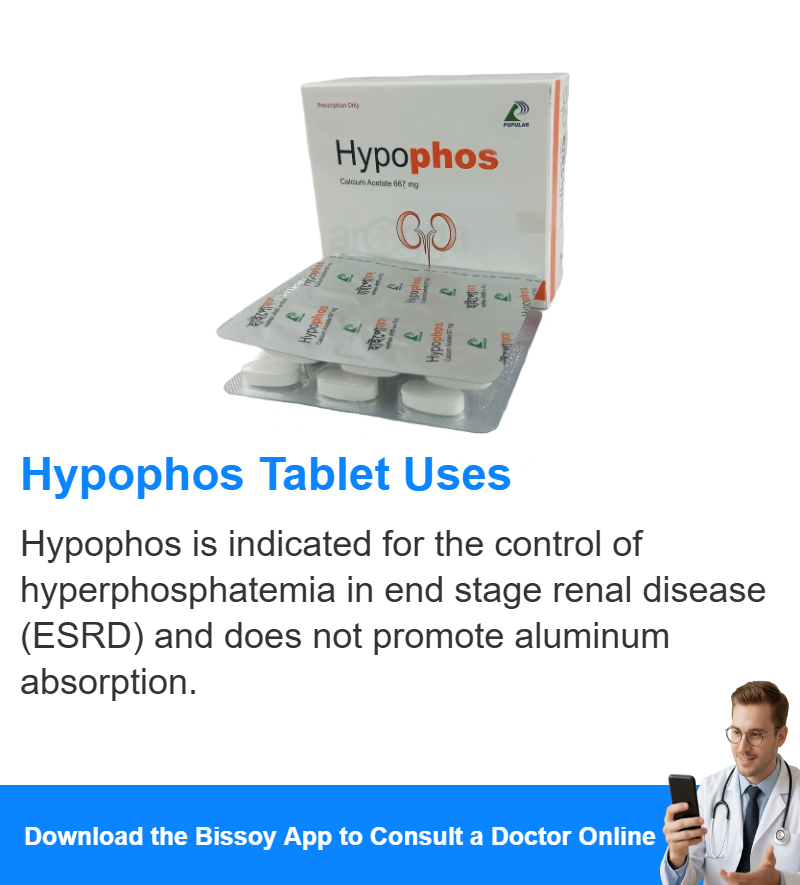
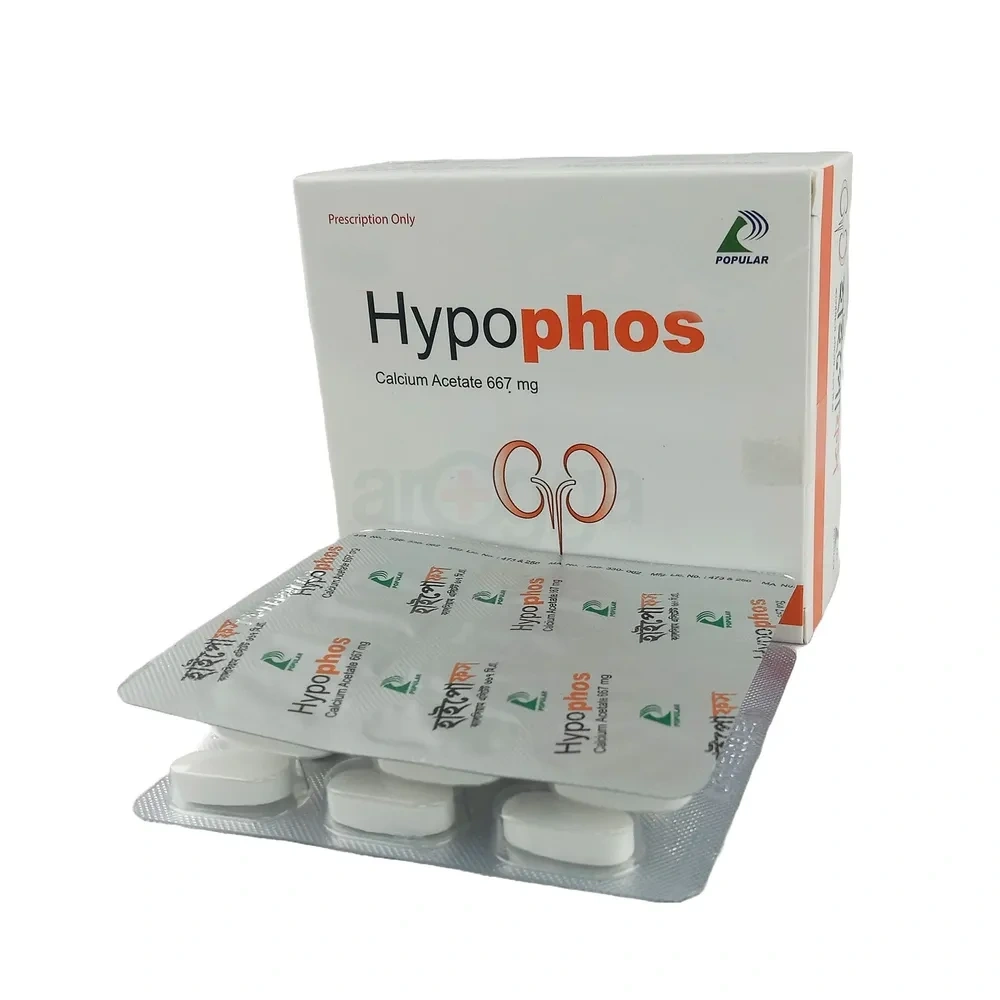
| Brand Name | Hypophos |
|---|---|
| Type | Tablet |
| Weight | 667 mg |
| Generic | Calcium Acetate |
| Manufacturer | Popular Pharmaceuticals Ltd. |
| Available in | English বাংলা |
Mechanism of Action
Calcium acetate acts as a phosphate binder. It binds to dietary phosphate in the gastrointestinal tract to form insoluble calcium phosphate, which is then excreted in the feces. This reduces the absorption of phosphate and helps lower serum phosphate levels.
How Long Does It Take to Work?
The effects of calcium acetate in reducing serum phosphate levels may become noticeable within a few days to weeks of consistent use. The exact time frame can vary depending on the individual's response and dietary phosphate intake.
Absorption
Calcium acetate is absorbed in the gastrointestinal tract, but its primary effect is due to its binding action rather than systemic absorption. The calcium that is absorbed contributes to maintaining calcium levels in the body.
Route of Elimination
The calcium-phosphate complex formed by calcium acetate is eliminated primarily through the feces. Only a small amount of calcium is excreted via the urine, and phosphate is also excreted in the urine after absorption and metabolism.
Dosage
The recommended initial dose of Calcium Acetate for the adult dialysis patient is 2 tablets with each meal. The dosage may be increased gradually to bring the serum phosphate level below 6 mg/dl, as long as hypercalcemia does not develop. Most patients require 3-4 tablets with each meal.Pediatric Use: The safety and efficacy of Calcium Acetate have not been established.
Geriatric Use: In clinical studies, no overall differences in safety or effectiveness were observed between the geriatric and younger subjects, and other reported clinical experience has not identified differences in responses between the elderly and younger patients, but greater sensitivity of some older individuals cannot be ruled out.
The dosage of calcium acetate typically depends on the patient's needs and phosphate levels. Common dosages include:
- For hyperphosphatemia: 1 to 2 grams of calcium acetate with meals, usually taken 3 times daily. The dosage may be adjusted based on serum phosphate levels and patient response.
- As a calcium supplement: The dosage will vary depending on the individual's calcium needs and should be determined by a healthcare provider.
Dosage adjustments may be necessary based on laboratory results and clinical response.
Administration
- Calcium acetate is usually administered orally in the form of tablets or capsules.
- It should be taken with meals to maximize phosphate binding and effectiveness.
- Follow the prescribed dosage and schedule as directed by a healthcare provider.
Side Effects
Common side effects may include:
- Gastrointestinal issues such as constipation, nausea, or abdominal discomfort.
- Hypercalcemia if used in excess or with other calcium supplements.
Severe side effects are rare but may include symptoms of hypercalcemia such as confusion, lethargy, or irregular heartbeat. Seek medical attention if severe symptoms occur.
Toxicity
Toxicity from calcium acetate is usually due to excessive calcium levels. Symptoms of toxicity include hypercalcemia, which can cause nausea, vomiting, constipation, confusion, and, in severe cases, cardiac arrhythmias. Monitor calcium levels regularly to prevent toxicity.
Precautions
- Monitor calcium and phosphate levels regularly to avoid imbalances and potential side effects.
- Use with caution in individuals with a history of kidney stones or other conditions that may be affected by calcium intake.
- Adjust dosage based on serum phosphate and calcium levels, as advised by a healthcare provider.
Interaction
- Calcium acetate can interact with other medications, including certain antibiotics and medications that affect calcium metabolism.
- Consult with a healthcare provider about potential interactions with other medications or supplements.
Disease Interaction
- Patients with hyperparathyroidism or other conditions affecting calcium metabolism should use calcium acetate with caution.
- Monitor and adjust dosage in individuals with a history of kidney stones or renal impairment.
Drug Interaction
- Calcium acetate may interact with certain drugs, such as tetracycline antibiotics, reducing their absorption and effectiveness.
- It may also affect the absorption of other minerals and vitamins. Separate administration times from other medications if recommended.
Food Interactions
Calcium acetate should be taken with meals to enhance its effectiveness in binding dietary phosphate. There are no significant food interactions, but it is advisable to maintain a balanced diet and avoid excessive intake of phosphate-rich foods.
Pregnancy Use
Calcium acetate is generally considered safe during pregnancy when used as directed. It is important to avoid excessive calcium intake, which could potentially lead to complications. Consult a healthcare provider before use during pregnancy.
Lactation Use
Calcium acetate is considered safe for use during lactation. Calcium levels in breast milk are generally well-regulated, and normal calcium intake through supplements like calcium acetate is unlikely to affect the breastfeeding infant.
Acute Overdose
In case of acute overdose, symptoms may include severe hypercalcemia. Immediate medical attention is required to manage symptoms and prevent complications. Treatment may involve discontinuation of calcium acetate, hydration, and medications to lower calcium levels.
Contraindication
- Contraindicated in patients with hypercalcemia or severe renal impairment where calcium and phosphate balance cannot be effectively managed.
- Should not be used in individuals with known hypersensitivity to calcium acetate or any components of the formulation.
Use Direction
- Follow the prescribed dosage and administration instructions provided by a healthcare provider.
- Do not exceed the recommended dose and avoid concurrent use of other calcium supplements without medical advice.
Storage Conditions
- Store calcium acetate at room temperature, away from moisture and heat.
- Keep in a tightly closed container and out of reach of children.
Volume of Distribution
The volume of distribution for calcium acetate is not well-defined as it primarily acts locally within the gastrointestinal tract. Systemic absorption is minimal, and its primary action is related to its role in binding dietary phosphate.
Half Life
The half-life of calcium acetate in the body is not well-defined due to its local action and minimal systemic absorption. The effects of calcium acetate in binding phosphate are related to its duration of action in the gastrointestinal tract rather than its half-life.
Clearance
Calcium acetate is cleared primarily through the gastrointestinal tract as part of the calcium-phosphate complex. Only a small amount of calcium is excreted via the kidneys. Regular monitoring of calcium and phosphate levels is necessary to ensure proper management and avoid imbalances.
See in details version Hypophos Tablet 667 mg also Hypophos Tablet 667 mg in bangla
Social card