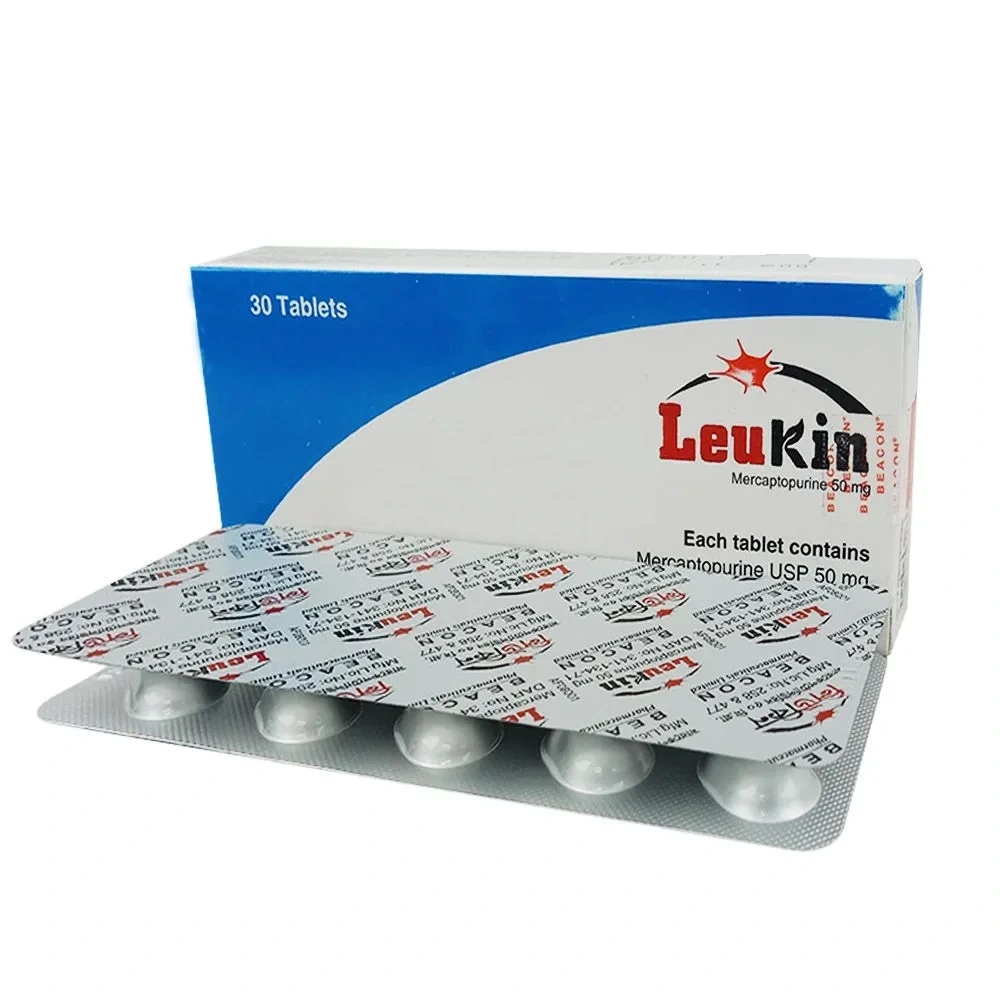
Introduction

Purinethol Tablet 50 mg is an immunosuppressive and cytotoxic medication used primarily in the treatment of certain types of leukemia, particularly acute lymphoblastic leukemia (ALL). It is also used to manage inflammatory bowel diseases, such as Crohn’s disease and ulcerative colitis, though less frequently. As an antimetabolite, it inhibits purine synthesis, which is essential for DNA replication, thereby affecting rapidly dividing cells.

Uses

Purinethol Tablet 50 mg is used for:

  • Treatment of acute lymphoblastic leukemia (ALL)
  • Maintenance therapy for leukemia
  • Management of Crohn’s disease and ulcerative colitis

Brand Name Purinethol
Type Tablet
Weight 50 mg
Generic Mercaptopurine
Manufacturer GlaxoSmithKline
Available in English বাংলা

Mechanism of Action

Purinethol Tablet 50 mg works by inhibiting purine synthesis, which is vital for DNA and RNA replication. It is converted into thioinosine monophosphate (TIMP) and incorporated into DNA and RNA, causing cell death in rapidly dividing cells, such as leukemic cells. It also suppresses the immune system by inhibiting T and B cell proliferation.

How Long Does It Take to Work?

Purinethol Tablet 50 mg may take several weeks to show therapeutic effects, especially in conditions like leukemia. In inflammatory bowel diseases, it can take 3 to 6 months for clinical benefits to become apparent.

Absorption

Purinethol Tablet 50 mg is variably absorbed from the gastrointestinal tract after oral administration. Its bioavailability ranges from 5% to 37%, due to first-pass metabolism in the liver.

Route of Elimination

Purinethol Tablet 50 mg is metabolized extensively in the liver and eliminated primarily via the kidneys. It is excreted in the urine, mostly as metabolites, including inactive forms like thiouric acid.

Dosage

Crohn's disease:
  • Adult: Initially 1-1.5 mg/kg daily, may increase to 125 mg daily.
  • Child: Initially 1-1.5 mg/kg daily increased to a max of 75 mg daily
Acute lymphocytic leukemia:
  • Adult: Usual maintenance dose: Initially, 1.5-2.5 mg/kg daily as a single dose, usually used in combination with methotrexate. Dose may vary individually based on response and tolerance. Monitor blood counts at least once wkly. Withdraw treatment immedietely if there is a sharp drop in the white cell count or severe bone-marrow depression. May resume treatment slowly and carefully if white cell count remains constant for 2-3 days or rises. Reduce dose when used with allopurinol.

  • Child: Usual maintenance dose: Initially, 1.5-2.5 mg/kg daily as a single dose, usually used in combination with methotrexate. Dose may vary individually based on response and tolerance. Monitor blood counts at least once wkly. Withdraw treatment immedietely if there is a sharp drop in the white cell count or severe bone-marrow depression. May resume treatment slowly and carefully if white cell count remains constant for 2-3 days or rises. Reduce dose when used with allopurinol.


The typical dose for acute lymphoblastic leukemia (ALL) maintenance therapy in children and adults is 1.5 to 2.5 mg/kg/day, taken orally once daily. For inflammatory bowel diseases, doses range from 1 to 1.5 mg/kg/day, but may be adjusted based on patient response and tolerance. Regular monitoring of blood counts and liver function is essential.

Administration

Purinethol Tablet 50 mg is administered orally, usually as a single daily dose. It is recommended to take the medication on an empty stomach, as food may affect its absorption. Dosing adjustments are often required based on therapeutic response and side effects.

Side Effects

Common side effects of mercaptopurine include:

  • Nausea
  • Vomiting
  • Loss of appetite
  • Fatigue
  • Diarrhea
  • Bone marrow suppression (leading to anemia, neutropenia, and thrombocytopenia)
Serious side effects include:
  • Liver toxicity (elevated liver enzymes, jaundice)
  • Pancreatitis
  • Increased risk of infection due to immunosuppression

Toxicity

Purinethol Tablet 50 mg can cause significant myelosuppression, leading to severe neutropenia and thrombocytopenia. Liver toxicity is also a concern, with some patients developing hepatotoxicity. Overdose can lead to severe bone marrow suppression and liver damage. Regular monitoring of blood counts and liver function is essential to avoid toxic effects.

Precautions

Precautions when using mercaptopurine include:

  • Regular blood count monitoring to detect bone marrow suppression
  • Liver function tests to monitor hepatotoxicity
  • Increased risk of infections due to immunosuppressive effects
  • Avoid live vaccines while on mercaptopurine
  • Use cautiously in patients with a history of liver disease

Interaction

Purinethol Tablet 50 mg interacts with:

  • Allopurinol and febuxostat, increasing the risk of toxicity (dose adjustment required)
  • Aminosalicylates (e.g., sulfasalazine, mesalamine), which can potentiate the immunosuppressive effects
  • Warfarin, which may have altered effects in patients taking mercaptopurine

Disease Interaction

Purinethol Tablet 50 mg should be used with caution in patients with:

  • Liver disease or hepatic impairment
  • Bone marrow depression
  • Infections or risk of infection due to immunosuppression
  • Genetic conditions affecting thiopurine metabolism (e.g., TPMT deficiency)

Drug Interaction

Purinethol Tablet 50 mg can interact with:

  • Allopurinol: Inhibits metabolism of mercaptopurine, increasing toxicity (reduce mercaptopurine dose if co-administered)
  • Aminosalicylates (e.g., mesalamine): May increase bone marrow suppression
  • Warfarin: May alter the effects of anticoagulation

Food Interactions

Food, particularly dairy products, can interfere with the absorption of mercaptopurine. It is recommended to take the drug on an empty stomach for optimal absorption. Alcohol should be avoided as it can increase the risk of liver toxicity.

Pregnancy Use

Purinethol Tablet 50 mg is classified as a Pregnancy Category D drug. It can cause fetal harm, including congenital malformations, especially if taken during the first trimester. Use of mercaptopurine in pregnancy should be limited to situations where the benefits outweigh the risks. Effective contraception is recommended during treatment.

Lactation Use

It is not known if mercaptopurine is excreted in breast milk. However, due to the potential for serious adverse effects in nursing infants, breastfeeding is generally not recommended during treatment with mercaptopurine.

Acute Overdose

Symptoms of mercaptopurine overdose include severe bone marrow suppression (leading to anemia, neutropenia, and thrombocytopenia), gastrointestinal symptoms (nausea, vomiting), and liver toxicity. Treatment includes supportive care, such as blood transfusions, and monitoring of liver function.

Contraindication

Purinethol Tablet 50 mg is contraindicated in patients with:

  • Hypersensitivity to mercaptopurine or any component of the formulation
  • Severe liver disease
  • Severe bone marrow depression

Use Direction

Purinethol Tablet 50 mg should be taken exactly as prescribed by the healthcare provider. It is typically taken once daily on an empty stomach. Blood tests will be needed frequently to monitor for adverse effects and adjust the dosage if necessary.

Storage Conditions

Store mercaptopurine at room temperature, away from moisture and heat. Keep it in a tightly closed container and out of reach of children. Do not freeze the medication.

Volume of Distribution

The volume of distribution of mercaptopurine is approximately 0.9 L/kg, indicating its relatively wide distribution throughout the body tissues, including leukemic cells.

Half Life

The half-life of mercaptopurine is approximately 1 to 3 hours, depending on individual metabolic variations, including the presence of thiopurine methyltransferase (TPMT) enzyme activity.

Clearance

Purinethol Tablet 50 mg is cleared through hepatic metabolism, with subsequent renal excretion of its metabolites. The clearance rate is influenced by genetic factors, including TPMT activity, which can affect both efficacy and toxicity.

See in details version Purinethol Tablet 50 mg also Purinethol Tablet 50 mg in bangla

Some Frequently Asked Questions About Purinethol Tablet 50 mg

*** Taking medicines without doctor's advice can cause long-term problems.
Prof. Dr. Shakeel Akhter

Prof. Dr. Shakeel Akhter

Orthopedic & Trauma Surgeon

Call Doctor
Prof. Dr. Faruque Ahmed

Prof. Dr. Faruque Ahmed

Gastroenterology, Liver Diseases & Pancreatic Medicine Specialist

Call Doctor
Dr. Md. Nazmul Haque

Dr. Md. Nazmul Haque

Liver Diseases, Medicine & Interventional Endoscopy Specialist

Call Doctor
Related Medicines