Introduction
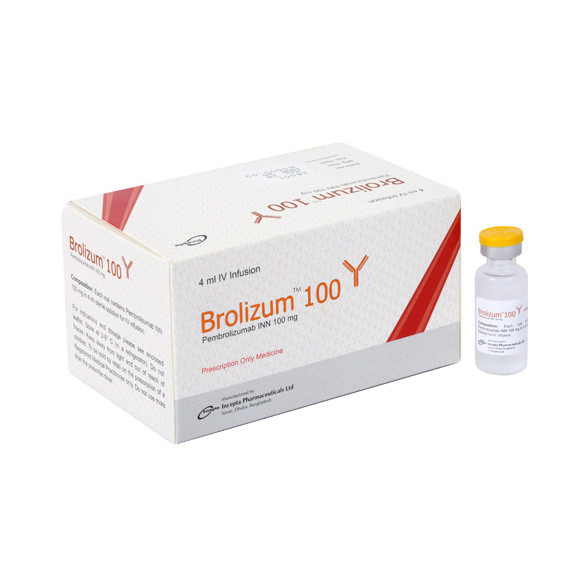
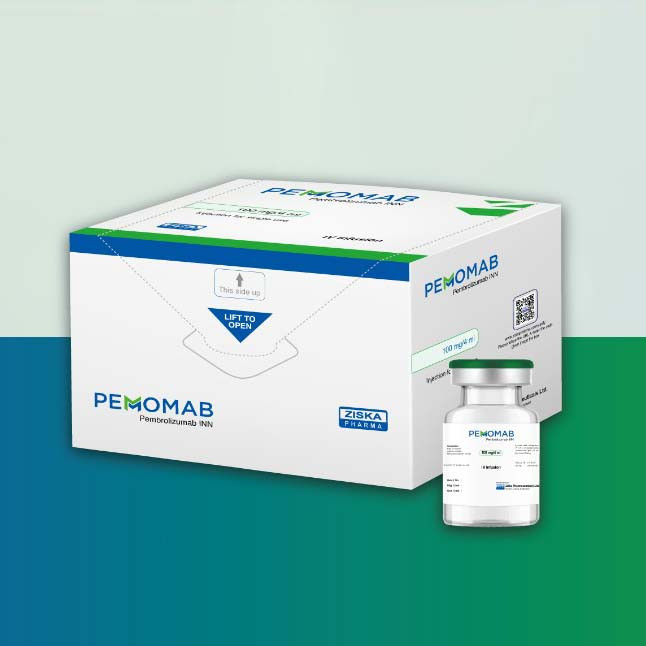
Pemro IV Infusion 100 mg/4 ml is a humanized IgG4 monoclonal antibody that targets the programmed cell death-1 (PD-1) receptor. By blocking the PD-1 pathway, it enhances the body's immune response against cancer cells and is used in the treatment of a wide range of advanced or metastatic malignancies.
Pemro IV Infusion 100 mg/4 ml is indicated for several cancers, including melanoma, non-small cell lung cancer, head and neck squamous cell carcinoma, cervical cancer, urothelial carcinoma, and other PD-L1-positive or microsatellite instability-high (MSI-H) tumors. It has become a cornerstone of modern cancer immunotherapy due to its durable clinical responses in many patients.
Uses
Pemro IV Infusion 100 mg/4 ml is a PD-1 blocking antibody used to treat various types of cancer, including metastatic melanoma, non small-cell lung cancer, cervical cancer, head and neck cancer, and Hodgkin's lymphoma.
Pemro IV Infusion 100 mg/4 ml is indicated for the treatment of:
-Patients with unresectable or metastatic melanoma.
-As a single therapy, pembrolizumab is indicated for first-line treatment of patients with metastatic non-small cell lung cancer whose tumors have high PD-L1 expression [(Tumor Proportion Score (TPS) ≥50%)] as determined by an FDA-approved test, with no EGFR or ALK genomic tumor aberrations.
-As a single therapy, pembrolizumab is indicated for first-line treatment of patients with metastatic non-small cell lung cancer whose tumors express PD-L1 (TPS ≥1%) as determined by an FDA-approved test, with disease progression on or after platinum-containing chemotherapy. Patients with EGFR or ALK genomic tumor aberrations should have disease progression on FDA-approved therapy for these aberrations prior to treatment.
The following indications present the status of accelerated approval based on tumor response rate and durability of the response and thus, the approval of this indications are contingent upon verification and description of clinical benefit in confirmatory trials.
-Patients with recurrent or metastatic cervical cancer with disease progression on or after chemotherapy whose tumors express PD-L1 (CPS > 1) as determined by an FDA-approved test.
-In combination with pemetrexed and carboplatin, is indicated for the first-line treatment of patients with metastatic nonsquamous non-small cell lung cancer.
-Patients with recurrent or metastatic head and neck squamous cell carcinoma with disease progression on or after platinum-containing chemotherapy.
-Treatment of adults and pediatric patients with refractory classical Hodgkin lymphoma or who have relapsed after 3 or more prior lines of therapy.
-Treatment of adult and pediatric patients with refractory primary mediastinal large B-cell lymphoma or who have relapsed after 2 or more prior lines of therapy.
-Treatment of patients with locally advanced or metastatic urothelial carcinoma who are not eligible for cisplatin-containing chemotherapy.
-Patients with locally advanced or metastatic urothelial carcinoma who have disease progression during or following platinum-containing chemotherapy.
-Treatment of adult and pediatric patients with unresectable or metastatic microsatellite instability-high or mismatch repair deficient with solid tumors that have progressed following previous treatment and colorectal cancer that has progressed following treatment with fluoropyrimidine, oxaliplatin, and irinotecan.
-Patients with recurrent locally advanced or metastatic gastric or gastroesophageal junction adenocarcinoma whose tumors express PD-L1 (CPS >1) as determined by an FDA-approved test, with disease progression on or after two or more prior lines of therapy including fluoropyrimidine- and platinum-containing chemotherapy and if appropriate, HER2/neu-targeted therapy.
Associated Conditions
Pharmacodynamics
Pemro IV Infusion 100 mg/4 ml pharmacodynamic reports indicate that there are not effector functions by binding to C1q and CD64 not by cytokine release. On clinical trials, the objective response rate, defined as the proportion of patients with tumor size reduction of a predefined amount for a minimum time period, was assessed based on independent central review and a response duration. These studies performed for different classes of cancer showed a response either partial or complete in a range of 14.3-26% of the individuals. The response duration was estimated to be of 11 months and 45-91% of the patients had a response equal or greater than 6 months.
In other clinical trials, it was reported the progression-free survival, defined as the time during and after the treatment that the patient lives with the disease without worsening. The administration of pembrolizumab improved the progression-free survival when compared to patients assigned to regular chemotherapy. The increase reached 34% of the individuals while chemotherapy reports only 16%.
The results mentioned above have been so clear and consistent that in phase III clinical trials the trial was stopped early to allow patients to switch to the treatment with pembrolizumab.
Mechanism of Action
Pemro IV Infusion 100 mg/4 ml, as an IgG4 subclass antibody, is preferred over other subclasses as it only induces weakly the complement and cell activation due to low affinity to C1q and Fc receptors. It binds with high affinity to the cell surface receptor programmed cell death protein 1 (PD-1) and it antagonizes its interaction with its known ligands PD-L1 and PD-L2. In normal circumstances, the binding of the ligands of PD-1 to the receptor inhibits the TCR-mediated T cell proliferation and cytokine production. This inhibitory signal seems to be essential for self-tolerance, collateral damage minimizing after immune response against a pathogen and maternal tolerance to fetal tissue. Therefore, the binding of pembrolizumab to PD-1 prevents the inhibitory pathway causing a physiological shift to immune reactivity and enhancing tumor immunosurveillance and anti-tumor immune response.
Absorption
When administered intravenously, pembrolizumab is completely bioavailable. When administered in repeated doses every 3 weeks, the systemic accumulation accounts for a 2.2 fold increase. the reported time to reach steady-state is of 18 weeks. The absorption profile of pembrolizumab is proportionally increased with increases in the dosage.
Volume of Distribution
The volume of distribution at steady state of pembrolizumab is 7.5 L which indicated a limited extravascular distribution.
Protein Binding
Pemro IV Infusion 100 mg/4 ml is not expected to bind to plasma proteins in a specific manner.
Half Life
The terminal half-life of pembrolizumab is 26 days.
Clearance
Clearance is increased proportionally with the body weight and the mean clearance is registered to be 0.22 L/day. The renal clearance of pembrolizumab is not clinically modified in a significant manner by the presence of mild to moderate renal impairment.
Toxicity
Pemro IV Infusion 100 mg/4 ml seems to be very well tolerated for a cancer therapy and the rate of discontinuations is reported to be of 14%. The presence of side effects of grade 3-4 is 10-14%. Due to the mechanism of action, the immune response was highly managed with treatment interruption and corticosteroid treatment. even though fertility studies have not been performed, there are no notable effects in reproductive organs in not sexually mature animals.
Food Interactions
No interactions found.
Dosage
- Melanoma: 200 mg every 3 weeks
- NSCLC: 200 mg every 3 weeks
- SCLC: 200 mg every 3 weeks
- HNSCC: 200 mg every 3 weeks
- cHL or PMBCL: 200 mg every 3 weeks for adults; 2 mg/kg (up to 200 mg) every 3 weeks for pediatrics
- Urothelial Carcinoma: 200 mg every 3 weeks
- MSI-H Cancer: 200 mg every 3 weeks for adults and 2 mg/kg (up to 200 mg) every 3 weeks for pediatrics
- Gastric Cancer: 200 mg every 3 weeks
- Esophageal Cancer: 200 mg every 3 weeks
- Cervical Cancer: 200 mg every 3 weeks
- HCC: 200 mg every 3 weeks
- MCC: 200 mg every 3 weeks for adults; 2 mg/kg (up to 200 mg) every 3 weeks for pediatrics
- RCC: 200 mg every 3 weeks with axitinib 5 mg orally twice daily
- Endometrial Carcinoma: 200 mg every 3 weeks with lenvatinib 20 mg orally once daily for tumors that are not MSI-H or dMMR.