Moxifloxacin Hydrochloride is an antibiotic medication used to treat a variety of bacterial infections. It is a fourth-generation fluoroquinolone and has broad-spectrum antibacterial and antiviral activity. It is effective against both gram-positive and gram-negative bacteria, as well as certain anaerobic bacteria. Moxifloxacin is usually prescribed for infections of the skin, upper and lower respiratory tract, and urinary tract.
Moxifloxacin is used to treat bacterial infections of the lungs, sinuses, skin, urinary tract, and other areas of the body. It can also be used to prevent certain types of bacteria from causing infection in people undergoing surgery.
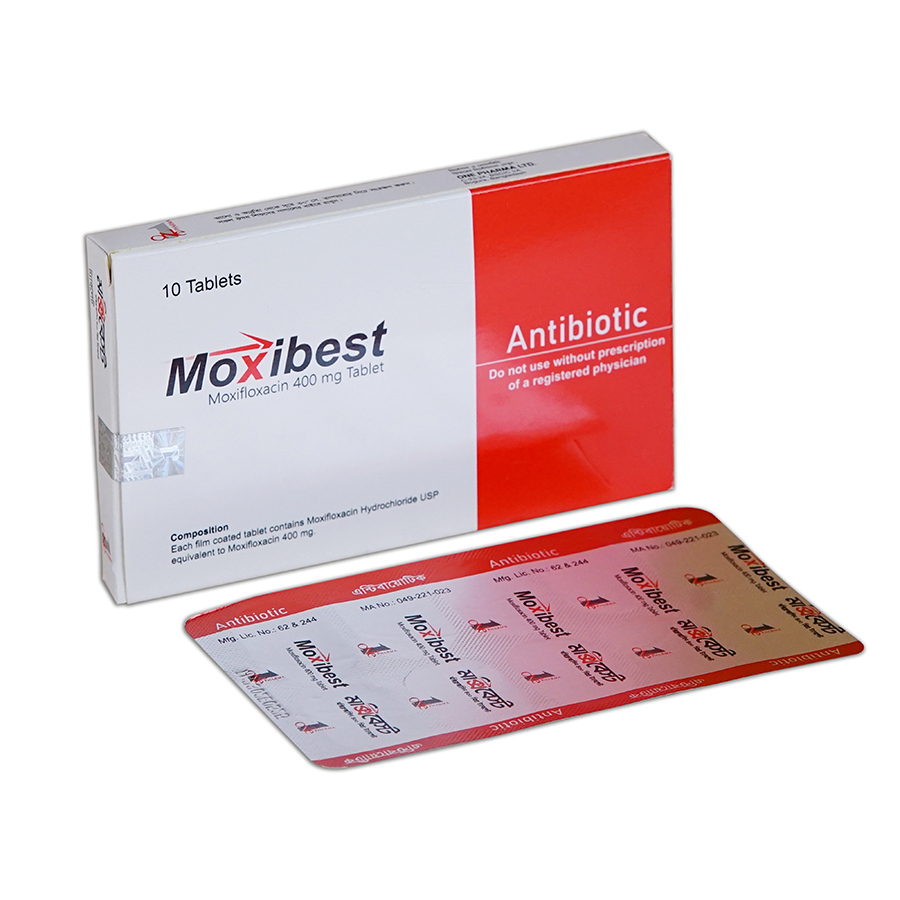
| Brand Name | Moxibest |
|---|---|
| Type | Tablet |
| Weight | 400 mg |
| Generic | Moxifloxacin Hydrochloride (Tablet) |
| Manufacturer | One Pharma Ltd. |
| Available in | English বাংলা |
Moxifloxacin works by inhibiting the enzymes required for bacterial growth and reproduction. It binds to the bacterial DNA gyrase and topoisomerase enzymes and prevents further replication of the bacteria, thereby stopping the spread and growth of the infection.
Moxifloxacin generally starts working within 24 hours of taking the first dose. However, it may take several days for the medication to completely clear the infection. Therefore, it is important to continue taking it until you finish the prescribed course, even if you begin to feel better.
Moxifloxacin is rapidly and almost completely absorbed from the gastrointestinal tract. The bioavailability of the drug is nearly 100%. Peak plasma concentrations are achieved 2 to 4 hours after administration.
Moxifloxacin is eliminated mainly via the kidneys. About 50-60% of the drug is excreted unchanged in the urine within 24 hours.
Moxifloxacin is available in tablet form and must be taken with food. Tablets should be swallowed whole and not crushed, chewed or split. The usual adult doses range from 400-800mg per day for most infections, divided as one 400mg dose taken twice a day. The duration of treatment depends on the infection being treated but may be up to 14 days.
Moxifloxacin is usually taken by mouth, with or without food, as directed by a healthcare provider. The tablets should not be crushed, chewed or split. If a dose is missed, it should be taken as soon as possible, unless it is almost time for the next dose. In such cases, it should be skipped and the next dose taken at the usual time.
The most common side effects of moxifloxacin are nausea, dizziness, insomnia, headache, and diarrhea. Less common side effects include skin rash, flushing, abdominal pain, and indigestion. Contact a healthcare provider immediately if any symptoms of an allergic reaction are experienced such as swelling of the face, lips, tongue, or throat; difficulty breathing; itching; rash; or hives.
Moxifloxacin is generally well-tolerated when taken as directed. However, overdoses may result in serious toxicity, ranging from mild to fatal effects. Signs and symptoms of an overdose include vomiting, nausea, chills, fever, mental confusion, and seizures.
Moxifloxacin should be used with caution in those with known or suspected renal impairment, and in those taking other medications that may prolong the QT interval. Other precautions include avoiding alcohol and certain other foods while taking moxifloxacin. Patients should also be advised to report signs and symptoms of an allergic reaction or other serious side effects.
Moxifloxacin should not be taken with certain antibiotics, antifungals, anti-seizure medications, or other medications that may prolong the QT interval. It can also interact with certain antidepressants, MAOIs, and certain anticoagulants. Always discuss any other medications you are taking with your healthcare provider prior to starting moxifloxacin.
Moxifloxacin may interact with or cause complications in patients with certain medical conditions such as a history of tendonitis, liver or kidney disease, joint problems, diabetes, and epilepsy. Patients with a history of irregular heartbeat should also discuss this with their healthcare provider before starting the medication.
Moxifloxacin may interact with certain medications, such as antibiotics, antifungals, anti-seizure medications, ED drugs, antidepressants, MAOIs, and certain anticoagulants. Always discuss any medications you are currently taking with your healthcare provider prior to starting moxifloxacin.
Moxifloxacin should be taken with food. Certain foods can interact with moxifloxacin and should be avoided, such as alcoholic beverages, caffeine, and highly acidic foods.
Moxifloxacin should only be used during pregnancy if clearly needed and when the potential benefits to the mother outweigh any potential risks to the fetus. It should be used with caution in the first trimester and not used in the third trimester, unless the benefits clearly outweigh the risks.
Moxifloxacin passes into breast milk and may cause undesirable effects for an infant. It should not be used in nursing mothers, unless recommended by a healthcare provider.
An overdose of moxifloxacin may cause serious symptoms such as nausea, vomiting, chills, fever, mental confusion, and seizures. In such cases, seek emergency medical attention or contact the Poison Control Center immediately.
Moxifloxacin should not be used by patients with a history of hypersensitivity to moxifloxacin or other quinolone antibiotics. It should also not be used in patients with known or suspected myasthenia gravis.
Moxifloxacin should be taken according to the directions on the medication label or as directed by a healthcare provider. The tablets should be swallowed whole and not crushed, chewed or split. If a dose is missed, it should be taken as soon as possible, unless it is almost time for the next dose. In such cases, it should be skipped and the next dose taken at the usual time.
Moxifloxacin should be stored at room temperature in a tight, light-resistant container. Keep the medication in a cool, dry place away from heat, moisture, and direct light.
The volume of distribution (Vd) of moxifloxacin is 31-41L, indicating that it distributes readily into body tissues.
The half-life (T½) of moxifloxacin is 6-8 hours, which is relatively short compared to other quinolone antibiotics.
Moxifloxacin has an average clearance rate of 42-52mL/min, which is similar to other fluoroquinolone antibiotics.
See in details version Moxibest Tablet 400 mg also Moxibest Tablet 400 mg in bangla