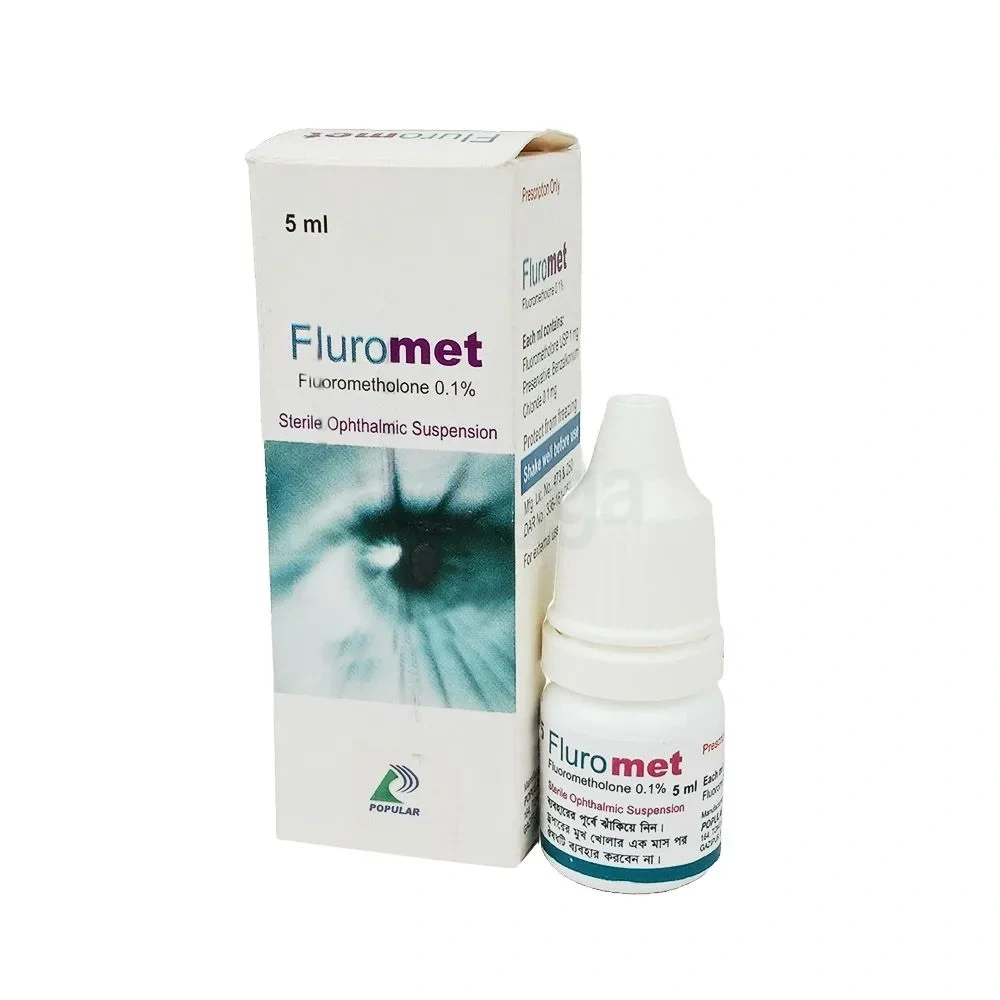
Flurolon Ophthalmic Suspension 0.1%

Fluorometholone acetate is a type of corticosteroid medication used to treat inflammatory conditions such as allergic conjunctivitis, swelling due to trauma or surgery, inflammation of the eyelids, and corneal ulcers. It is available as an ophthalmic ointment or suspension.

Uses For

  • Corneal ulcers
  • Inflammation of the eyelids
  • Inflammation due to trauma or surgery
  • Allergic conjunctivitis
Brand Name Flurolon
Type Ophthalmic Suspension
Weight 0.1%
Generic Fluorometholone Acetate
Manufacturer General Pharmaceuticals Ltd.
Available in English বাংলা

Mechanism of Action

Fluorometholone acetate acts to reduce inflammation by modulating different pathways. It prevents the production of inflammatory mediators and inhibits the migration of leukocytes (a type of white blood cell) to the site of inflammation. It also increases the production of lipocortins, which blocks the enzymes responsible for the production of prostaglandins.

How Long Does it Take to Work?

Fluorometholone acetate usually takes effect quickly, within 1-2 hours after application. It is typically used 2-3 times per day, depending on the severity of the condition.

Absorption

Fluorometholone acetate is rapidly and almost completely absorbed from the eye after topical application. It does not appear to be systemically absorbed.

Route of Elimination

Following topical application to the eye, Fluorometholone acetate is metabolized in the cornea and is eliminated in the urine.

Dosage

Bottle should be shaken before use. 1 to 2 drops instilled into the conjunctival sac two to four times daily. During the initial 24 to 48 hours, the dosage may be safely increased to 2 drops every hour. Care should be taken not to discontinue therapy prematurely.

Use in Children: Safety and effectiveness have not been demonstrated in children under 2 years of age.

Fluorometholone acetate is available as an ophthalmic ointment or suspension in a concentration of 0.1%, recommended to be administered 2-3 times daily as a thin layer applied to the affected area. Each application should not exceed 1 gram.

Administration

Fluorometholone acetate should be applied directly to the affected area of the eye. It should be applied as a thin layer across the entire surface of the eyelid, and then gently blinked for several seconds. Hands should be thoroughly washed before use.

Side Effects

  • Eye irritation
  • Tearing
  • Stinging
  • Itching
  • Redness of the eye

Toxicity

When applied to the eye, Fluorometholone has a relatively low toxicity profile and is generally well tolerated. There have been reports of the ointment causing vision problems, including clouded vision or decreased visual acuity. Severe ocular irritation and corneal perforation have also been reported.

Precautions

  • Do not use flourometholone if you have an infection, or if you are allergic to any component of the medication.
  • Do not use flourometholone in combination with other topical ophthalmic medications.
  • Notify your doctor if you experience vision problems or irritation.

Interaction

Fluorometholone may interact with other oral or topical medications used to treat eye irritation. For example, when used together with neomycin ointment, it can cause increased ocular irritation. It is important to tell your doctor about any other medications you are taking before using fluorometholone.

Disease Interactions

Fluorometholone is not usually recommended for people with active bacterial, viral, or fungal infections. People with a history of glaucoma, herpes simplex keratitis, or corneal ulceration should also not use this medication.

Drug Interactions

Fluorometholone may interact with other ophthalmic medications, such as antibiotics and antifungals, increasing the risk of ocular irritation or other side effects. It is important to tell your doctor about any medications you are taking before using fluorometholone.

Food Interactions

No food interactions have been reported with fluorometholone.

Pregnancy Use

Fluorometholone has not been adequately studied in pregnant women. However, animal studies have not shown any adverse effects on the fetus. It is not known whether fluorometholone is safe for use during pregnancy; therefore, it should be used with caution.

Lactation Use

Fluorometholone is excreted in breast milk. It should not be used in nursing women unless the benefit outweighs the risk.

Acute Overdose

No cases of acute overdose of fluorometholone have been reported. If overdose is suspected, contact a poison control center or emergency room immediately.

Contraindication

  • Active bacterial, viral or fungal infections
  • Glaucoma
  • Herpes simplex keratitis
  • Corneal ulcers

Use Direction

Fluorometholone should be applied to the affected area of the eye as a thin layer. Hands should be thoroughly washed before use. Do not allow the tip of the container to come into contact with the eye. Do not exceed 1 gram of medication per day.

Storage Conditions

Fluorometholone should be stored at room temperature (15°-30°C) in a tightly closed container, out of reach of children.

Volume of Distribution

Fluorometholone has a volume of distribution of about 1L/kg.

Half Life

The half life of fluorometholone is about 6 hours.

Clearance

Fluorometholone is cleared from the eye primarily via metabolism in the cornea and is then eliminated in the urine.

See in details version Flurolon Ophthalmic Suspension 0.1% also Flurolon Ophthalmic Suspension 0.1% in bangla

Social card

Uses

Some Frequently Asked Questions About Flurolon Ophthalmic Suspension 0.1%

*** Taking medicines without doctor's advice can cause long-term problems.
Prof. Dr. Col. Quazi Salim Yazdi

Prof. Dr. Col. Quazi Salim Yazdi

Skin, Allergy, Leprosy & Sexual Diseases Specialist

Call Doctor
Dr. Ananta Kumar Bhakta

Dr. Ananta Kumar Bhakta

Orthopedics (Bone, Joint, Injury, Accident) Specialist & Trauma Surgeon

Call Doctor
Dr. Md. Belal Hossain

Dr. Md. Belal Hossain

Cardiology (Heart Diseases) & Medicine Specialist

Call Doctor
Related Medicines