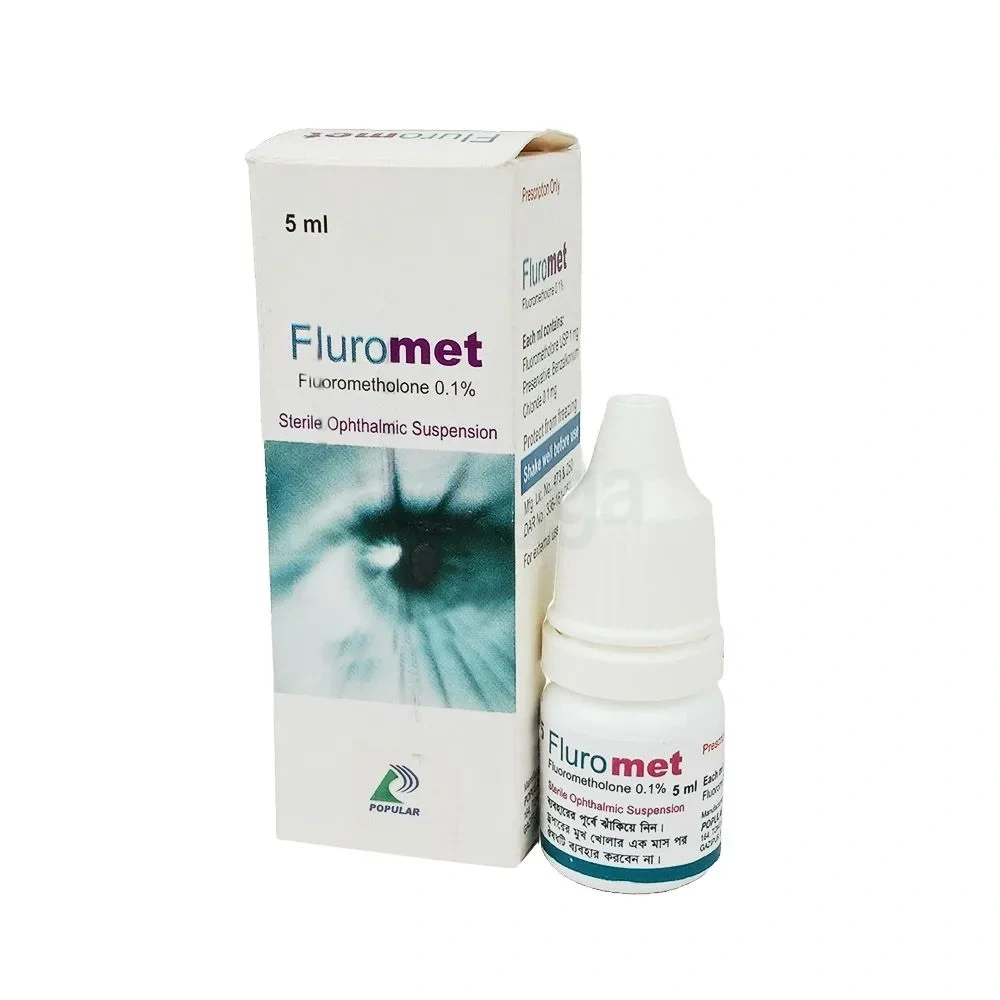
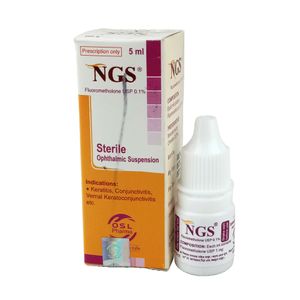
Introduction
A glucocorticoid employed, usually as eye drops, in the treatment of allergic and inflammatory conditions of the eye. It has also been used topically in the treatment of various skin disorders. (From Martindale, The Extra Pharmacopoeia, 30th ed, p732)
Uses
Fluorometholone is an ophthalmic corticosteroid used for the relief of inflammation located in both the palpebral and bulbar conjunctiva, the cornea, and the anterior segment of the globe of the eye.
For the ophthalmic treatment of corticosteroid-responsive inflammation of the palpebral and bulbar conjunctiva, cornea and anterior segment of the globe.
Associated Conditions
Pharmacodynamics
Corticosteroids such as fluorometholone inhibit the inflammatory response to a variety of inciting agents and probably delay or slow healing. They inhibit the edema, fibrin deposition, capillary dilation, leukocyte migration, capillary proliferation, fibroblast proliferation, deposition of collagen, and scar formation associated with inflammation.
Mechanism of Action
There is no generally accepted explanation for the mechanism of action of ocular corticosteroids. However, corticosteroids are thought to act by the induction of phospholipase A2 inhibitory proteins, collectively called lipocortins. It is postulated that these proteins control the biosynthesis of potent mediators of inflammation such as prostaglandins and leukotrienes by inhibiting the release of their common precursor, arachidonic acid. Arachidonic acid is released from membrane phospholipids by phospholipase A2. Their primary target is the cytosolic glucocorticoid receptor. After binding the receptor the newly formed receptor-ligand complex translocates itself into the cell nucleus, where it binds to many glucocorticoid response elements (GRE) in the promoter region of the target genes. The DNA bound receptor then interacts with basic transcription factors, causing the increase in expression of specific target genes.
Toxicity
Side effects may include acute anterior uveitis and perforation of the globe. Keratitis, conjunctivitis, corneal ulcers, mydriasis, conjunctival hyperemia, loss of accommodation and ptosis have occasionally been reported following local use of corticosteroids. LD50 = 234 mg/kg (rats)
Food Interactions
No interactions found.
Dosage
Use in Children: Safety and effectiveness have not been demonstrated in children under 2 years of age.