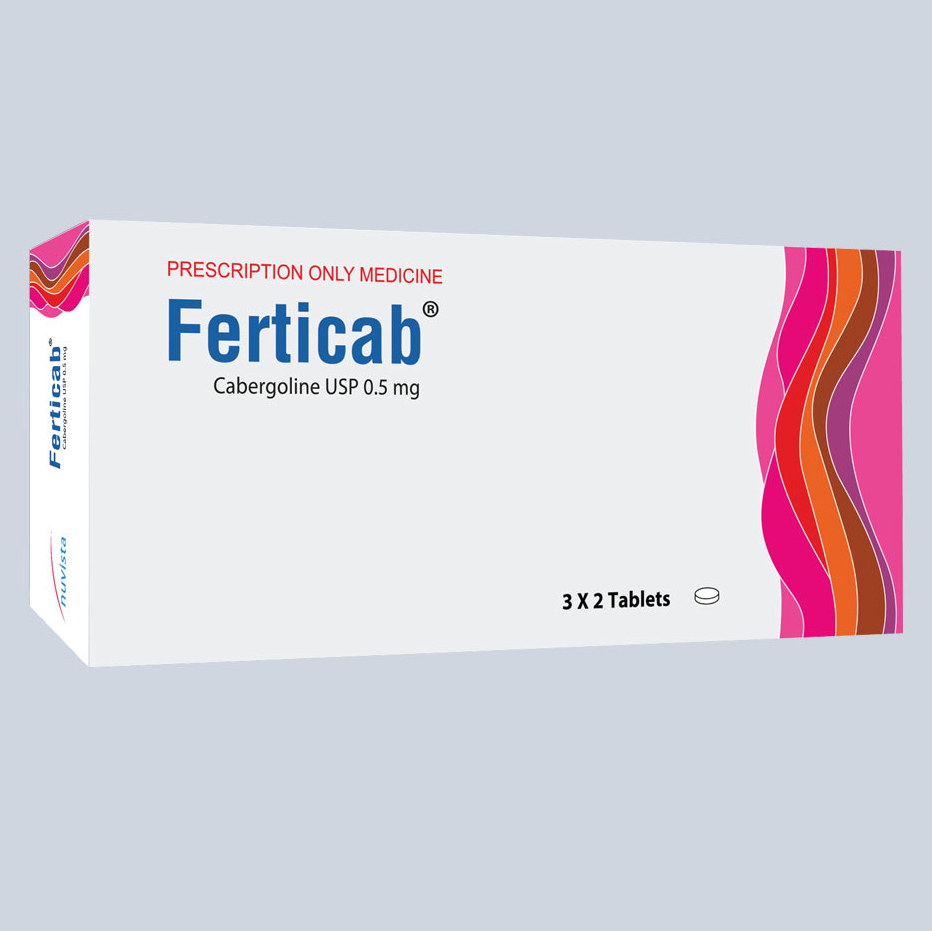
Introduction
Ferticab Tablet 0.5 mg is a dopamine agonist that is used to treat conditions such as, hyperprolactinemia, Parkinson’s Disease, and reproductive disorders. It is readily available in both oral and intravenous forms.
Uses For
Ferticab Tablet 0.5 mg is used to treat hyperprolactinemia, a condition in which the body produces too much of the hormone prolactin. It is also used to treat Parkinson's disease, infertility, and uses off-label for other conditions.
Mechanism of Action
Ferticab Tablet 0.5 mg works by activating dopamine receptors, which helps to reduce the amount of prolactin released by the pituitary gland.
How Long Does it Take to Work
Ferticab Tablet 0.5 mg typically starts working soon after taking it. However, it may take up to two weeks for therapeutic levels of the medication to be reached in the body.
Absorption
Ferticab Tablet 0.5 mg is rapidly and well absorbed from the gastrointestinal tract and is widely distributed throughout the body.
Route of Elimination
Ferticab Tablet 0.5 mg is mainly eliminated through the kidneys; approximately 80% of the drug is excreted in the urine.
Dosage
The exact dosage of Ferticab Tablet 0.5 mg depends on the severity of the condition being treated and the individual's response to the drug. For hyperprolactinemia, the initial dose is typically 0.5 to 1 mg twice weekly, and the maximum is 4 mg per week.
Administration
Ferticab Tablet 0.5 mg is available as a pill and is to be taken orally. The tablets can be taken with or without food.
Side Effect
The most common side effects of Ferticab Tablet 0.5 mg include nausea, vomiting, diarrhea, constipation, dizziness, headache, tiredness, and difficulty sleeping.
Toxicity
Ferticab Tablet 0.5 mg is generally well-tolerated when taken as prescribed, however it can cause serious toxicity if taken in large amounts.
Precaution
This medication should not be taken by anyone who is allergic to cabergoline or any of its ingredients. Women who are pregnant or breastfeeding should consult a physician to discuss the risks.
Interaction
Ferticab Tablet 0.5 mg can interact with certain medications, herbs, or supplements. Patients should inform their healthcare provider about all medications they are taking before beginning therapy.
Disease Interaction
Ferticab Tablet 0.5 mg should not be used by patients with uncontrolled hypertension, severe heart or liver disease, and uncontrolled psychotic disorders.
Drug Interaction
Ferticab Tablet 0.5 mg can interact with certain medications, such as certain antidepressants, antipsychotics, and anti-seizure medications.
Food Interactions
Grapefruit and grapefruit juice should not be used while taking Ferticab Tablet 0.5 mg as they can increase the risk of side effects.
Pregnancy Use
Ferticab Tablet 0.5 mg should only be used by pregnant women only when absolutely necessary, as the risks outweigh the benefits.
Lactation Use
Ferticab Tablet 0.5 mg should not be used by breastfeeding women as it can pass into breast milk and may cause harm to the infant.
Acute Overdose
In the event of an acute overdose, seek medical attention immediately. Symptoms can include severe nausea, vomiting, diarrhea, and dizziness.
Contraindication
Ferticab Tablet 0.5 mg should not be used in patients who are hypersensitive to the drug or any of its inactive ingredients.
Use Direction
Ferticab Tablet 0.5 mg is generally taken orally with or without food two times each week, according to the instructions of a healthcare provider.
Storage Condition
Store Ferticab Tablet 0.5 mg at room temperature, away from direct sunlight and heat.
Volume of Distribution
Ferticab Tablet 0.5 mg has an apparent volume of distribution of approximately 0.35 L/kg.
Half Life
The half-life of cabergoline is approximately 63 - 68 hours.
Clearance
Ferticab Tablet 0.5 mg is cleared from the body primarily via the kidneys; approximately 80% is excreted as metabolites.
Dosage Information
- For Hyperprolactinemia: The starting dose is typically 0.5 to 1 mg orally twice a week, and the maximum is 4 mg orally per week.
- For Parkinson's Disease: The starting dose is 0.25 to 0.50 mg, taken orally in two divided doses. This dose can be increased by 0.25 to 0.50 mg every four weeks until symptoms are relieved.
- For Infertility: 0.75 mg twice a week up to 6 months.
See in details version Ferticab Tablet 0.5 mg also Ferticab Tablet 0.5 mg in bangla
Social card