Introduction
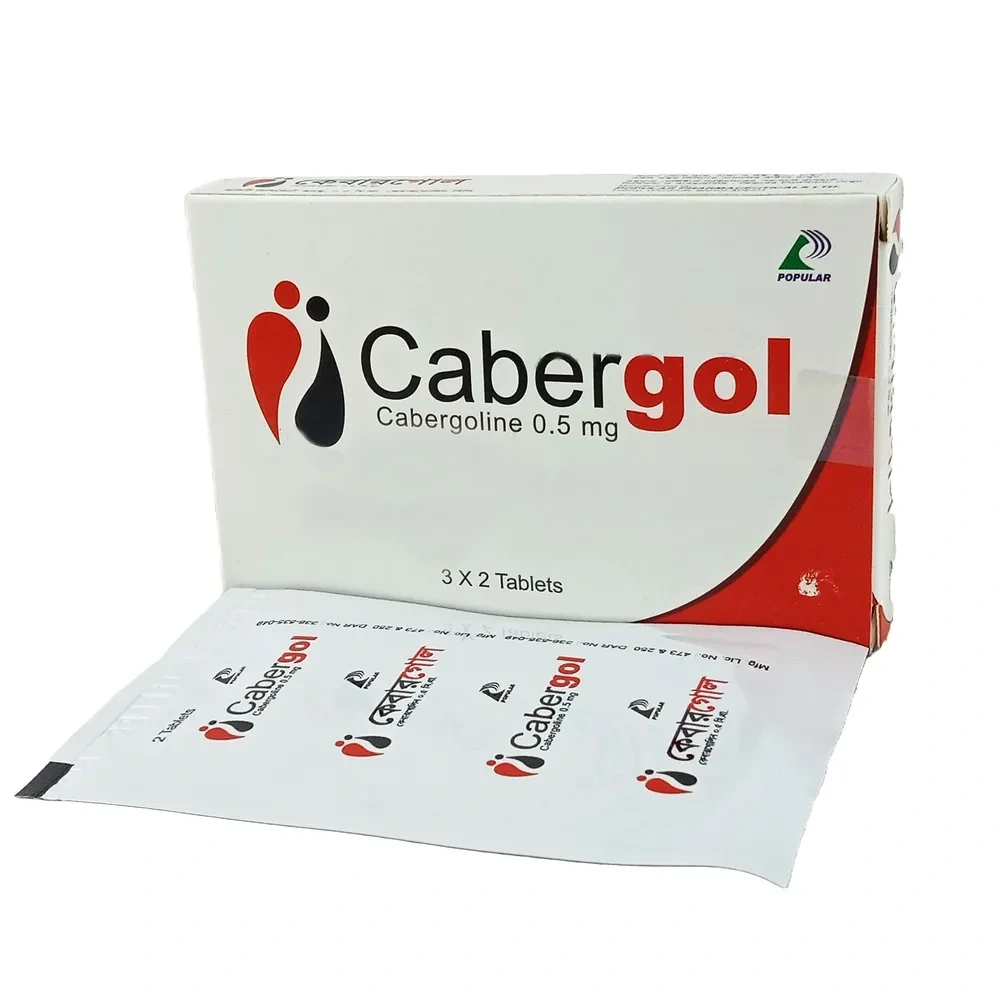
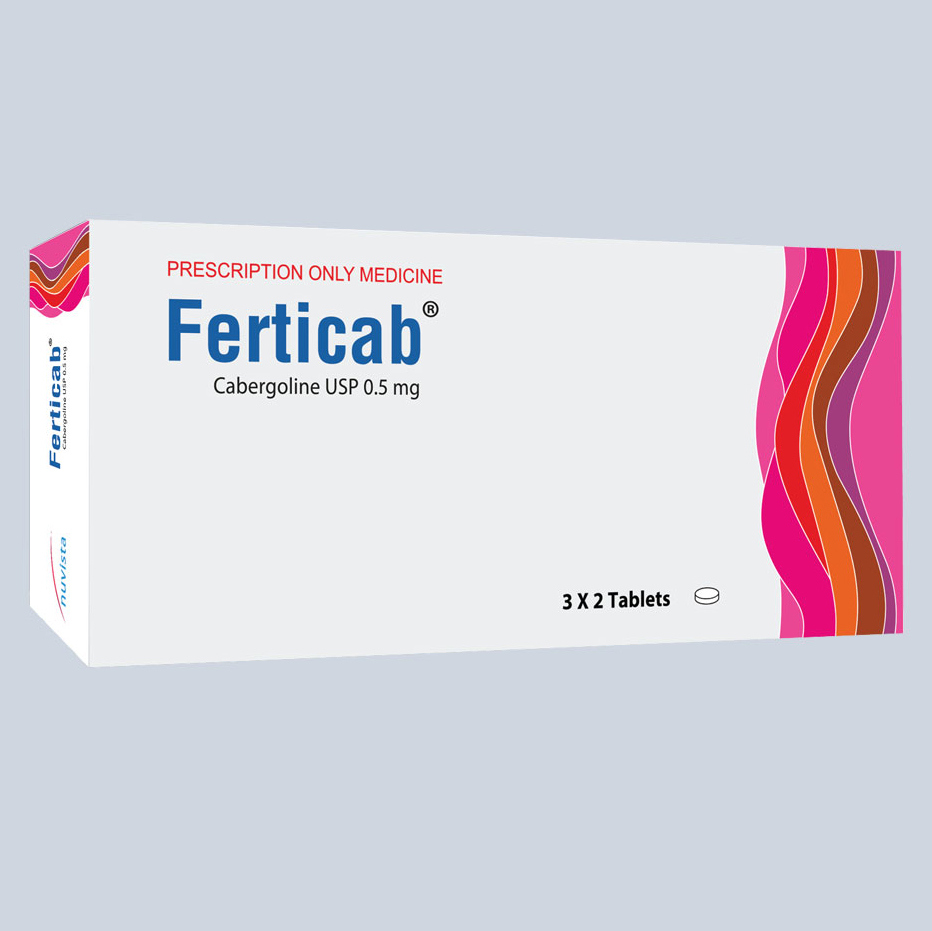
Argolin Tablet 0.5 mg, an ergot derivative, is a long-acting dopamine agonist and prolactin inhibitor. It is used to treat hyperprolactinemic disorders and Parkinsonian Syndrome. Argolin Tablet 0.5 mg possesses potent agonist activity on dopamine D2 receptors.
Uses
Argolin Tablet 0.5 mg is a dopamine receptor agonist used for the treatment of hyperprolactinemic conditions due to various causes.
For the treatment of hyperprolactinemic disorders, either idiopathic or due to prolactinoma (prolactin-secreting adenomas). May also be used to manage symptoms of Parkinsonian Syndrome as monotherapy during initial symptomatic management or as an adjunct to levodopa therapy during advanced stages of disease.
Associated Conditions
Pharmacodynamics
Argolin Tablet 0.5 mg stimulates centrally-located dopaminergic receptors resulting in a number of pharmacologic effects. Five dopamine receptor types from two dopaminergic subfamilies have been identified. The dopaminergic D1 receptor subfamily consists of D1 and D5 subreceptors, which are associated with dyskinesias. The dopaminergic D2 receptor subfamily consists of D2, D3 and D4 subreceptors, which are associated with improvement of symptoms of movement disorders. Thus, agonist activity specific for D2 subfamily receptors, primarily D2 and D3 receptor subtypes, are the primary targets of dopaminergic antiparkinsonian agents. It is thought that postsynaptic D2 stimulation is primarily responsible for the antiparkinsonian effect of dopamine agonists, while presynaptic D2 stimulation confers neuroprotective effects. This semisynthetic ergot derivative exhibits potent agonist activity on dopamine D2- and D3-receptors. It also exhibits: agonist activity (in order of decreasing binding affinities) on 5-hydroxytryptamine (5-HT)2B, 5-HT2A, 5-HT1D, dopamine D4, 5-HT1A, dopamine D1, 5-HT1B and 5-HT2C receptors and antagonist activity on α2B, α2A, and α2C receptors. Parkinsonian Syndrome manifests when approximately 80% of dopaminergic activity in the nigrostriatal pathway of the brain is lost. As this striatum is involved in modulating the intensity of coordinated muscle activity (e.g. movement, balance, walking), loss of activity may result in dystonia (acute muscle contraction), Parkinsonism (including symptoms of bradykinesia, tremor, rigidity, and flattened affect), akathesia (inner restlessness), tardive dyskinesia (involuntary muscle movements usually associated with long-term loss of dopaminergic activity), and neuroleptic malignant syndrome, which manifests when complete blockage of nigrostriatal dopamine occurs. High dopaminergic activity in the mesolimbic pathway of the brain causes hallucinations and delusions; these side effects of dopamine agonists are manifestations seen in patients with schizophrenia who have overractivity in this area of the brain. The hallucinogenic side effects of dopamine agonists may also be due to 5-HT2A agonism. The tuberoinfundibular pathway of the brain originates in the hypothalamus and terminates in the pituitary gland. In this pathway, dopamine inhibits lactotrophs in anterior pituitary from secreting prolactin. Increased dopaminergic activity in the tuberoinfundibular pathway inhibits prolactin secretion.
Mechanism of Action
The dopamine D2 receptor is a 7-transmembrane G-protein coupled receptor associated with Gi proteins. In lactotrophs, stimulation of dopamine D2 causes inhibition of adenylyl cyclase, which decreases intracellular cAMP concentrations and blocks IP3-dependent release of Ca2+ from intracellular stores. Decreases in intracellular calcium levels may also be brought about via inhibition of calcium influx through voltage-gated calcium channels, rather than via inhibition of adenylyl cyclase. Additionally, receptor activation blocks phosphorylation of p42/p44 MAPK and decreases MAPK/ERK kinase phosphorylation. Inhibition of MAPK appears to be mediated by c-Raf and B-Raf-dependent inhibition of MAPK/ERK kinase. Dopamine-stimulated growth hormone release from the pituitary gland is mediated by a decrease in intracellular calcium influx through voltage-gated calcium channels rather than via adenylyl cyclase inhibition. Stimulation of dopamine D2 receptors in the nigrostriatal pathway leads to improvements in coordinated muscle activity in those with movement disorders. Argolin Tablet 0.5 mg is a long-acting dopamine receptor agonist with a high affinity for D2 receptors. Receptor-binding studies indicate that cabergoline has low affinity for dopamine D1, α1,- and α2- adrenergic, and 5-HT1- and 5-HT2-serotonin receptors.
Absorption
First-pass effect is seen, however the absolute bioavailability is unknown.
Protein Binding
Moderately bound (40% to 42%) to human plasma proteins in a concentration-independent manner.
Route of Elimination
After oral dosing of radioactive cabergoline to five healthy volunteers, approximately 22% and 60% of the dose was excreted within 20 days in the urine and feces, respectively. Less than 4% of the dose was excreted unchanged in the urine.
Half Life
The elimination half-life is estimated from urinary data of 12 healthy subjects to range between 63 to 69 hours.
Clearance
- renal cl=0,008 L/min
- nonrenal cl=3.2 L/min
Toxicity
Overdosage might be expected to produce nasal congestion, syncope, or hallucinations.
Food Interactions
- Exercise caution with grapefruit products. Argolin Tablet 0.5 mg is partially metabolized through the CYP3A4 pathway. Therefore coadministration with grapefruit, a CYP3A4 inhibitor, may increase its serum concentration.
- Exercise caution with St. John's Wort. Argolin Tablet 0.5 mg is partially metabolized through the CYP3A4 pathway. Therefore coadministration with St. John's Wort, a CYP3A4 inducer, may reduce its serum concentration.
- Take with or without food. Taking cabergoline with food may reduce gastric irritation.
Dosage
- To prevent milk production (lactation): 1 mg Argolin Tablet 0.5 mg tablet on the first day after delivery.
- To stop lactation once have started to breastfeed: 0.25 mg Argolin Tablet 0.5 mg tablet every 12 hours for two days.
- To reduce prolactin levels in other conditions: Initially take one Argolin Tablet 0.5 mg 0.5 mg tablet (to be taken in two doses) spread out over a week (e.g., half a tablet on Monday and the other half of the tablet on Thursday). Dose will be increased up to a maximum dose of 4.5 mg or until have responded fully to treatment.