Introduction

Epicure Tablet 50 mg is an antiepileptic drug used to treat partial-onset seizures in patients with epilepsy. It is a novel drug with a chemical structure related to levetiracetam, another antiepileptic medication. Epicure Tablet 50 mg is known for its high affinity for the synaptic vesicle protein 2A (SV2A), which is thought to play a key role in its therapeutic effects.

Uses

Epicure Tablet 50 mg is used for:

  • Treatment of partial-onset seizures in adults and children aged 4 years and older with epilepsy.
  • As adjunctive therapy in combination with other antiepileptic drugs for better seizure control.
It is used when monotherapy or other treatments have not achieved adequate seizure control.

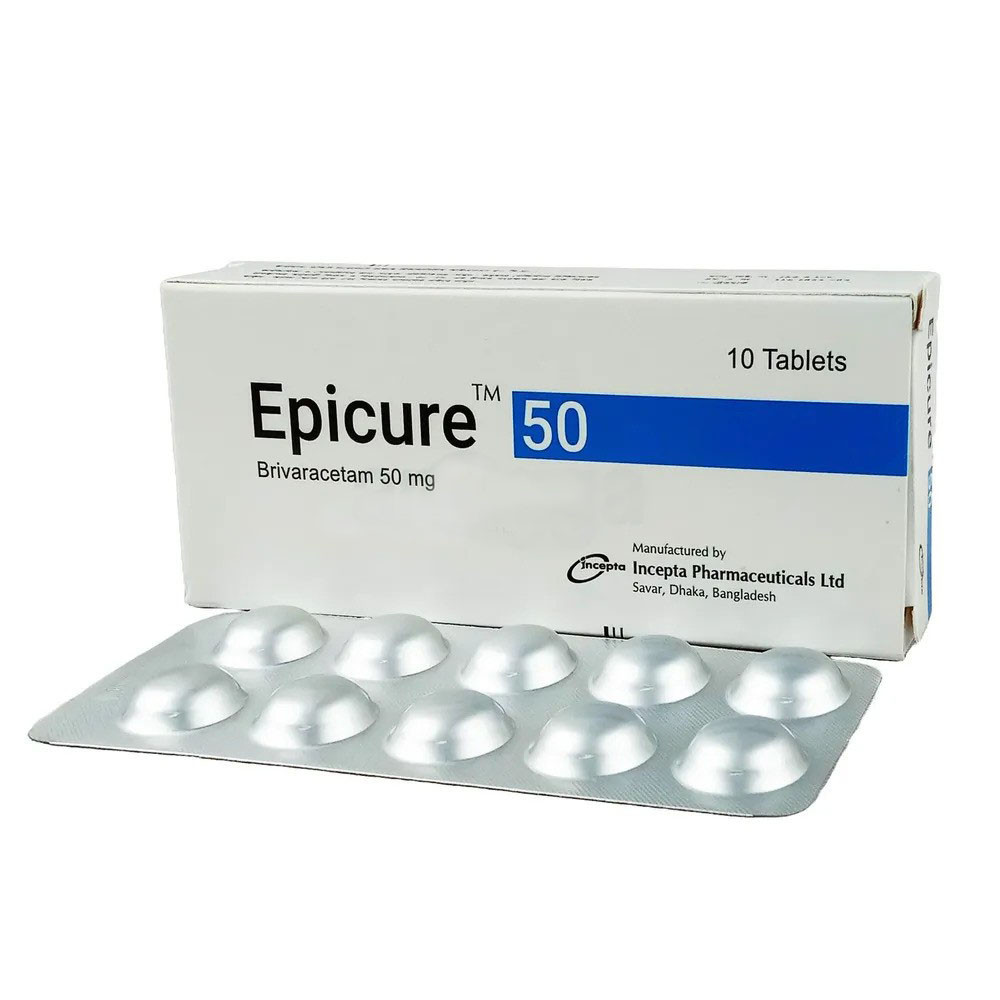
Brand Name Epicure
Type Tablet
Weight 50 mg
Generic Brivaracetam
Manufacturer Incepta Pharmaceuticals Ltd.
Available in English বাংলা

Mechanism of Action

Epicure Tablet 50 mg works by binding to the synaptic vesicle protein SV2A, which is involved in neurotransmitter release. This binding modulates synaptic transmission and helps stabilize neuronal activity, thereby reducing the frequency of seizures. Unlike some other antiepileptic drugs, brivaracetam does not affect voltage-gated ion channels directly.

How Long Does It Take to Work?

Epicure Tablet 50 mg may begin to show therapeutic effects within a few days of starting treatment. However, optimal seizure control may take several weeks. The time to efficacy can vary based on individual patient factors and whether it is used alone or in combination with other medications.

Absorption

Epicure Tablet 50 mg is well-absorbed following oral administration. The drug reaches peak plasma concentrations within 1 to 2 hours. The absolute bioavailability of brivaracetam is approximately 100%, indicating that the drug is fully absorbed when taken orally.

Route of Elimination

Epicure Tablet 50 mg is primarily eliminated through renal excretion. Approximately 66% of the dose is excreted in the urine as unchanged drug, with the remainder being metabolized in the liver. The drug's elimination process is predominantly renal, with minor hepatic metabolism.

Dosage

Brivaracetam tablet or oral solution is taken in oral route. It may be taken with or without food. The recommended dose for patients 1 month of age and older is included below. In pediatric patients weighing less than 50 kg, the recommended dosing regimen is dependent upon body weight. When initiating treatment, gradual dose escalation is not required. Dose should be adjusted based on clinical response and tolerability.

Adults (16 years and older)-
  • Initial dose: 50 mg twice daily (100 mg per day)
  • Minimum and maximum maintenance dose: 25 mg to 100 mg twice daily (50 mg to 200 mg per day)
Pediatric patients weighing 50 kg or more-
  • Initial dose: 25 mg to 50 mg twice daily (50 mg to 100 mg per day)
  • Minimum and maximum maintenance dose: 25 mg to 100 mg twice daily (50 mg to 200 mg per day)
Pediatric patients weighing 20 kg to less than 50 kg-
  • Initial dose: 0.5 mg/kg to 1 mg/kg twice daily (1 mg/kg to 2 mg/kg per day)
  • Minimum and maximum maintenance dose: 0.5 mg/kg to 2 mg/kg twice daily (1 mg/kg to 4 mg/kg per day)
Pediatric patients weighing 11 kg to less than 20 kg-
  • Initial dose: 0.5 mg/kg to 1.25 mg/kg twice daily (1 mg/kg to 2.5 mg/kg per day)
  • Minimum and maximum maintenance dose: 0.5 mg/kg to 2.5 mg/kg twice daily (1 mg/kg to 5 mg/kg per day)
Pediatric patients weighing less than 11 kg-
  • Initial dose: 0.75 mg/kg to 1.5 mg/kg twice daily (1.5 mg/kg to 3 mg/kg per day)
  • Minimum and maximum maintenance dose: 0.75 mg/kg to 3 mg/kg twice daily (1.5 mg/kg to 6 mg/kg per day)
Geriatric use: Dose selection for an elderly patient should be judicious, usually starting at the low end of the dosing range.

Renal impairment: Dose adjustments are not required for patients with impaired renal function. Use of brivaracetam is not recommended in patients with end stage renal disease undergoing dialysis.

Use in children and adolescents: Safety and effectiveness in pediatric patients below the age of 1 month have not been established.

The typical dosage of brivaracetam is:

  • Initial dose: 50 mg twice daily.
  • Maintenance dose: Adjusted based on clinical response, with a range of 50 to 200 mg twice daily.
Dosage adjustments may be required based on patient response and tolerance. Special populations, such as those with renal or hepatic impairment, may need adjusted dosing.

Administration

Epicure Tablet 50 mg can be administered orally in the form of tablets, oral solution, or as an intravenous injection. The oral tablets should be taken with or without food, and the oral solution should be measured carefully. For intravenous administration, brivaracetam is usually given over 2 to 15 minutes.

Side Effects

Common side effects of brivaracetam include:

  • Drowsiness and fatigue
  • Dizziness and headache
  • Nausea and vomiting
  • Loss of appetite and weight loss
  • Irritability and mood changes
Side effects can vary in severity and may require dose adjustments or discontinuation if persistent or severe.

Toxicity

Toxicity with brivaracetam may manifest as severe drowsiness, confusion, or excessive sedation. In cases of overdose, symptoms might include severe central nervous system depression or exacerbation of side effects. Immediate medical attention should be sought in the event of an overdose.

Precautions

Precautions include:

  • Monitoring for signs of behavioral or mood changes, particularly in patients with a history of psychiatric disorders.
  • Adjusting dosage for patients with renal or hepatic impairment.
  • Monitoring for possible drug interactions and adjusting therapy as needed.
Regular follow-up and monitoring are important to manage side effects and ensure effective therapy.

Interaction

Epicure Tablet 50 mg may interact with other drugs that affect the central nervous system or are metabolized by the liver. Significant interactions include:

  • Drugs that induce or inhibit liver enzymes (e.g., rifampin, carbamazepine).
  • Other antiepileptic drugs, which may require dose adjustments to avoid additive effects or decreased efficacy.
It is important to consult with a healthcare provider regarding potential interactions with other medications.

Disease Interaction

Epicure Tablet 50 mg should be used with caution in patients with:

  • Severe renal or hepatic impairment, as adjustments in dosage may be necessary.
  • Pre-existing psychiatric or behavioral disorders, due to potential changes in mood or behavior.
Regular monitoring and assessment are essential for these patients.

Drug Interaction

Drug interactions include:

  • Potential interactions with medications that alter the levels of brivaracetam through enzyme induction or inhibition.
  • Other central nervous system depressants may exacerbate sedative effects.
Always inform healthcare providers of all medications being taken to avoid potential interactions.

Food Interactions

There are no significant food interactions with brivaracetam. The drug can be taken with or without food. However, maintaining a consistent diet and avoiding excessive alcohol intake can help manage overall health and treatment efficacy.

Pregnancy Use

Epicure Tablet 50 mg is classified as a Category C drug for pregnancy, indicating that risk cannot be ruled out. It should be used during pregnancy only if the potential benefits justify the potential risks to the fetus. Pregnant women should discuss their condition with their healthcare provider to evaluate the risks and benefits of brivaracetam.

Lactation Use

The safety of brivaracetam during lactation is not fully established. It is excreted in breast milk, so breastfeeding mothers should weigh the benefits of breastfeeding against the potential risks to the infant. Consult a healthcare provider to determine the best approach for managing epilepsy while breastfeeding.

Acute Overdose

In the event of an acute overdose, symptoms may include severe sedation, confusion, and exacerbation of side effects. Treatment involves symptomatic and supportive care. Seek immediate medical attention if overdose is suspected.

Contraindication

Epicure Tablet 50 mg is contraindicated in patients with known hypersensitivity to the drug or any of its components. Careful consideration should be given to patients with severe renal or hepatic impairment, where dose adjustments are required.

Use Direction

Follow the prescribed dosage and administration instructions provided by the healthcare provider. Adherence to the treatment regimen and regular follow-up appointments are essential for effective seizure control and management of side effects.

Storage Conditions

Store brivaracetam at room temperature, away from light and moisture. Keep it out of reach of children. Specific storage conditions should be followed according to product labeling or pharmacist advice.

Volume of Distribution

The volume of distribution for brivaracetam is approximately 0.7 L/kg. This indicates its distribution into body tissues and fluids, impacting its therapeutic and side effect profile.

Half Life

The terminal half-life of brivaracetam is approximately 8 to 9 hours. This supports its dosing schedule, typically involving administration twice daily.

Clearance

Epicure Tablet 50 mg is primarily cleared through the kidneys. Renal clearance accounts for approximately 66% of the drug's elimination, with the remainder being metabolized in the liver. Clearance rates may be affected by renal or hepatic function.

See in details version Epicure Tablet 50 mg also Epicure Tablet 50 mg in bangla

Social card

Uses

Some Frequently Asked Questions About Epicure Tablet 50 mg

*** Taking medicines without doctor's advice can cause long-term problems.
Dr. Mohammad Nasir Uddin

Dr. Mohammad Nasir Uddin

Urologist, Andrologist & Laparoscopic Surgeon

Call Doctor
Prof. Dr. Nazmun Nahar

Prof. Dr. Nazmun Nahar

Vitreo Retina, Ophthalmic Trauma & Cataract Surgery Specialist

Call Doctor
Related Medicines