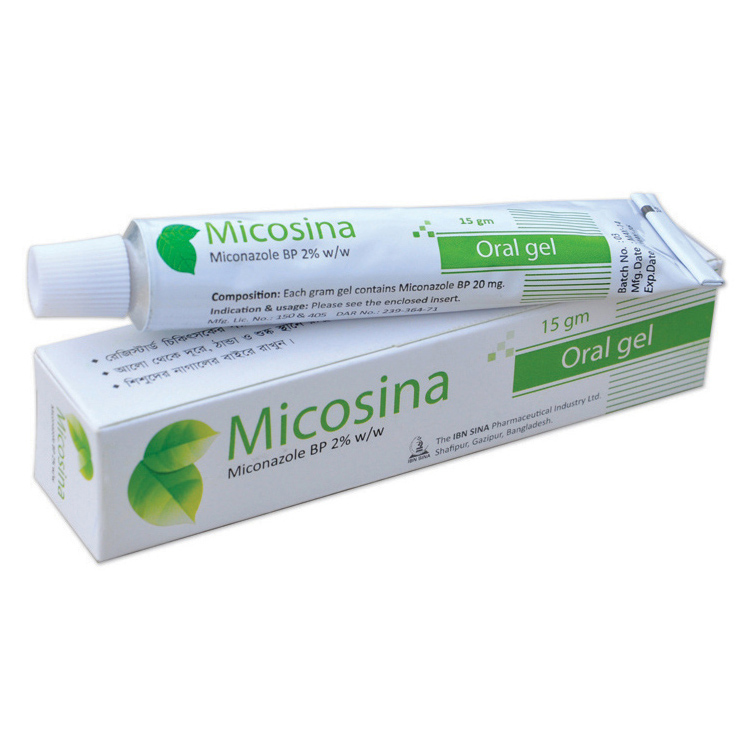
Brand Name Dakrin
Type Oral Gel
Weight 2% w/w
Generic Miconazole Nitrate
Manufacturer General Pharmaceuticals Ltd.
Price 15 gm tube: ৳ 60.18

About Dakrin

Dakrin Oral Gel (General Pharmaceuticals Ltd.) is a brand medicine containing the generic Miconazole Nitrate . Current listed price in Bangladesh: 15 gm tube: ৳ 60.18.

Medical information for Dakrin Oral Gel 2% w/w

Uses, dosage, side effects, and safety details below apply to Dakrin Oral Gel 2% w/w (generic: Miconazole Nitrate). This is general information — consult a doctor before use.

Introduction

Miconazole is a broad-spectrum azole antifungal with some activity against Gram-positive bacteria as well. It is widely used to treat mucosal yeast infections, including both oral and vaginal infections; although intravenous miconazole is no longer available, a wide variety of suppositories, creams, gels, and tablet-based products are available. Miconazole is thought to act primarily through the inhibition of fungal CYP450 14α-lanosterol demethylase activity.

It is currently available as a variety of prescription and over the counter products. Despite having been in clinical use for an extended period, resistance to miconazole among susceptible organisms is relatively low.

Uses

Miconazole is an azole antifungal with broad-spectrum activity used to treat fungal infections affecting the vagina, mouth and skin, including candidiasis.

Miconazole is indicated for the local treatment of oropharyngeal candidiasis in adult patients and for the adjunctive treatment of diaper dermatitis complicated by candidiasis in immunocompetent patients aged four weeks and older. Miconazole is available as both a suppository and cream for the treatment of vaginal yeast infections and the relief of associated vulvar itching and irritation. Lastly, miconazole cream is effective in treating athlete's foot (tinea pedis), jock itch (tinea cruris), ringworm infections (tinea corporis), pityriasis (formerly tinea) versicolor, and cutaneous candidiasis.

Associated Conditions

  • Acne Vulgaris
  • Dermatophytosis
  • Dermatophytosis of nail
  • Diaper Dermatitis
  • Excessive sweating and body odor
  • Fungal skin infection
  • Gastrointestinal candidiasis
  • Infection Mixed
  • Infections
  • Fungal of the Skin Folds
  • Nail candida
  • Oropharyngeal Candidiasis
  • Pityriasis versicolor
  • Ringworm
  • Seborrheic Dermatitis
  • Skin candida
  • Tinea Capitis
  • Tinea Corporis
  • Tinea Cruris
  • Tinea Pedis
  • Vaginal Candidiasis
  • Cutaneous candidiasis

Pharmacodynamics

Miconazole is an azole antifungal that functions primarily through inhibition of a specific demethylase within the CYP450 complex. As miconazole is typically applied topically and is minimally absorbed into the systemic circulation following application, the majority of patient reactions are limited to hypersensitivity and cases of anaphylaxis. Patients using intravaginal miconazole products are advised not to rely on contraceptives to prevent pregnancy and sexually transmitted infections, as well as not to use tampons concurrently.

Mechanism of Action

Miconazole is an azole antifungal used to treat a variety of conditions, including those caused by Candida overgrowth. Unique among the azoles, miconazole is thought to act through three main mechanisms. The primary mechanism of action is through inhibition of the CYP450 14α-lanosterol demethylase enzyme, which results in altered ergosterol production and impaired cell membrane composition and permeability, which in turn leads to cation, phosphate, and low molecular weight protein leakage.

In addition, miconazole inhibits fungal peroxidase and catalase while not affecting NADH oxidase activity, leading to increased production of reactive oxygen species (ROS). Increased intracellular ROS leads to downstream pleiotropic effects and eventual apoptosis.

Lastly, likely as a result of lanosterol demethylation inhibition, miconazole causes a rise in intracellular levels of farnesol. This molecule participates in quorum sensing in Candida, preventing the transition from yeast to mycelial forms and thereby the formation of biofilms, which are more resistant to antibiotics. In addition, farnesol is an inhibitor of drug efflux ABC transporters, namely Candida CaCdr1p and CaCdr2p, which may additionally contribute to increased effectiveness of azole drugs.

Absorption

Miconazole given to healthy volunteers as a single 50 mg oral tablet produced a mean Cmax of 15.1 ± 16.2 mcg/mL, a mean AUC0-24 of 55.2 ± 35.1 mcg*h/mL, and a median Tmax of 7 hours (range 2.0-24.1). In these patients measurable plasma concentrations ranged from 0.5 to 0.83 mcg/mL.

Topical miconazole is absorbed poorly into the systemic circulation. In pediatric patients aged 1-21 months given multiple topical applications of miconazole ointment for seven days, the plasma miconazole concentration was less than 0.5 ng/mL in 88% of the patients, with the remaining patients having a concentration of 0.57 and 0.58 ng/mL, respectively. Similarly, patients. administered with a vaginal 1200 mg ovule had a mean Cmax of 10.71 ng/mL, mean Tmax of 18.4 hours, and mean AUC0-96 of 477.3 ng*h/mL.

Volume of Distribution

A 1200 mg miconazole vaginal suppository resulted in a calculated apparent volume of distribution of 95 546 L while a 100 mg vaginal cream yielded an apparent volume of distribution of 10 911L.

Protein Binding

In vitro data suggests that miconazole binds human serum albumin, however, the clinical significance of this observation is unclear.

Route of Elimination

Miconazole is excreted through both urine and feces; less than 1% of unchanged miconazole is recovered in urine.

Half Life

Miconazole has a terminal half-life of 24 hours.

Toxicity

Miconazole overdose has not been reported. Patients experiencing an overdose are at an increased risk of severe adverse effects such as headache, skin irritation, diarrhea, nausea, vomiting, abdominal pain, and dysgeusia. Symptomatic and supportive measures are recommended.

Miconazole has an oral LD50 of 500 mg/kg in rats.

Food Interactions

No interactions found.

Dosage

Miconazole Oral Gel-
Oropharyngeal candidosis-
  • Infants 4-24 months: 1.25 ml (1⁄4 measuring spoon) of gel, applied 4 times day after meals.
  • Adult and children 2 years of age and older: 2.5 ml (1⁄2 measuring spoon) of gel, applied 4 times a day after meals.
Gastrointestinal tract candidosis-
  • Infants (4 months of age or above): Children and adults who have difficulty swallowing tablets: 20 mg per kg body weight per day, in four divided doses. The daily dose should not exceed 250 mg (10 ml gel) four times daily.
Missed Dose: Apply the missed dose as soon as you remember. In case of next dosing time, omit the missed
dose and continue your usual course.

Miconazole Cream: Sufficient Miconazole Cream should be applied to cover affected areas twice daily (morning and evening) in patients with tinea pedis, tinea cruris, tinea corporis and cutaneous candidiasis and once daily in patients with tinea versicolor. If Miconazole Cream is used in intertriginous areas it should be applied sparingly and smoothed in well to avoid maceration effects.

Early relief of symptoms (2 to 3 days) is experienced by the majority of patients and clinical improvement may be seen fairly soon after treatment is begun.All lesions usually disappear after 2 to 5 weeks.Prolong treatment for 10 days to prevent relapse. However, Candida infections, tinea cruris and corporis should be treated for two weeks and tinea pedis for one month in order to reduce the possibility of recurrence.

Frequently Asked Questions About Dakrin Oral Gel 2% w/w

1. What is Dakrin Oral Gel 2% w/w?

Dakrin Oral Gel 2% w/w is an antifungal medication used to treat a variety of fungal infections, including skin infections, vaginal yeast infections, and oral thrush.

2. How does Dakrin Oral Gel 2% w/w work?

Dakrin Oral Gel 2% w/w works by inhibiting the growth of fungi by interfering with their cell membrane, ultimately causing the destruction of the fungal cells.

3. What conditions is Dakrin Oral Gel 2% w/w used to treat?

Dakrin Oral Gel 2% w/w is used to treat:

  • Vaginal yeast infections
  • Fungal skin infections (e.g., athlete’s foot, jock itch, ringworm)
  • Oral thrush
  • Fungal infections in the mouth

4. How is Dakrin Oral Gel 2% w/w used?

Dakrin Oral Gel 2% w/w is available in various forms, including creams, powders, vaginal suppositories, and oral gel. The form of the drug and dosage depend on the type of infection being treated.

5. What is the usual dosage of Dakrin Oral Gel 2% w/w?

The dosage of Dakrin Oral Gel 2% w/w varies based on the form of the medication and the condition being treated. For skin infections, the cream is usually applied once or twice daily. For vaginal infections, suppositories or creams are typically used for several consecutive days.

6. Can I use Dakrin Oral Gel 2% w/w if I am pregnant?

Dakrin Oral Gel 2% w/w should be used during pregnancy only if clearly needed. Consult your doctor before using it, especially during the first trimester.

7. Is Dakrin Oral Gel 2% w/w safe to use while breastfeeding?

Dakrin Oral Gel 2% w/w is generally considered safe for use while breastfeeding when used topically. However, consult your doctor before using it to ensure safety.

8. What are the side effects of Dakrin Oral Gel 2% w/w?

Common side effects of Dakrin Oral Gel 2% w/w include:

  • Skin irritation or redness (for topical use)
  • Itching or burning sensation
  • Vaginal irritation (for vaginal use)

9. Can Dakrin Oral Gel 2% w/w cause serious side effects?

Serious side effects are rare but may include:

  • Severe allergic reactions (swelling, difficulty breathing)
  • Severe vaginal irritation or discharge
  • Skin reactions like blisters or open sores
If any of these occur, seek immediate medical attention.

10. Can Dakrin Oral Gel 2% w/w interact with other medications?

Dakrin Oral Gel 2% w/w may interact with other medications, particularly oral anticoagulants (e.g., warfarin). Inform your doctor about all medications you are taking, including over-the-counter drugs and supplements.

11. How should Dakrin Oral Gel 2% w/w be applied to the skin?

For skin infections, apply a thin layer of Dakrin Oral Gel 2% w/w cream or powder to the affected area once or twice a day, as directed by your doctor.

12. Can Dakrin Oral Gel 2% w/w be used for toenail fungus?

Dakrin Oral Gel 2% w/w is effective for treating skin fungal infections but may not be as effective for toenail fungus. A stronger treatment may be needed for toenail infections.

13. Can I use Dakrin Oral Gel 2% w/w for athlete’s foot?

Yes, Dakrin Oral Gel 2% w/w is commonly used to treat athlete's foot. Apply it topically to the affected area once or twice a day.

14. How long should I use Dakrin Oral Gel 2% w/w for a fungal infection?

The duration of treatment depends on the type of infection. Typically, fungal skin infections require treatment for 2 to 4 weeks. Vaginal infections may require 1 to 7 days of treatment, depending on the severity.

15. Is Dakrin Oral Gel 2% w/w effective for vaginal yeast infections?

Yes, Dakrin Oral Gel 2% w/w is commonly used to treat vaginal yeast infections. It is available in the form of suppositories or creams that are inserted into the vagina.

16. Can Dakrin Oral Gel 2% w/w be used for oral thrush?

Yes, Dakrin Oral Gel 2% w/w oral gel is often used to treat oral thrush in adults and children. It helps reduce the fungal infection in the mouth.

17. How should I use Dakrin Oral Gel 2% w/w for a vaginal yeast infection?

For vaginal yeast infections, use Dakrin Oral Gel 2% w/w as directed, usually by inserting a suppository into the vagina before bedtime, for the prescribed number of days.

18. Can I use Dakrin Oral Gel 2% w/w for a diaper rash?

While Dakrin Oral Gel 2% w/w may be helpful for treating fungal diaper rashes, consult a healthcare provider for the most appropriate treatment for your baby.

19. What should I do if I miss a dose of Dakrin Oral Gel 2% w/w?

If you miss a dose, apply it as soon as you remember, unless it is almost time for your next dose. Do not double the dose to make up for a missed one.

20. What should I do if I overdose on Dakrin Oral Gel 2% w/w?

An overdose of Dakrin Oral Gel 2% w/w is unlikely due to its topical or localized use. However, if excessive application occurs, wash the area with water and contact your healthcare provider.

21. Can I use Dakrin Oral Gel 2% w/w while using other vaginal medications?

Consult your doctor before using Dakrin Oral Gel 2% w/w alongside other vaginal medications to avoid potential interactions.

22. Does Dakrin Oral Gel 2% w/w cause any long-term side effects?

Long-term side effects are rare with Dakrin Oral Gel 2% w/w. If you experience persistent irritation or allergic reactions, consult your healthcare provider.

23. Can I use Dakrin Oral Gel 2% w/w if I have a weakened immune system?

If you have a weakened immune system, consult your doctor before using Dakrin Oral Gel 2% w/w, as you may be more susceptible to infections.

24. Can Dakrin Oral Gel 2% w/w be used to treat ringworm?

Yes, Dakrin Oral Gel 2% w/w is effective for treating ringworm and other fungal skin infections.

25. How does Dakrin Oral Gel 2% w/w compare to other antifungal treatments?

Dakrin Oral Gel 2% w/w is a broad-spectrum antifungal medication and is generally well-tolerated. Other antifungals like clotrimazole or terbinafine may be used for different types of fungal infections.

26. Can Dakrin Oral Gel 2% w/w cause itching?

Itching is a possible side effect of Dakrin Oral Gel 2% w/w, especially when applied to the skin or vaginal area. If itching becomes severe, contact your healthcare provider.

27. Can I use Dakrin Oral Gel 2% w/w for fungal infections in the groin area?

Yes, Dakrin Oral Gel 2% w/w is effective for treating fungal infections in the groin area, such as jock itch.

28. How should I store Dakrin Oral Gel 2% w/w?

Dakrin Oral Gel 2% w/w should be stored at room temperature in a dry place, away from moisture and heat. Keep it in its original packaging to avoid contamination.

29. Is Dakrin Oral Gel 2% w/w available without a prescription?

Dakrin Oral Gel 2% w/w is available over-the-counter for the treatment of mild fungal infections like athlete's foot or yeast infections. Stronger doses may require a prescription.

30. Can Dakrin Oral Gel 2% w/w cause vaginal discharge?

Vaginal discharge may occur during the use of Dakrin Oral Gel 2% w/w, especially if treating a yeast infection. If discharge is unusual or has a strong odor, consult your healthcare provider.

31. Can Dakrin Oral Gel 2% w/w help with toenail fungus?

While Dakrin Oral Gel 2% w/w is effective for treating fungal skin infections, toenail fungus may require a different treatment, such as oral antifungals.

32. Does Dakrin Oral Gel 2% w/w cause dryness of the skin?

Dryness is not a common side effect of Dakrin Oral Gel 2% w/w, but if you experience this issue, contact your doctor for advice.

33. How soon will I notice improvement with Dakrin Oral Gel 2% w/w?

Improvement may be seen within a few days for most skin infections. For vaginal infections, it may take up to a week to fully resolve symptoms.

34. Can Dakrin Oral Gel 2% w/w be used for systemic infections?

No, Dakrin Oral Gel 2% w/w is used primarily for topical and localized infections. Systemic fungal infections require oral antifungals or intravenous treatments.

35. Can I use Dakrin Oral Gel 2% w/w for cold sores?

Dakrin Oral Gel 2% w/w is not typically used for cold sores. A prescription antiviral may be needed to treat cold sores.

36. Does Dakrin Oral Gel 2% w/w have an effect on birth control?

There is no evidence suggesting that Dakrin Oral Gel 2% w/w affects birth control effectiveness. However, it is always good to consult your doctor for personalized advice.

37. Can Dakrin Oral Gel 2% w/w cause headaches?

Headaches are not common with Dakrin Oral Gel 2% w/w, but if you experience them frequently, consult your healthcare provider.

38. Can I use Dakrin Oral Gel 2% w/w while swimming?

Yes, you can swim while using Dakrin Oral Gel 2% w/w. However, avoid excessive exposure to moisture after applying it to the skin, as it may reduce the effectiveness.

39. Can I use Dakrin Oral Gel 2% w/w if I have a fungal infection on my face?

While Dakrin Oral Gel 2% w/w can be used for facial fungal infections, consult your doctor before applying it to sensitive areas such as the face.

40. Can I apply Dakrin Oral Gel 2% w/w to broken skin?

You should avoid applying Dakrin Oral Gel 2% w/w to broken or irritated skin unless instructed by your doctor, as it may cause irritation.

41. Can I take Dakrin Oral Gel 2% w/w with alcohol?

There are no known interactions between alcohol and Dakrin Oral Gel 2% w/w. However, it is best to avoid excessive drinking while on any medication.

42. How often should I use Dakrin Oral Gel 2% w/w for a skin infection?

Dakrin Oral Gel 2% w/w should be applied to the affected area once or twice daily, depending on your doctor's instructions.

43. What should I do if I accidentally ingest Dakrin Oral Gel 2% w/w?

If you accidentally ingest Dakrin Oral Gel 2% w/w, contact a healthcare provider immediately. It is generally not harmful in small amounts, but it's better to seek advice.

44. Can Dakrin Oral Gel 2% w/w be used for fungal infections in the armpits?

Yes, Dakrin Oral Gel 2% w/w can be used to treat fungal infections in the armpits. Apply the cream or powder to the affected area as directed.

45. Does Dakrin Oral Gel 2% w/w have any effect on blood sugar levels?

There is no evidence to suggest that Dakrin Oral Gel 2% w/w affects blood sugar levels. However, consult your healthcare provider if you have diabetes.

46. How does Dakrin Oral Gel 2% w/w compare to other antifungal treatments?

Dakrin Oral Gel 2% w/w is considered effective for treating a variety of fungal infections and may be preferred due to its ease of use and fewer side effects compared to other treatments.

47. Can Dakrin Oral Gel 2% w/w cause allergic reactions?

Yes, some individuals may be allergic to Dakrin Oral Gel 2% w/w. Symptoms of an allergic reaction include rash, itching, swelling, or difficulty breathing. Seek immediate medical attention if these occur.

48. Can I use Dakrin Oral Gel 2% w/w for fungal infections on my scalp?

Dakrin Oral Gel 2% w/w is primarily used for skin infections. For scalp fungal infections, consult your doctor for the appropriate treatment.

49. How long can I safely use Dakrin Oral Gel 2% w/w?

Dakrin Oral Gel 2% w/w can be used for the duration recommended by your doctor. Prolonged use may lead to resistance or other issues, so always follow the prescribed treatment period.

50. Does Dakrin Oral Gel 2% w/w require a prescription?

Dakrin Oral Gel 2% w/w is available over-the-counter for common fungal infections like athlete’s foot and vaginal yeast infections. Stronger formulations may require a prescription.

Medical review

Last reviewed: 24 Jul 2026

Medically reviewed by:

This is general information, not personal medical advice. Consult a doctor before taking any medicine.

Social card

Uses
Taking medicines without doctor's advice can cause long-term problems.
Dr. Mohammad Mamun Khan

Dr. Mohammad Mamun Khan

Rheumatology & Medicine Specialist

Call Doctor
Dr. Afsana Nahid

Dr. Afsana Nahid

Dermatology & Venereology Specialist

Call Doctor
Prof. Dr. Md. Setabur Rahman

Prof. Dr. Md. Setabur Rahman

General, Laparoscopic, Breast & Cancer Specialist Surgeon

Call Doctor
Related Medicines