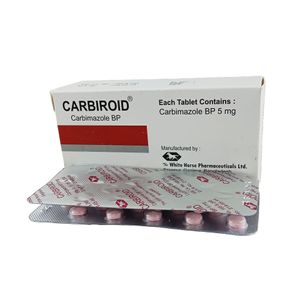
Carbizol Tablet 5 mg is an antithyroid medication used primarily to treat hyperthyroidism (overactive thyroid). It is a prodrug that is converted into methimazole, which then inhibits thyroid hormone production.
Carbizol Tablet 5 mg is used for:
| Brand Name | Carbizol |
|---|---|
| Type | Tablet |
| Weight | 5 mg |
| Generic | Carbimazole |
| Manufacturer | Square Pharmaceuticals Ltd. |
| Available in | English বাংলা |
Carbizol Tablet 5 mg works by inhibiting the enzyme thyroid peroxidase, which is essential for the synthesis of thyroid hormones. By blocking this enzyme, carbimazole reduces the production of thyroid hormones (thyroxine and triiodothyronine) in the thyroid gland, thereby alleviating symptoms of hyperthyroidism.
Carbizol Tablet 5 mg typically begins to show effects within 1-2 weeks of starting treatment. However, it may take several weeks to months to achieve optimal control of thyroid hormone levels and to fully stabilize symptoms.
Carbizol Tablet 5 mg is absorbed from the gastrointestinal tract following oral administration. It is converted into its active form, methimazole, in the body.
The primary route of elimination for carbimazole is via the urine. Methimazole, the active form, is also excreted in the urine after being metabolized by the liver.
The dosage of carbimazole depends on the severity of hyperthyroidism and individual patient factors. Typical starting doses are:
Carbizol Tablet 5 mg is administered orally in tablet form. It should be taken with or without food, as directed by a healthcare provider. Consistency in dosing time helps maintain stable drug levels.
Common side effects of carbimazole include:
Toxicity may occur with overdose or prolonged use, presenting as severe leukopenia, liver damage, or allergic reactions. Symptoms of toxicity may include severe sore throat, fever, jaundice, or unusual bleeding. Immediate medical attention is required in such cases.
Precautions include:
Carbizol Tablet 5 mg may interact with:
Use carbimazole with caution in:
Drug interactions include:
No significant food interactions are known with carbimazole. However, maintaining a consistent diet can help manage thyroid function effectively. Consult with a healthcare provider for personalized advice.
Carbizol Tablet 5 mg is classified as Category D for pregnancy, meaning there is evidence of risk to the fetus based on human studies. It should be used only if the potential benefits outweigh the risks. Consult a healthcare provider for alternatives or management during pregnancy.
Carbizol Tablet 5 mg is excreted in breast milk, and its use during lactation should be carefully considered. Consult with a healthcare provider to determine the risks and benefits, and consider alternative treatments if necessary.
In the event of an acute overdose, symptoms may include severe leukopenia or liver toxicity. Seek immediate medical attention. Treatment may involve supportive care and symptomatic management.
Carbizol Tablet 5 mg is contraindicated in:
Take carbimazole exactly as prescribed by a healthcare provider. Do not alter the dosage or frequency without consulting a provider. Regular follow-ups and blood tests are important to monitor effectiveness and detect side effects.
Store carbimazole tablets at room temperature, away from moisture and direct light. Keep out of reach of children and do not use after the expiration date. Dispose of unused medication properly.
The volume of distribution for carbimazole is not well-defined due to its topical application. The drug primarily acts locally in the thyroid gland.
The half-life of carbimazole is approximately 6 hours. However, the duration of action may be extended due to its conversion to methimazole and its effects on thyroid hormone production.
Carbizol Tablet 5 mg is primarily cleared by the kidneys after being metabolized in the liver. Regular monitoring of kidney and liver function is recommended to ensure safe clearance of the drug.
See in details version Carbizol Tablet 5 mg also Carbizol Tablet 5 mg in bangla