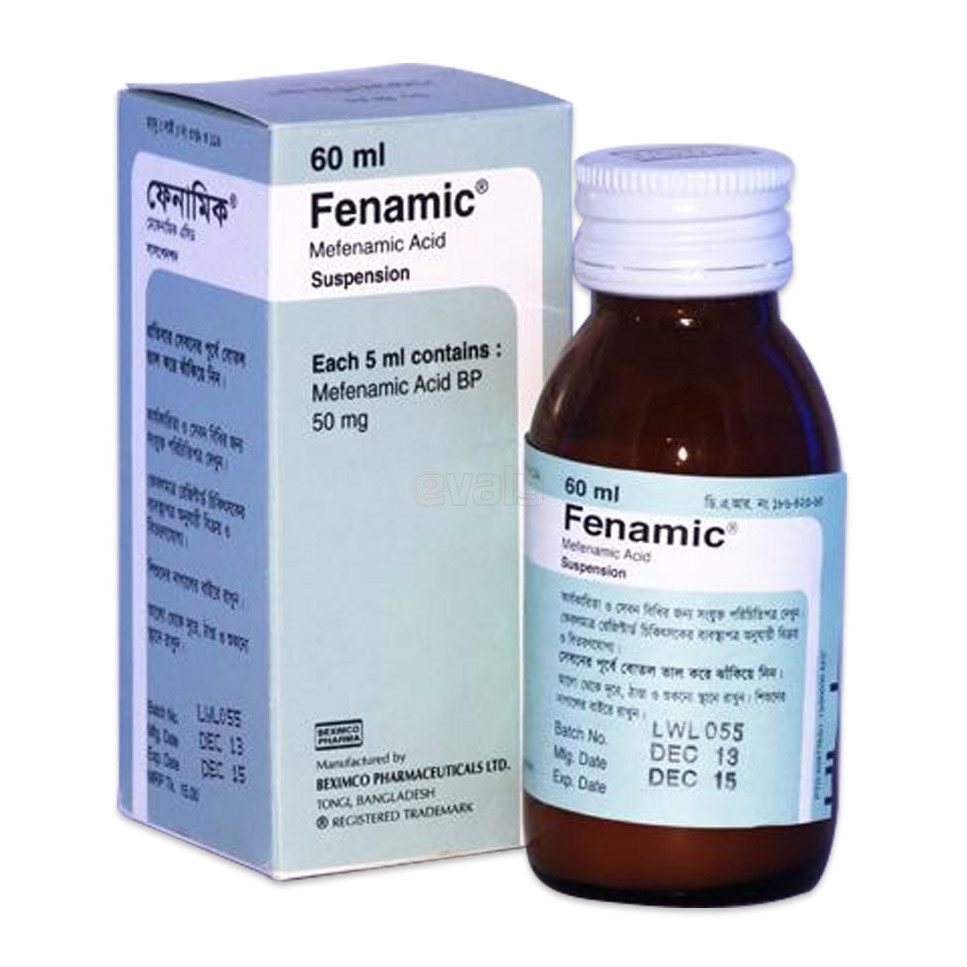
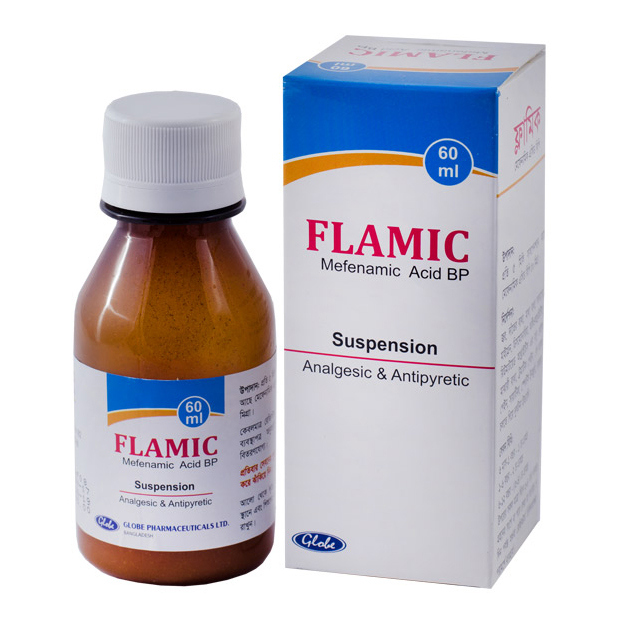
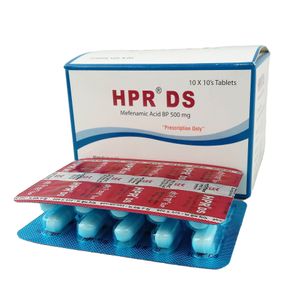
Mefenamic Acid is a medical drug that belongs to the class of medications called NSAIDs or non-steroidal anti-inflammatory drugs. Mefenamic Acid is typically used to treat mild to moderate pain, inflammation, and fever, and is generally available over the counter. It may also be prescribed to treat certain forms of arthritis, though it is not approved by the FDA for this use.
Mefenamic Acid is used to treat mild to moderate pain, inflammation, and fever. This medication can be used to treat a variety of conditions, including:
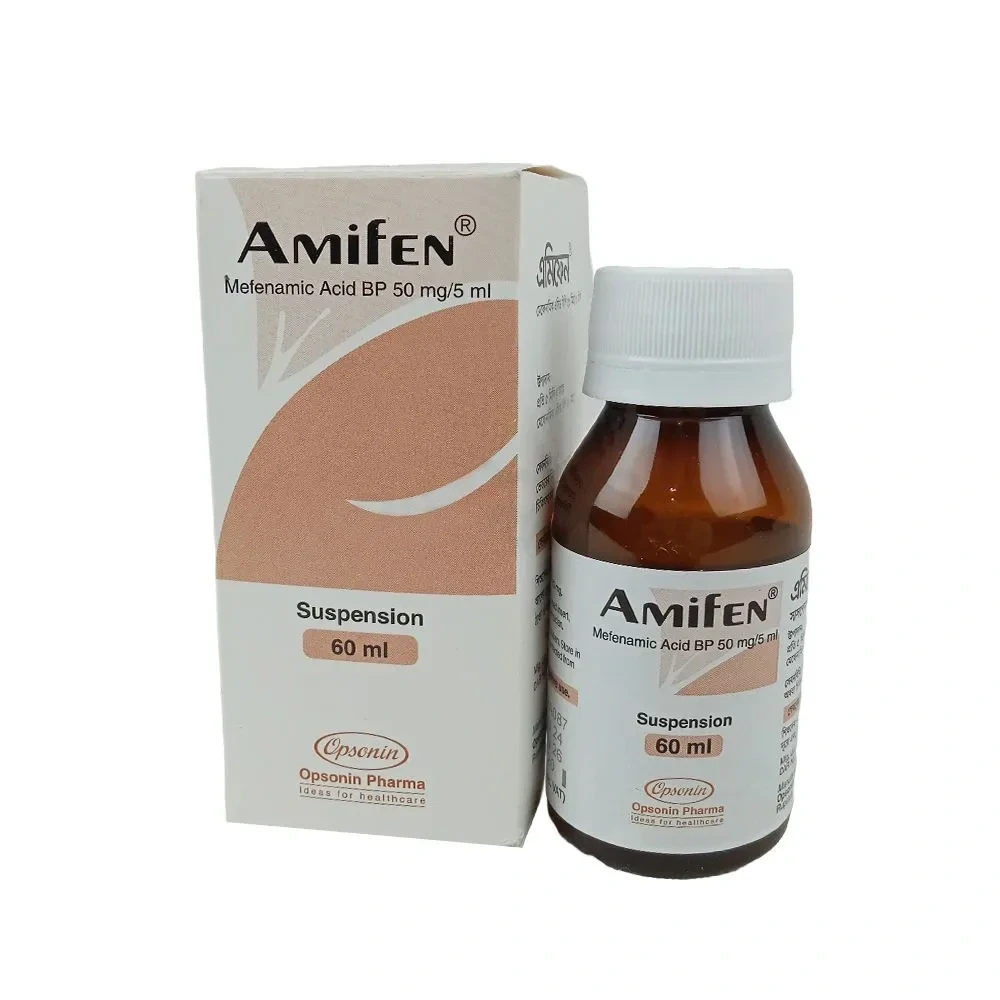
| Brand Name | Amifen |
|---|---|
| Type | Oral Suspension |
| Weight | 50 mg/5 ml |
| Generic | Mefenamic acid |
| Manufacturer | Opsonin Pharma Ltd. |
| Available in | English বাংলা |
Mefenamic Acid works by inhibiting the production of cyclooxygenase (COX), an enzyme involved in the synthesis of substances involved in inflammation and pain. By blocking the production of these substances, Mefenamic Acid is able to reduce the inflammation and pain associated with various conditions.
Mefenamic Acid typically begins to work within two hours of taking the medication. However, the onset of action may vary depending on the dose and strength of medication taken, and the individual characteristics of the patient.
Mefenamic Acid is completely and readily absorbed after oral administration, with peak plasma concentrations of the drug occurring 1 to 4 hours after ingestion. It is also rapidly absorbed through the skin.
Mefenamic Acid is eliminated primarily from the urine and feces. The drug is metabolized in the liver before it is eliminated in the urine.
The dosage of Mefenamic Acid varies depending on the patient’s age, medical condition, and the severity of their symptoms. Generally, the medication is taken orally, typically in 250mg to 500mg doses 3 to 4 times per day, not to exceed 1,500mg daily.
Mefenamic Acid can be taken orally, topically, or intravenously, depending on the condition being treated and the patient’s history and current health status. It is important to follow the instructions provided by the doctor or pharmacist when taking this medication.
The most common side effects of Mefenamic Acid include:
Less common side effects may include:
If any of these side effects are experienced, contact a doctor or pharmacist immediately.
Overdose of Mefenamic Acid can lead to serious toxicity. Symptoms of Mefenamic Acid overdose include stomach pain, nausea, vomit, drowsiness, dizziness, low blood pressure, and tinnitus. If an overdose is suspected, seek medical attention immediately.
Before taking Mefenamic Acid, individuals should inform their doctor or pharmacist of any medical conditions, allergies, or other medications being taken, as this medication may interact adversely with certain conditions and other medications.
Mefenamic Acid may interact with certain medications, including:
It is important to tell your doctor or pharmacist about all medications and other supplements being taken in order to reduce the risk of interactions and adverse reactions.
Mefenamic Acid may affect the ability of the lungs to eliminate certain toxins, making it more difficult for individuals with bronchial asthma to breathe. Individuals with a history of ulcer disease should tell their doctor before taking Mefenamic Acid because it may increase the chance of stomach bleeding.
Drugs that may interact adversely with Mefenamic Acid include antacids, aspirin, lithium, warfarin, ACE inhibitors, probenecid, other NSAIDs, and tacrolimus.
Mefenamic Acid may interact with certain foods, such as those that are high in caffeine, alcohol, or potassium. It is important to avoid alcohol while taking this medication, as it can aggravate the side effects of Mefenamic Acid.
Mefenamic Acid should not be used during pregnancy unless absolutely necessary. Additionally, the drug should be used with caution in breastfeeding mothers, as it can pass through the breast milk.
Mefenamic Acid should be used with caution in breastfeeding women, as the drug may pass through the breast milk and affect the infant. Women who are breastfeeding should consult their doctor before taking this medication.
If an acute overdose of Mefenamic Acid is suspected, seek medical attention immediately, as serious toxicity can occur. Symptoms of Mefenamic Acid overdose include stomach pain, nausea, vomiting, drowsiness, dizziness, low blood pressure, and tinnitus.
Mefenamic Acid is contraindicated in individuals with a hypersensitivity or history of allergic reactions to aspirin or other NSAIDs. The drug should also not be used in individuals with a history of ulcer disease, or those who are taking other medications and supplements.
Mefenamic Acid should be taken exactly as directed by the doctor or pharmacist. Missing doses or taking more than directed may lead to serious toxicity. It is important to follow the instructions carefully and to consult a healthcare provider if any questions or concerns arise.
Mefenamic Acid should be stored at room temperature in a dry and air tight container. It should be kept out of the reach of children and pets.
The volume of distribution of Mefenamic Acid is estimated to be 36 L, indicating that the drug is widely distributed throughout the body.
The half-life of Mefenamic Acid is estimated to be 3.7 hours, indicating that it is rapidly cleared from the body.
The elimination half-life of Mefenamic Acid is estimated to be 2.6 hours, indicating that it is rapidly cleared from the body.
See in details version Amifen Oral Suspension 50 mg/5 ml also Amifen Oral Suspension 50 mg/5 ml in bangla