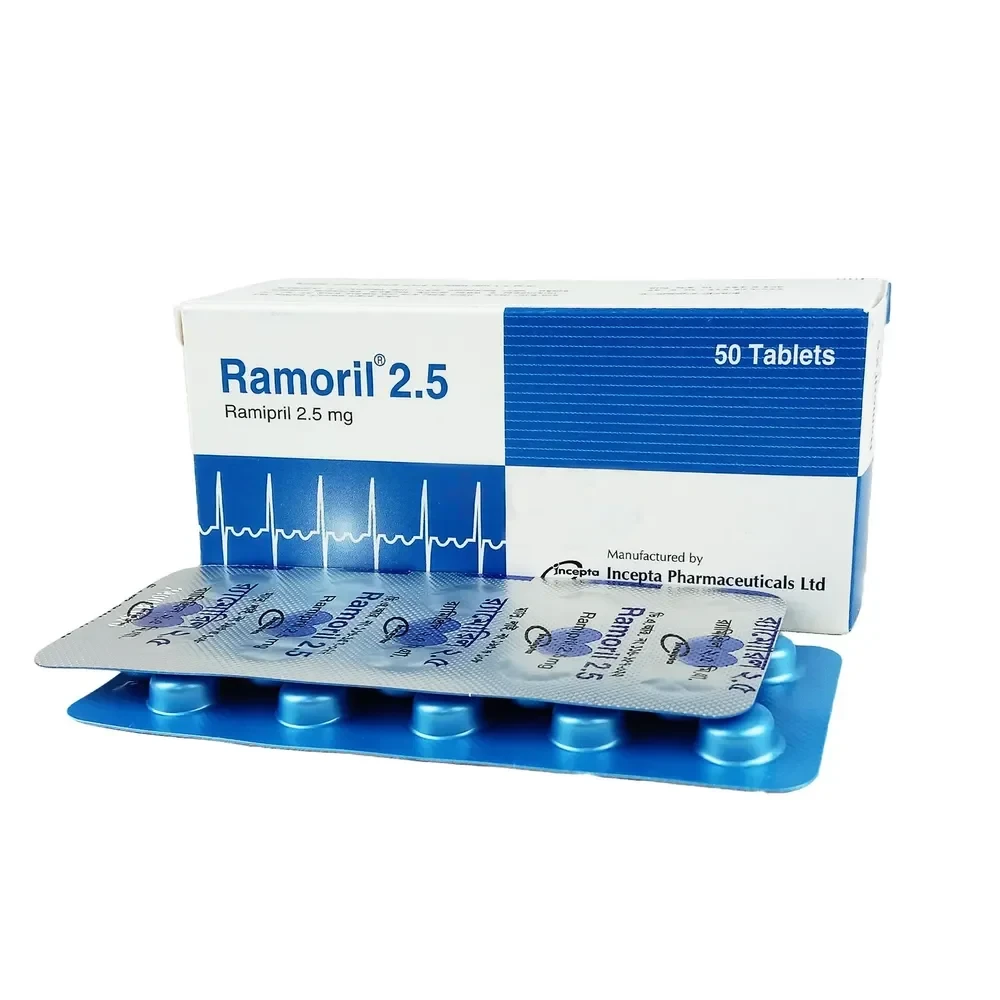
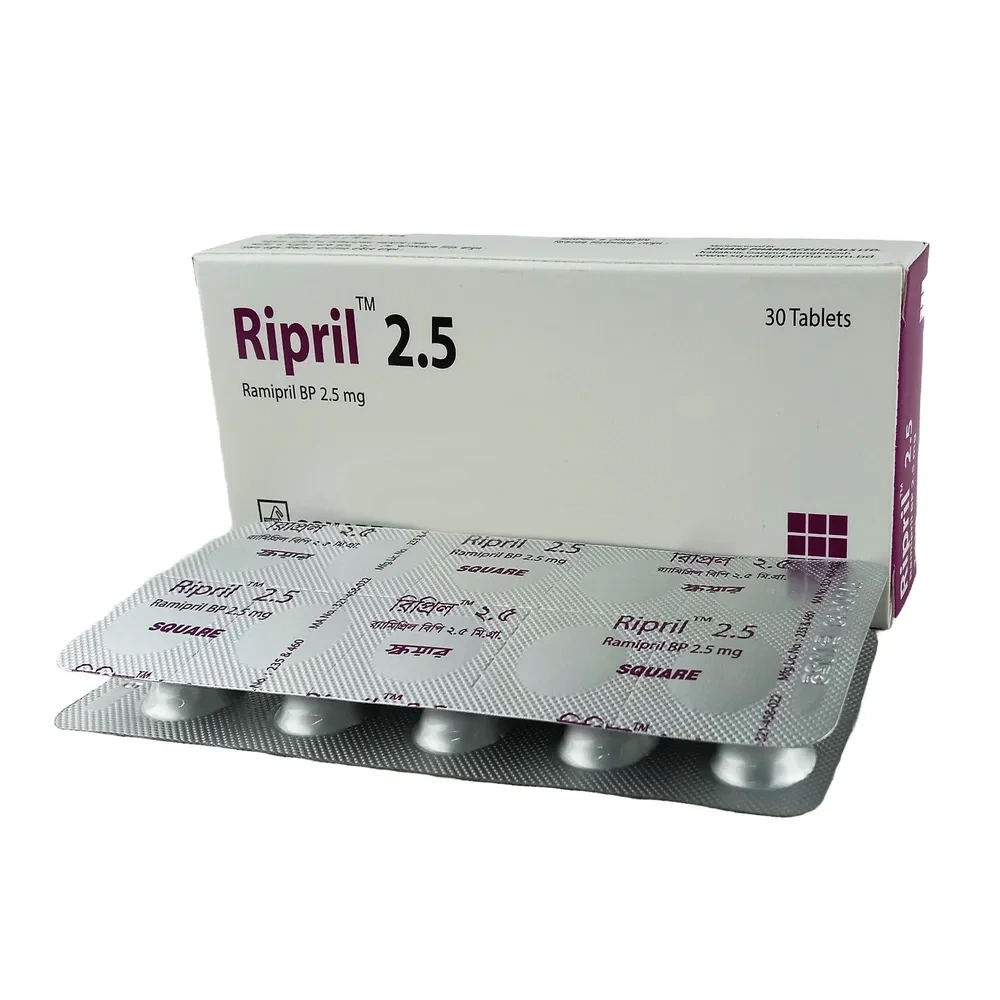
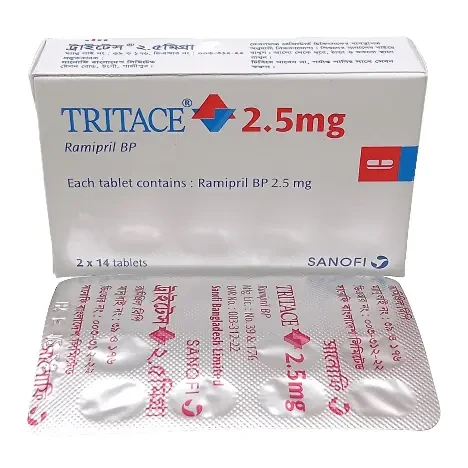
Introduction
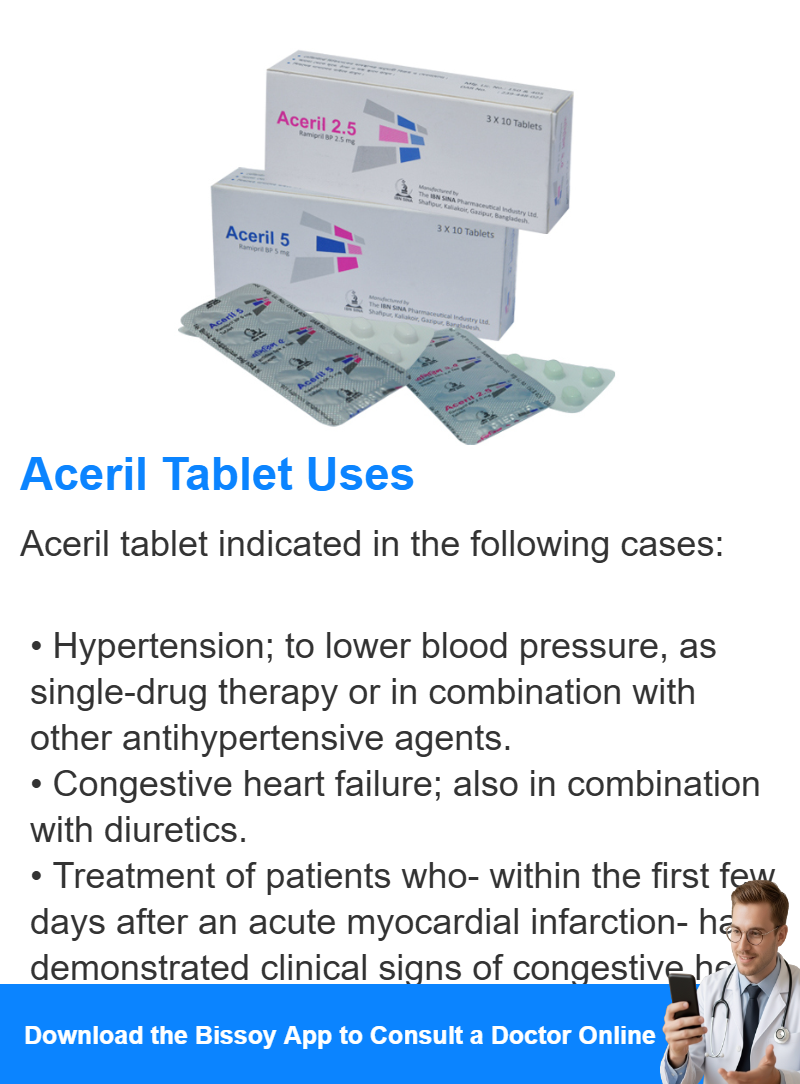
Aceril Tablet 2.5 mg is a prodrug belonging to the angiotensin-converting enzyme (ACE) inhibitor class of medications. It is metabolized to ramiprilat in the liver and, to a lesser extent, kidneys. Aceril Tablet 2.5 mgat is a potent, competitive inhibitor of ACE, the enzyme responsible for the conversion of angiotensin I (ATI) to angiotensin II (ATII). ATII regulates blood pressure and is a key component of the renin-angiotensin-aldosterone system (RAAS). Aceril Tablet 2.5 mg may be used in the treatment of hypertension, congestive heart failure, nephropathy, and to reduce the rate of death, myocardial infarction and stroke in individuals at high risk of cardiovascular events.
Uses
Aceril Tablet 2.5 mg is an ACE inhibitor used for the management of hypertension and the reduction of cardiovascular mortality following myocardial infarction in hemodynamically stable patients with clinical signs of congestive heart failure.
For the management of mild to severe hypertension. May be used to reduce cardiovascular mortality following myocardial infarction in hemodynamically stable individuals who develop clinical signs of congestive heart failure within a few days following myocardial infarction. To reduce the rate of death, myocardial infarction and stroke in individuals at high risk of cardiovascular events. May be used to slow the progression of renal disease in individuals with hypertension, diabetes mellitus and microalubinuria or overt nephropathy.
Associated Conditions
Pharmacodynamics
Aceril Tablet 2.5 mg is an ACE inhibitor similar to benazepril, fosinopril and quinapril. It is an inactive prodrug that is converted to ramiprilat in the liver, the main site of activation, and kidneys. Aceril Tablet 2.5 mgat confers blood pressure lowing effects by antagonizing the effect of the RAAS. The RAAS is a homeostatic mechanism for regulating hemodynamics, water and electrolyte balance. During sympathetic stimulation or when renal blood pressure or blood flow is reduced, renin is released from the granular cells of the juxtaglomerular apparatus in the kidneys. In the blood stream, renin cleaves circulating angiotensinogen to ATI, which is subsequently cleaved to ATII by ACE. ATII increases blood pressure using a number of mechanisms. First, it stimulates the secretion of aldosterone from the adrenal cortex. Aldosterone travels to the distal convoluted tubule (DCT) and collecting tubule of nephrons where it increases sodium and water reabsorption by increasing the number of sodium channels and sodium-potassium ATPases on cell membranes. Second, ATII stimulates the secretion of vasopressin (also known as antidiuretic hormone or ADH) from the posterior pituitary gland. ADH stimulates further water reabsorption from the kidneys via insertion of aquaporin-2 channels on the apical surface of cells of the DCT and collecting tubules. Third, ATII increases blood pressure through direct arterial vasoconstriction. Stimulation of the Type 1 ATII receptor on vascular smooth muscle cells leads to a cascade of events resulting in myocyte contraction and vasoconstriction. In addition to these major effects, ATII induces the thirst response via stimulation of hypothalamic neurons. ACE inhibitors inhibit the rapid conversion of ATI to ATII and antagonize RAAS-induced increases in blood pressure. ACE (also known as kininase II) is also involved in the enzymatic deactivation of bradykinin, a vasodilator. Inhibiting the deactivation of bradykinin increases bradykinin levels and may sustain the effects of ramiprilat by causing increased vasodilation and decreased blood pressure.
Mechanism of Action
Aceril Tablet 2.5 mg inhibits the RAAS system by binding to and inhibiting ACE thereby preventing the conversion of angiotensin I to angiotensin II. As plasma levels of angiotensin II fall, less activation of the G-protein coupled receptors angiotensin receptor I (AT1R) and angiotensin receptor II (AT2R) occurs.
AT1R mediates vasoconstriction, inflammation, fibrosis, and oxidative stress through a variety of signaling pathways. These include Gq coupling to the inositol triphosphate pathway, activation of phospholipases C, A2, and D which contribute to eicosanoid production, activation of Ca2+ These counteracting effects are shared by the Mas receptor which is activated by Ang(1-7), a subtype of angiotensin produced by plasma esterases from AngI or by ACE2 from AngII produced through a secondary pathway by tonin and cathepsin G. Ang(1-7) also activates AT2R although the bulk of its effect is mediated by MasR.
ACE is also responsible for the breakdown of bradykinin. The resulting buildup of bradykinin due to ACE inhibition is thought to mediate the characteristic dry-cough as a side effect of ACE inhibitor medications.
Absorption
The extent of absorption is at least 50-60%.. Food decreases the rate of absorption from the GI tract without affecting the extent of absorption. The absolute bioavailabilities of ramipril and ramiprilat were 28% and 44%, respectively, when oral administration was compared to intravenous administration. The serum concentration of ramiprilat was unchanged when capsules were opened and the contents dissolved in water, dissolved in apple juice, or suspended in apple sauce.
Protein Binding
Protein binding of ramipril is about 73% and that of ramiprilat about 56%. Protein binding is independent of concentration over the range of 0.1μg/mL-10μg/mL
Route of Elimination
Following oral administration, about 60% of the dose is eliminated in the urine as unchanged ramipril (6
Half Life
Plasma concentrations of ramiprilat decline in a triphasic manner. Initial rapid decline represents distribution into tissues and has a half life of 2-4 hours. The half life of the apparent elimination phase is 9-18 hours, which is thought to represent clearance of free drug. The half-life of the terminal elimination phase is > 50 hours and thought to represent clearance of drug bound to ACE due to its slow dissociation. The half life of ramiprilat after multiple daily doses (MDDs) is dose-dependent, ranging from 13-17 hours with 5-10 mg MDDs to 27-36 hours for 2.5 mg MDDs.
Clearance
The renal clearance of ramipril and ramiprilat was reported to be 7.2 and 77.4 mL/min/1.73m2. The mean renal clearance of ramipril and ramiprilat is reported to be 10.7 and 126.8 mL/min in healthy elderly patients with normal renal function, additionally the Cmax of ramiprilat is approximately 20% higher in this population. While the pharmacokinetics of ramipril appear unaffected by reduced renal function, the plasma concentration and half-life of ramiprilat are increased. In patient's with hepatic failure the concentration of ramipril is initially increased while the tmax of ramiprilat is prolonged due to a reduced ability to metabolize the drug. However, steady state concentrations of ramiprilat are the same in hepatic failure as in healthy patients.
Toxicity
Symptoms of overdose may include excessive peripheral vasodilation (with marked hypotension and shock), bradycardia, electrolyte disturbances, and renal failure. Cases of ACE inhibitor induced hepatotoxicity have been reported in humans and presented as acute jaundice and elevated liver enzymes. Removal of the ACE inhbitor resulted in a decline in liver enzymes and re-challenge produced a subsequent increase.
There were no observed tumerogenic effects at chronic doses up to 500mg/kg/day to rats for 24 months or at doses up to 1000mg/kg/day to mice for 18 months. For both species doses were administered by gavage and equivalent to 200 time the maximum recommended human exposure based on body surface area.
No mutagenic activity was detected in the Ames test in bacteria, the micronucleus test in mice, unscheduled DNA synthesis in a human cell line, or a forward gene-mutation assay in a Chinese hamster ovary cell line. Several metabolites of ramipril also produced negative results in the Ames test.
No effects on fertility were seen in rats at doses up to 500mg/kg/day. No teratogenicity was observed in rats and cynomolgus monkeys at doses 400 times the maximum recommended human exposure nor in rabbites at 2 times the maximum recommended human exposure.
LD50 10 g/kg (rat). LD50 10.5 g/kg (mouse). LD50 1 g/kg (dog).
Food Interactions
- Avoid potassium-containing products. Potassium products increase the risk of hyperkalemia.
- Take with or without food. The absorption is unaffected by food.
Dosage
Hypertension: For the management of hypertension in adults not receiving a diuretic, the usual initial dose of Aceril Tablet 2.5 mg is 1.25-2.5 mg once daily. Dosage generally is adjusted no more rapidly than at 2 week intervals. The usual maintenance dosage in adults is 2.5-20 mg daily given as a single dose or in 2 divided doses daily. If BP is not controlled with Aceril Tablet 2.5 mg alone, a diuretic may be added.
Congestive heart failure after myocardial infarction: In this case, Aceril Tablet 2.5 mg therapy may be initiated as early as 2 days after myocardial infarction. An initial dose of 2.5 mg twice daily is recommended, but if hypotension occurs, dose should be reduced to 1.25 mg twice daily. Therapy is then titrated to a target daily dose of 5 mg twice daily.
Prevention of major cardiovascular events: In this case, the recommended dose is 2.5 mg once daily for the first week of therapy and 5 mg once daily for the following 3 weeks; dosage then may be increased, as tolerated, to a maintenance dosage of 10 mg once daily.
Dosage in renal impairment:
- For patients with hypertension and renal impairment: The recommended initial dose is 1.25 mg Aceril Tablet 2.5 mg once daily. Subsequent dosage should be titrated according to individual tolerance and BP response, up to a maximum of 5 mg daily.
- For patients with heart failure and renal impairment: The recommended dose is 1.25 mg once daily. The dose may be increased to 1.25 mg twice daily and up to a maximum dose of 2.5 mg twice daily depending upon clinical response and tolerability.