Introduction
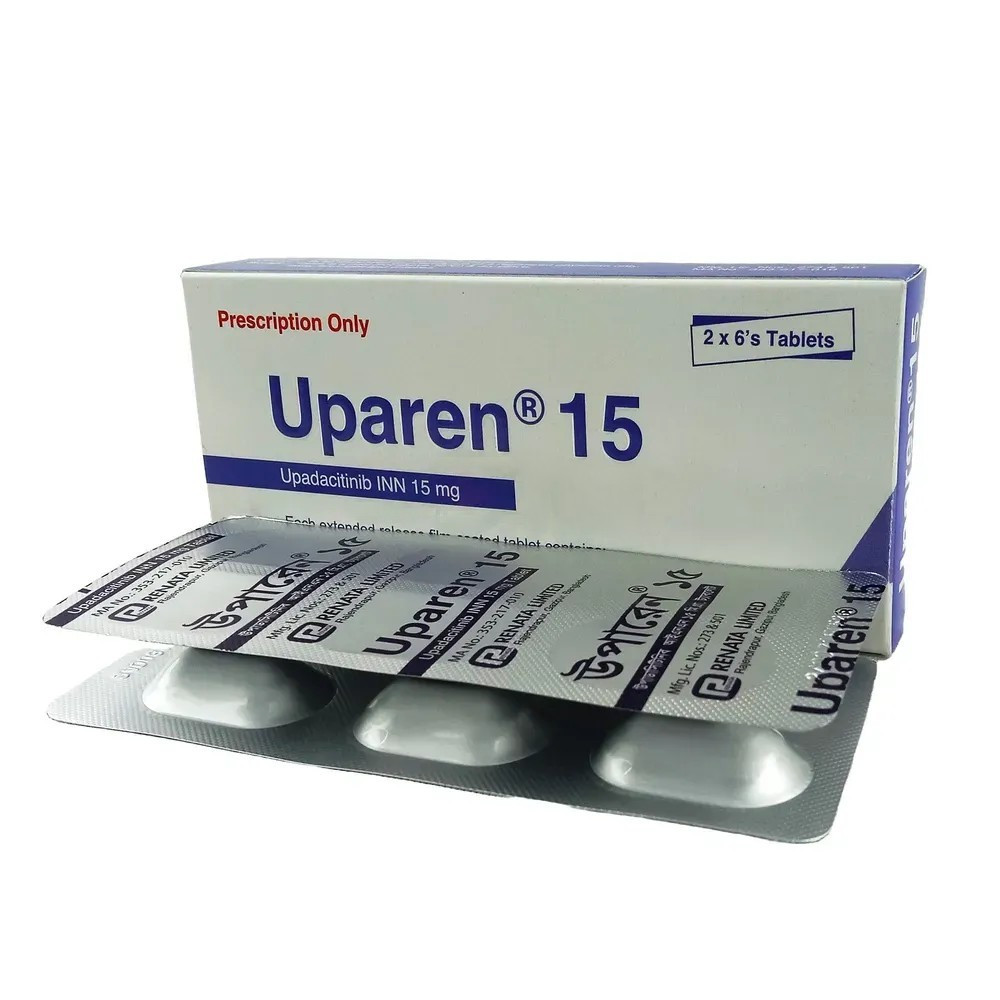
Upadacitinib is an oral Janus kinase (JAK)1-selective inhibitor and a disease-modifying antirheumatic drug (DMARD) used in the treatment of rheumatoid arthritis to slow down disease progression. Rheumatoid arthritis is a chronic autoimmune inflammatory disease affecting the peripheral joints. It is characterized by synovial inflammation and hyperplasia, autoantibody production, cartilage damage and bone destruction, leading to co-morbidities. Despite a variety of therapeutic agents available for treatment, up to 40% of the patients do not respond to current therapies, including biological therapies. The etiology of the disease is mostly unknown; however, the role of JAK as a driver of immune-mediated conditions was discovered, leading to the use of JAK as therapeutic targets for rheumatoid arthritis. To reduce dose-related toxicity (as seen with some pan-JAK inhibitors) without significantly affecting efficacy, more selective JAK1 inhibitors, upadacitinib and filgotinib, were developed.
It used for the treatment of adults with moderately to severely active rheumatoid arthritis who have had an inadequate response or intolerance to methotrexate. It is currently being investigated in several clinical trials assessing its therapeutic effectiveness in other inflammatory diseases, such as psoriatic arthritis, ankylosing spondylitis, ulcerative colitis, and atopic dermatitis.
Uses
Upadacitinib is an oral Janus kinase (JAK)1-selective inhibitor used in the treatment of moderate to severe rheumatoid arthritis in adult patients who did not respond well to methotrexate.
Upadacitinib is indicated for the treatment of adults with moderately to severely active rheumatoid arthritis who have had an inadequate response or intolerance to methotrexate.
For patients who do not responded well or are intolerant to one or more disease-modifying anti-rheumatic drugs (DMARDs), upadacitinib may be used as monotherapy or in combination with methotrexate (MTX).
Associated Conditions
Pharmacodynamics
Upadacitinib is a DMARD that works by inhibiting the Janus Kinases (JAKs), which are essential downstream cell signalling mediators of pro-inflammatory cytokines. It is believed that these pro-inflammatory cytokines play a role in many autoimmune inflammatory conditions, such as rheumatoid arthritis. In clinical trials, upadacitinib decreased the activity of pro-inflammatory interleukins, transiently increased the levels of lymphocytes, and insignificantly decreased the levels of immunoglobulins from the baseline.
Mechanism of Action
Rheumatoid arthritis (RA) is a chronic autoimmune inflammatory disease that involves the interplay of several mediators, including the immune cells (mainly T- and B-lymphocytes) and pro-inflammatory cytokines, such as the tumour necrosis factor (TNF), transforming growth factor (TGF), and interleukin 6 (IL-6). The Janus Kinase (JAK) family plays an essential role in the normal physiological functions (such as erythropoiesis), but also the signalling of pro-inflammatory cytokines that are implicated in many immune-mediated diseases. The JAK family consists of four isoforms (JAK1, JAK2, JAK3, and Tyrosine Kinase 2) that each interacts with different cytokine receptors and uniquely associates with the intracellular domains of Type I/II cytokine receptors. JAK1 is primarily involved in the signalling transduction pathways of IL-6, IFN and the common γ -chain cytokines, including IL-2 and IL-15. IL-6 has been closely studied in particular, as it is a major cytokine involved in B- and T-cell differentiation and the acute phase response in inflammation.
Upon interaction of cytokines with their cytokine receptors, the JAKs mediate the JAK-STAT signal transduction pathway in response to receptor activation. JAKs are tyrosine kinases that cause phosphorylation of several proteins, including cytokine receptors and JAKs themselves. Phosphorylation of JAKs promotes the phosphorylation and activation of the signalling molecules called STATs, leading to their nuclear translocation, binding to DNA promoters, and target gene transcription. JAK1-mediated signalling pathways ultimately promote pro-inflammatory events, such as increased proliferation and survival of immune cells, T cell differentiation, and macrophage activation. Upadacitinib is a selective JAK1 inhibitor that has a negligible effect on JAK3, leading to an improved drug safety profile. Upadacitinib blocks the cellular processes that contribute to the inflammatory conditions in rheumatoid arthritis. In human leukocytes cellular assays, upadacitinib inhibited JAK1/3-induced phosphorylation of STAT3/5 mediated by IL-6/7.
Absorption
Upadacitinib displays a dose-proportional pharmacokinetic profile over the therapeutic dose range. Following oral administration, the median time to reach Cmax (Tmax) ranges from 2 to 4 hours. The steady-state plasma concentrations of upadacitinib are reached within 4 days following multiple once-daily administrations, with minimal accumulation. Food intake has no clinically relevant effect on the AUC, Cmax, and Cmin of upadacitinib from the extended-release formulation.
Volume of Distribution
The volume of distribution of upadacitinib in a patient with rheumatoid arthritis and a body weight of 74 kg is estimated to be 224 L following oral administration of an extended-release formula. In a pharmacokinetic study consisting of healthy volunteers receiving the extended-release formulation, the steady-state volume of distribution was 294 L. Upadacitinib partitions similarly between plasma and blood cellular components with a blood to plasma ratio of 1.0.
Protein Binding
Upadacitinib is 52% bound to human plasma proteins.
Route of Elimination
Following administration of a single radio-labelled dose from the immediate-release formulation, approximately 53% of the total dose was excreted in the feces where 38% of the excreted dose was an unchanged parent drug. About 43% of the total dose was excreted in the urine, where 24% of that dose was in the unchanged parent drug form. Approximately 34% of the total dose of upadacitinib dose was excreted as metabolites.
Half Life
The mean terminal elimination half-life of upadacitinib ranged from 8 to 14 hours following administration of the extended-release formulation. In clinical trials, approximately 90% of upadacitinib in the systemic circulation was eliminated within 24 hours of dosing.
Clearance
The apparent oral clearance of upadacitinib in healthy volunteers receiving the extended-release formulation was 53.7 L/h.
Toxicity
There is limited clinical information on the overdose from upacitinib: in clinical trials, once-daily administration of 60 mg in extended-release formulations were well tolerated. In case of an overdose, it is recommended that the patient is monitored for signs and symptoms of adverse reactions and treated with appropriate symptomatic treatment.
The oral LD50 in rats is 14500 mg/kg.
Food Interactions
- Avoid St. John's Wort. This herb induces CYP3A metabolism and may reduce serum levels of upadacitinib.
- Take with or without food. Food does not significantly affect drug concentrations.
Dosage
Pediatric Use: The safety and efficacy of Upadacitinib in children and adolescents aged 0 to 18 years have not yet been established. No data are available.
Hepatic Impairment: Upadacitinib is not recommended in patients with severe hepatic impairment.