Introduction
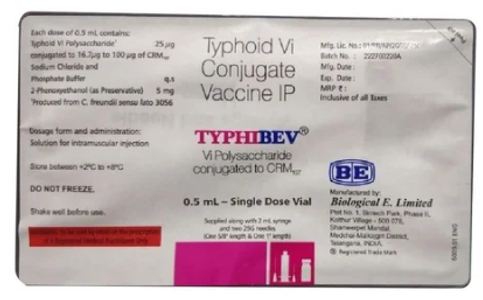
The Typhoid Conjugate Vaccine is a vaccine designed to protect against typhoid fever, a serious bacterial infection caused by *Salmonella typhi*. This vaccine is particularly used in regions where typhoid fever is common and helps to reduce the incidence of the disease by stimulating the body's immune response.
Uses
The Typhoid Conjugate Vaccine is used to:
- Prevent Typhoid Fever: It provides immunity against typhoid fever, especially in areas where the disease is prevalent.
- Protect Travelers: It is recommended for travelers visiting regions where typhoid fever is endemic.
- Immunize Children: It is recommended for children aged 6 months and older, as part of routine immunization programs in high-risk areas.
Mechanism of Action
The vaccine works by introducing a conjugated form of the *Salmonella typhi* polysaccharide antigens into the body. These antigens are linked to a protein carrier, enhancing the immune response. This process helps the body develop immunity by producing antibodies against the bacteria.
How Long Does It Take to Work?
Immunity typically develops within 2 weeks after vaccination. Full protection is usually achieved after this period, and the vaccine provides long-lasting protection against typhoid fever.
Absorption
The vaccine is administered intramuscularly or subcutaneously, and the antigens are absorbed into the bloodstream where they stimulate an immune response.
Route of Elimination
The vaccine's components are metabolized and eliminated through natural physiological processes. The polysaccharide antigens are broken down and excreted via the kidneys and liver.
Dosage
A single 0.5 mL dose of the vaccine should be administered intramuscularly in the deltoid muscle of upper arm if muscle mass is adequate for children 2 years and above, adolescents and adults. For infants and toddlers aged >6 months to <2 years of age, the vaccine should be administered intramuscularly in the vastus lateralis muscle on anterolateral aspect of thigh. This vaccine should not be injected into the gluteal area or in any areas where there may be a nerve trunk.The standard dosage of the Typhoid Conjugate Vaccine is:
- Children (6 months to 2 years): 0.5 mL intramuscularly (IM)
- Children (2 years and older) and Adults: 0.5 mL IM
Administration
The Typhoid Conjugate Vaccine is administered via intramuscular injection into the deltoid muscle or another appropriate site. It is important to follow vaccination schedules and guidelines for optimal efficacy.
Side Effects
Common side effects may include:
- Pain at the injection site
- Redness or swelling at the injection site
- Fever
- Fatigue
Toxicity
There is no known toxicity associated with the Typhoid Conjugate Vaccine. However, any severe allergic reactions or unusual symptoms following vaccination should be evaluated by a healthcare provider.
Precautions
Precautions include:
- Assessing for any history of severe allergic reactions to vaccines or components of the vaccine.
- Monitoring for any adverse reactions post-vaccination.
- Consulting a healthcare provider if there are any concerns about the patient’s immune status or underlying health conditions.
Interaction
The vaccine may interact with other vaccines or immunosuppressive treatments. It is important to inform the healthcare provider of all current medications and vaccines.
Disease Interaction
Patients with severe febrile illness or compromised immune systems may need to defer vaccination until their condition improves. Consult a healthcare provider for personalized advice.
Drug Interaction
There are no significant drug interactions reported with the Typhoid Conjugate Vaccine. However, patients should disclose all medications they are taking to ensure compatibility.
Food Interactions
There are no known food interactions with the Typhoid Conjugate Vaccine. The vaccine can be administered regardless of food intake.
Pregnancy Use
The vaccine is generally considered safe for use during pregnancy, especially in high-risk areas. However, it should only be administered if the benefits outweigh potential risks. Pregnant individuals should consult their healthcare provider before vaccination.
Lactation Use
The vaccine is considered safe during lactation. It does not affect breastfeeding or the quality of breast milk.
Acute Overdose
In the case of an overdose, which is unlikely with a single dose vaccine, there is no specific treatment required. Monitoring and supportive care should be provided as needed.
Contraindication
The vaccine is contraindicated in individuals with a history of severe allergic reactions to the vaccine or its components. It should not be administered to individuals with certain health conditions without prior consultation with a healthcare provider.
Use Direction
Follow the vaccination schedule and dosage as prescribed. Ensure that the vaccine is administered by a trained healthcare professional in a sterile environment to avoid complications.
Storage Conditions
Store the vaccine in a refrigerator at 2-8°C (36-46°F). Do not freeze. Keep the vaccine in its original packaging to protect it from light and maintain stability.
Volume of Distribution
The volume of distribution is not specifically applicable to vaccines as they do not enter the bloodstream in the same manner as systemic medications.
Half Life
The half-life of vaccine antigens is not typically measured as they are designed to provoke an immune response rather than have a pharmacokinetic profile like drugs.
Clearance
The components of the vaccine are metabolized and cleared through normal physiological processes, including the kidneys and liver.