Introduction
Promethazine is an N-dimethylaminopropyl derivative of phenothiazine that was developed in France in 1946. Promethazine antagonizes a variety of receptors, allowing it to be used for a number of indications including allergic reactions, pain, sedation, nausea, and vomiting.
Uses
Promethazine is a first-generation antihistamine used for the treatment of allergic conditions, nausea and vomiting, and motion sickness.
Promethazine tablets and suppositories are indicated to treat rhinitis, allergic conjunctivitis, allergic reactions to blood or plasma, dermographism, anaphylactic reactions, sedation, nausea, vomiting, pain, motion sickness, and allergic skin reactions. Promethazine cough syrup with phenylephrine and codeine is indicated to relieve cough and upper respiratory symptoms, and nasal congestion associated with allergy or the common cold.
Associated Conditions
Pharmacodynamics
Promethazine is is a histamine H1 antagonist that can be used for it's ability to induce sedation, reduce pain, and treat allergic reactions. Promethazine's effects generally last 4-6h but can last up to 12h. Patients should be counselled regarding CNS and respiratory depression, reduce seizure threshold, and bone marrow depression.
Mechanism of Action
Promethazine is a an antagonist of histamine H1, post-synaptic mesolimbic dopamine, alpha adrenergic, muscarinic, and NMDA receptors. The antihistamine action is used to treat allergic reactions. Antagonism of muscarinic and NMDA receptors contribute to its use as a sleep aid, as well as for anxiety and tension. Antagonism of histamine H1, muscarinic, and dopamine receptors in the medullary vomiting center make promethazine useful in the treatment of nausea and vomiting.
Absorption
A 25mg dose of intramuscular promethazine reaches a Cmax of 22ng/mL. Intravenous promethazine reaches a Cmax of 10.0ng/mL, with a Tmax of 4-10h, and an AUC of 14,466ng*h/mL. Oral promethazine is only 25% bioavailable due to first pass metabolism. Oral promethazine reaches a Cmax of 2.4-18.0ng/mL, with a Tmax of 1.5-3h, and an AUC of 11,511ng*h/mL.
Volume of Distribution
The volume of distribution of promethazine is approximately 970L or 30L/kg.
Protein Binding
Promethazine is 93% protein bound in serum, mostly to albumin.
Route of Elimination
An intravenous dose of promethazine is 0.64% eliminated in the urine as the unchanged parent drug, 0.02-2.02% in the urine as desmethylpromethazine, 10% in the urine as promethazine sulfoxide.
Half Life
The elimination half life of promethazine is approximately 12-15h.
Clearance
The intravenous clearance of promethazine is approximately 1.14L/min. The renal clearance of promethazine is 5.9mL/min and the renal clearance of promethazine sulfoxide is 90.4mL/min.
Toxicity
The intraperitoneal LD50 in rats is 170mg/kg and in mice is 160mg/kg. The subcutaneous LD50 in rats is 400mg/kg and in mice is 240mg/kg. The oral LD50 in mice is 255mg/kg.
Patients experiencing an overdose of promethazine may present with mild central nervous system and cardiovascular depression, hypotension, respiratory depression, unconciousness, hyperreflexia, hypertonia, ataxia, athetosis, extensor-plantar reflexes, convulsions, dry mouth, flushing, gastrointestinal symptoms, and fixed, dilated pupils. Treat overdoses with symptomatic and supportive treatment, which may include activated charcoal, sodium sulfate, magnesium sulfate, controlled ventilation, diazepam, intravenous fluids, vasopressors, norepinephrine, phenylephrine, anticholinergic antiparkinsonian agents, diphenhydramine, barbiturates, or oxygen.
Food Interactions
- Avoid alcohol. Alcohol may increase the sedation caused by promethazine.
Dosage
Elderly: No specific dosage recommendations.
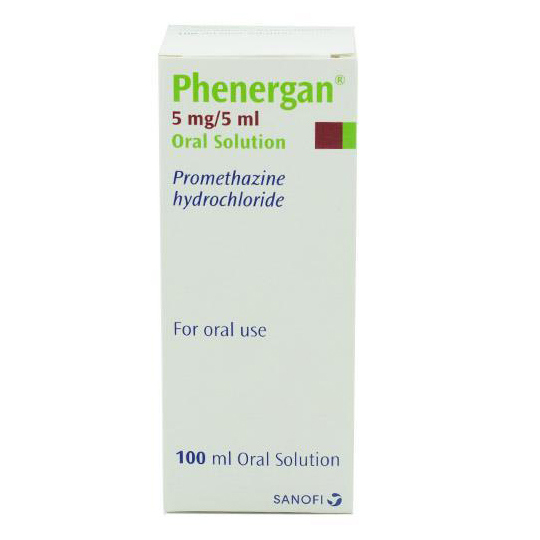
Children: They may be treated more conveniently by the elixir containing 5 mg/5 ml.
As an antihistamine in allergy:
- Children of 2-5 years: 5-15 mg
- Children of 5-10 years: 10-25 mg
- In the case where two doses in 24 hours are required, the lower dose stated should be given.
- Children of 2-5 years: 15-20 mg
- Children of 5-10 years: 20-25 mg
- Given as a single night-time dose