Introduction
Pramipexole is a non-ergot dopamine agonist used in the treatment of Parkinson's disease and restless legs syndrome (RLS). It stimulates dopamine receptors in the brain, helping to improve motor symptoms such as tremor, rigidity, bradykinesia, and impaired movement.
Pramipexole may be used alone in early Parkinson's disease or in combination with levodopa in advanced disease. It helps improve motor function and quality of life but does not alter the progression of the underlying neurodegenerative disorder.
Uses
Pramipexole is a non-ergot dopamine agonist used to treat the signs and symptoms of idiopathic Parkinson's disease and Restless Legs Syndrome (RLS).
This drug is indicated for the symptomatic treatment of Parkinson’s disease . This drug can be administered as monotherapy or in conjunction with levodopa. It is also indicated for symptomatic treatment of moderate to severe primary Restless Legs Syndrome (RLS) .
Associated Conditions
Pharmacodynamics
Parkinson's Disease
Through the stimulation of dopamine receptors, pramipexole is thought to relieve the symptoms of Parkinson's Disease . The motor symptoms of Parkinson's disease occur partly due to a reduction of dopamine in the substantia nigra of the brain . Dopamine is an essential neurotransmitter that has major effects on motor movements in humans.
Restless Legs Syndrome
Pramipexole likely restores balance to the dopaminergic system, controlling the symptoms of this condition. Restless legs syndrome is thought to occur, in part, through dysfunction of the dopaminergic system, resulting in unpleasant lower extremity symptoms , .
Other effects
In addition to the abovementioned effects, animal studies demonstrate that pramipexole blocks dopamine synthesis, release, and turnover. Additionally, this drug is neuroprotective to dopamine neuron degeneration after ischemia or methamphetamine neurotoxicity .
Mechanism of Action
The exact mechanism of action of pramipexole as a treatment for Parkinson's disease is unknown at this time. It is thought, however, that the ability of pramipexole to cause stimulation of the dopamine receptors in the striatum of the brain, a region that receives a vast array of neurological input and is responsible for a wide variety of functions, may be involved. Studies performed in animals show that pramipexole influences striatal neuronal transmission rates following activation of dopamine receptors .
Pramipexole is considered a non-ergot dopamine agonist that shows specificity and strong activity at the D2 subfamily of dopamine receptors in vitro, binding selectively and dopamine D2 receptors and showing a preference for the dopamine D3 receptor subtype rather than other subtypes . The clinical significance of this binding specificity is unknown , .
Absorption
The bioavailability of pramipexole is higher than 90%, indicating a high level of absorption .
Volume of Distribution
This drug is extensively distributed in the body with a volume of distribution of approximately 500 L .
Protein Binding
About 15% bound to plasma proteins .
Route of Elimination
The main route of pramipexole elimination, with 90% of a pramipexole dose found in the urine, almost entirely as unchanged drug .
Half Life
About 8.5-12 hours .
Clearance
Renal clearance is about 400 mL/min, indicating heavy secretion by the renal tubules .
Toxicity
LD50
Rat Oral LD 50 >800 mg/kg .
Carcinogenicity, mutagenicity, impact on fertility
Pramipexole was not found to be carcinogenic in 2-year studies on mice and rats at 0.3, 2.2, and 11 times the maximum recommended human dose (MRHD). No increased incidence of tumors was observed . No mutagenicity was detected in various assays, including the Ames test. Finally, pramipexole given to rat models at a dose of 2.5 mg/kg/day (5 times the maximum recommended human dose), increased estrus cycles and inhibited implantation of a fertilized ovum. Decreased levels of prolactin, a hormone necessary for implantation and maintenance of early pregnancy, were measured . The significance of these findings in humans is unknown.
Pregnancy
This drug is considered a pregnancy category C drug, showing teratogenic effects in animals. Currently, there no studies of pramipexole in human pregnancy. Animal reproduction studies are not always predictive of human response. This drug should only be used in pregnancy if the potential benefit outweighs the possible fetal risks .
Nursing
Whether pramipexole is excreted in human milk is unknown. A decision should be made regarding the administration pramipexole during nursing, or whether to discontinue it during nursing, as many drugs are excreted in human milk. The potential exists for risk to the infant if pramipexole is, in fact, excreted in the milk .
Food Interactions
- Take with or without food. Food decreases the risk of GI side effects.
Dosage
Parkinson's disease:
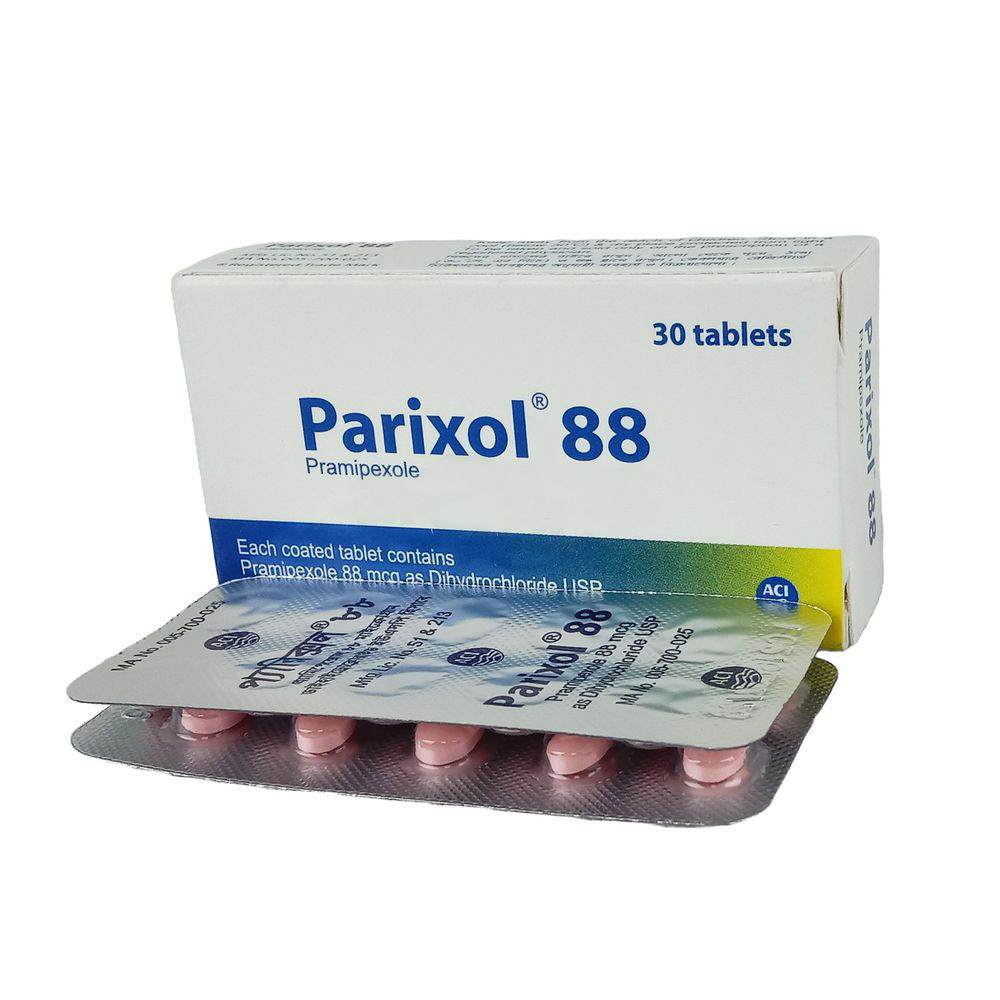
- Initial dose: 88 micrograms 3 times daily, dose doubled every 5-7 days if tolerated to 350 micrograms 3 times daily; further increased if necessary by 180 micrograms 3 times daily at weekly intervals
- Maximum dose: 3.3 mg daily in 3 divided doses. During pramipexole dose titration and maintenance Levodopa dose should be reduced.
- Initial dose: 88 micrograms once daily 2-3 hours before bedtime, dose doubled every 4-7 days if necessary to 350 micrograms daily.
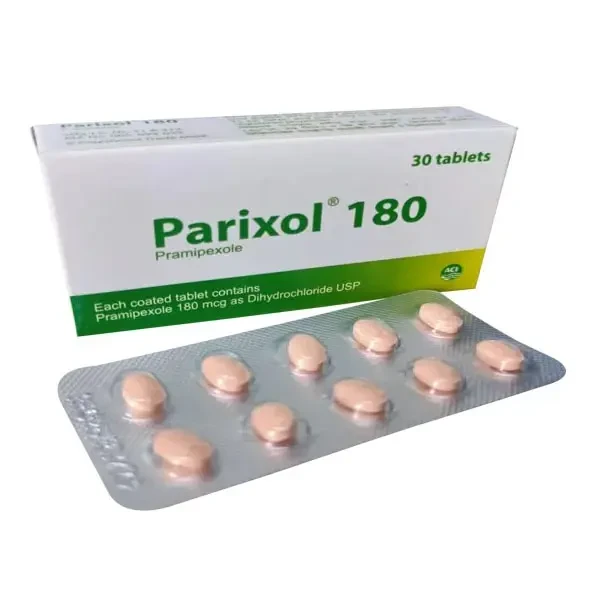
- Maximum dose: 540 micrograms daily.