Introduction
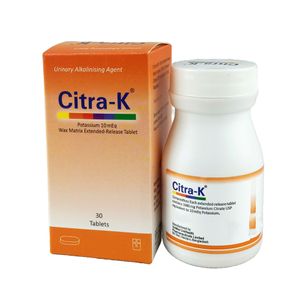
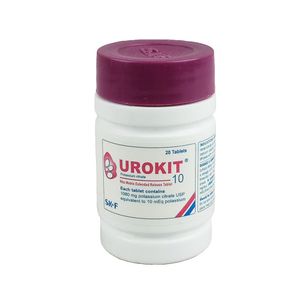
Potassium citrate (also known as tripotassium citrate) is a potassium salt of citric acid. It is a white, hygroscopic crystalline powder. It is odorless with a saline taste. It contains 38.3% potassium by mass. In the monohydrate form it is highly hygroscopic and deliquescent. Potassium citrate is used to treat a kidney stone condition called renal tubular acidosis. Potassium Citrate is indicated also for the management of Hypocitraturic calcium oxalate nephrolithiasis.
Uses
Potassium citrate is an agent used to manage renal tubular acidosis, hypocitraturic calcium oxalate nephrolithiasis, and uric acid lithiasis with or without calcium stones.
For the management of renal tubular acidosis, hypocitraturic calcium oxalate nephrolithiasis, and uric acid lithiasis with or without calcium stones.
Associated Conditions
Pharmacodynamics
Potassium citrate induces changes in the urine which renders urine less susceptible to the formation of crystals and stones from salts e.g. calcium oxalate, calcium phosphate and uric acid. Increased citrate levels in the urine will make complexation with calcium which decrease the calcium ion activity and decrease the chance for the formation of calcium phosphate crystals. Citrate also inhibits the spontaneous nucleation of calcium oxalate and calcium phosphate.
Mechanism of Action
After oral administration of potassium citrate, its metabolism yields alkaline load. Potassium Citrate therapy appears to increase urinary citrate mainly by modifying the renal handling of citrate, rather than by increasing the filtered load of citrate. In addition to raising urinary pH and citrate, Potassium Citrate increases urinary potassium by approximately the amount contained in the medication. In some patients, Potassium Citrate causes a transient reduction in urinary calcium.
Route of Elimination
Urinary; less than 5% unchanged.
Toxicity
LD50 (dog): Intravenous 176 mg/kg.
Food Interactions
- Take with food. Take potassium citrate within 30 minutes of eating to limit gastrointestinal irritation.
Dosage
Monitor serum electrolytes (sodium, potassium, chloride and carbon dioxide), serum creatinine and complete blood counts every four months and more frequently in patients with cardiac disease, renal disease or acidosis. Perform electrocardiograms periodically. Treatment should be discontinued if there is hyperkalemia, a significant rise in serum creatinine or a significant fall in blood hemocrit or hemoglobin.
Severe Hypocitraturia: In patients with severe hypocitraturia (urinary citrate <150 mg/day), therapy should be initiated at a dosage of 60 mEq/day (30 mEq two times/day or 20 mEq three times/day with meals or within 30 minutes after meals or bedtime snack). Twenty-four hour urinary citrate and/or urinary pH measurements should be used to determine the adequacy of the initial dosage and to evaluate the effectiveness of any dosage change. In addition, urinary citrate and/or pH should be measured every four months. Doses of Potassium Citrate greater than 100 mEq/day have not been studied and should be avoided.
Mild To Moderate Hypocitraturia: In patients with mild to moderate hypocitraturia (urinary citrate > 150 mg/day) therapy should be initiated at 30 mEq/day (15 mEq two times/day or 10 mEq three times/day within 30 minutes after meals or bedtime snack). Twenty-four hour urinary citrate and/or urinary pH measurements should be used to determine the adequacy of the initial dosage and to evaluate the effectiveness of any dosage change. Doses of Potassium Citrate greater than 100 mEq/day have not been studied and should be avoided.