Introduction
Pioglitazone + Metformin Hydrochloride is a combination medication used to manage type 2 diabetes mellitus. Pioglitazone is a thiazolidinedione (TZD) that improves insulin sensitivity, while Metformin is a biguanide that decreases glucose production in the liver. Together, they help control blood sugar levels in people with type 2 diabetes, particularly when diet and exercise alone are insufficient.
Uses
This combination medication is used for:
- Managing blood glucose levels in type 2 diabetes mellitus.
- Improving glycemic control in conjunction with diet and exercise.
- Enhancing insulin sensitivity and reducing hepatic glucose production.
Mechanism of Action
The mechanism of action involves two complementary processes:
- Pioglitazone: Enhances insulin sensitivity in muscle and adipose tissue by activating peroxisome proliferator-activated receptor-gamma (PPAR-γ). This increases glucose uptake and utilization by these tissues.
- Metformin: Reduces hepatic glucose production, particularly by decreasing gluconeogenesis in the liver. It also improves insulin sensitivity and enhances peripheral glucose uptake.
How Long Does It Take to Work?
Patients may start to see improvements in blood glucose levels within 1-2 weeks of starting the medication, though optimal control may take up to 3 months. Full benefits, including better glycemic control, may take several months of consistent use.
Absorption
Both components of the combination are absorbed through the gastrointestinal tract:
- Pioglitazone: Rapidly absorbed with peak plasma concentrations occurring within 2 hours after oral administration.
- Metformin: Absorbed primarily from the small intestine, with peak plasma concentrations occurring approximately 2-3 hours after ingestion.
Route of Elimination
The elimination routes for each component are as follows:
- Pioglitazone: Metabolized primarily in the liver and excreted in the urine (approximately 15%) and feces (approximately 55%).
- Metformin: Excreted unchanged in the urine.
Dosage
General: The use of antihyperglycemic therapy in the management of type 2 diabetes should be individualized on the basis of effectiveness and tolerability while not exceeding the maximum recommended daily dose of Pioglitazone 45 mg and Metformin 2550 mg.Dosage Recommendations: Selecting the starting dose of Pioglitazone & Metformin should be based on the patient's current regimen of Pioglitazone and/or Metformin. Pioglitazone & Metformin should be given in divided daily doses with meals to reduce the gastrointestinal side effects associated with Metformin.
Starting dose for patients inadequately controlled on Metformin monotherapy Based on the usual starting dose of Pioglitazone (15-30 mg daily), Pioglitazone & Metformin may be initiated at either the 15 mg/500 mg or 15 mg/850 mg tablet strength once or twice daily, and gradually titrated after assessing adequacy of therapeutic response. Starting dose for patients who initially responded to Pioglitazone monotherapy and require additional glycemic control
Based on the usual starting doses of Metformin (500 mg twice daily or 850 mg daily), Pioglitazone & Metformin may be initiated at either the 15 mg/500 mg twice daily or 15 mg/850 mg tablet strength once daily, and gradually titrated after assessing adequacy of therapeutic response.
Starting dose for patients switching from combination therapy of Pioglitazone plus Metformin as separate tablets Pioglitazone & Metformin may be initiated with either the 15 mg/500 mg or 15 mg/850 mg tablet strengths based on the dose of Pioglitazone and Metformin already being taken.
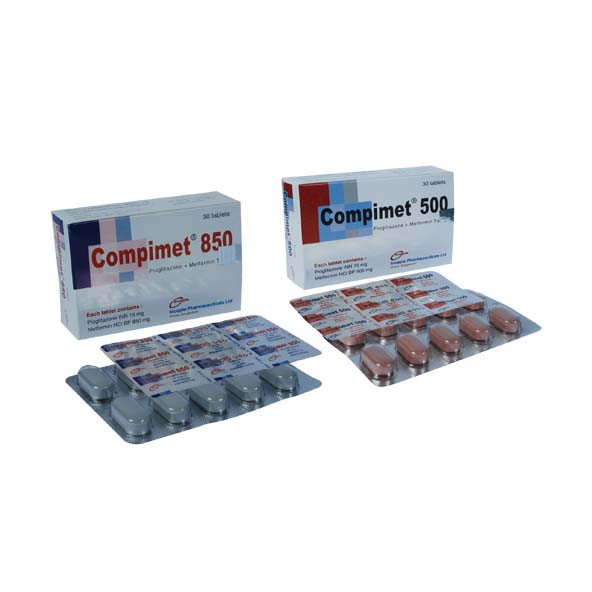
Maximum Recommended Dose: Pioglitazone & Metformin tablets are available as a 15 mg Pioglitazone plus 500 mg Metformin or a 15 mg Pioglitazone plus 850 mg Metformin formulation for oral administration. The maximum recommended dose for Pioglitazone is 45 mg daily. The maximum recommended daily dose for Metformin is 2550 mg in adults. Special Patient Populations: The initial and maintenance dosing of combination of Pioglitazone and Metformin should be conservative in patients with advanced age, due to the potential for decreased renal function in this population. Generally, elderly, debilitated, and malnourished patients should not be titrated to the maximum dose of combination of Pioglitazone and Metformin. Monitoring of renal function is necessary to aid in prevention of Metformin associated lactic acidosis, particularly in the elderly. Therapy with combination of Pioglitazone and Metformin should not be initiated if the patient exhibits clinical evidence of active liver disease or increased serumtransaminase levels (ALT greater than 2.5 times the upper limit of normal) at start of therapy. Liver enzyme monitoring is recommended in all patients prior to initiation of therapy with combination of Pioglitazone and Metformin and periodically thereafter
The dosage of Pioglitazone + Metformin Hydrochloride varies based on the specific formulation and patient needs. A common starting dose is one tablet containing 15 mg of Pioglitazone and 500 mg of Metformin, taken twice daily with meals. Dosage may be adjusted based on blood glucose levels and tolerance, up to a maximum of 45 mg of Pioglitazone and 2000 mg of Metformin per day.
Administration
Administer the medication orally with meals to reduce gastrointestinal side effects. Tablets should be swallowed whole and not crushed or chewed. Adhere to the dosage prescribed by a healthcare provider and follow any specific instructions regarding timing and meal intake.
Side Effects
Common side effects include:
- Gastrointestinal issues such as nausea, diarrhea, and abdominal pain.
- Headache, dizziness, and fatigue.
- Edema and weight gain (particularly with Pioglitazone).
Serious side effects may include:
- Lactic acidosis (associated with Metformin).
- Heart failure (associated with Pioglitazone).
- Severe hypoglycemia.
Toxicity
Overdose or toxicity may present with symptoms such as severe gastrointestinal distress, lactic acidosis, and hypoglycemia. Seek immediate medical attention if an overdose is suspected or if severe symptoms occur. The treatment for toxicity involves supportive care and symptomatic management.
Precautions
Precautions include:
- Monitoring for signs of lactic acidosis, especially in patients with renal impairment.
- Regular monitoring of liver function and blood glucose levels.
- Avoiding use in patients with significant hepatic dysfunction or a history of heart failure.
Interaction
Drug interactions include:
- Pioglitazone may interact with drugs that affect hepatic enzyme activity (e.g., CYP3A4 inhibitors and inducers).
- Metformin may interact with other medications that affect renal function or blood glucose levels.
Consult a healthcare provider to manage potential drug interactions effectively.
Disease Interaction
Patients with the following conditions should use this medication with caution:
- Renal impairment (risk of lactic acidosis).
- Hepatic dysfunction (risk of exacerbation of liver disease).
- Heart failure (particularly with Pioglitazone).
Drug Interaction
Potential drug interactions include:
- Insulin and other antidiabetic drugs may increase the risk of hypoglycemia.
- Medications that affect renal function can influence Metformin clearance and increase the risk of lactic acidosis.
Consult with a healthcare provider to address and manage these interactions.
Food Interactions
Taking the medication with food can help reduce gastrointestinal side effects. Avoid excessive alcohol consumption as it can increase the risk of hypoglycemia and lactic acidosis.
Pregnancy Use
The safety of Pioglitazone + Metformin Hydrochloride during pregnancy has not been established. It is generally advised to use alternative medications or insulin therapy to manage blood glucose levels during pregnancy. Consult a healthcare provider for personalized advice.
Lactation Use
The use of Pioglitazone + Metformin Hydrochloride during lactation is not well-studied. It is recommended to consult a healthcare provider to assess the risks and benefits before using this medication while breastfeeding.
Acute Overdose
In case of acute overdose, symptoms may include severe gastrointestinal distress, hypoglycemia, or lactic acidosis. Immediate medical attention is required. Treatment may involve supportive care, glucose administration, and management of lactic acidosis if present.
Contraindication
This medication is contraindicated in:
- Patients with severe renal impairment.
- Patients with a history of hypersensitivity to Pioglitazone, Metformin, or any component of the formulation.
- Patients with active liver disease or significant heart failure.
Use Direction
Follow the prescribed dosage and administration instructions provided by a healthcare provider. Generally, take one tablet or as directed, with meals to minimize gastrointestinal side effects. Adhere to regular monitoring and follow-up appointments to assess efficacy and safety.
Storage Conditions
Store the medication in a cool, dry place away from direct sunlight and moisture. Keep out of reach of children and follow any specific storage instructions on the product label to maintain efficacy.
Volume of Distribution
The volume of distribution for Pioglitazone is approximately 0.2 L/kg, indicating distribution into body tissues. Metformin has a volume of distribution of about 1.6 L/kg, reflecting its distribution in tissues and limited plasma binding.
Half Life
The half-life of each component is as follows:
- Pioglitazone: Approximately 3-7 hours.
- Metformin: Approximately 6-7 hours.
Clearance
Pioglitazone is primarily cleared through hepatic metabolism, while Metformin is excreted unchanged in the urine. The clearance rate for Metformin is significantly influenced by renal function, whereas Pioglitazone clearance is less affected by renal impairment.