Introduction
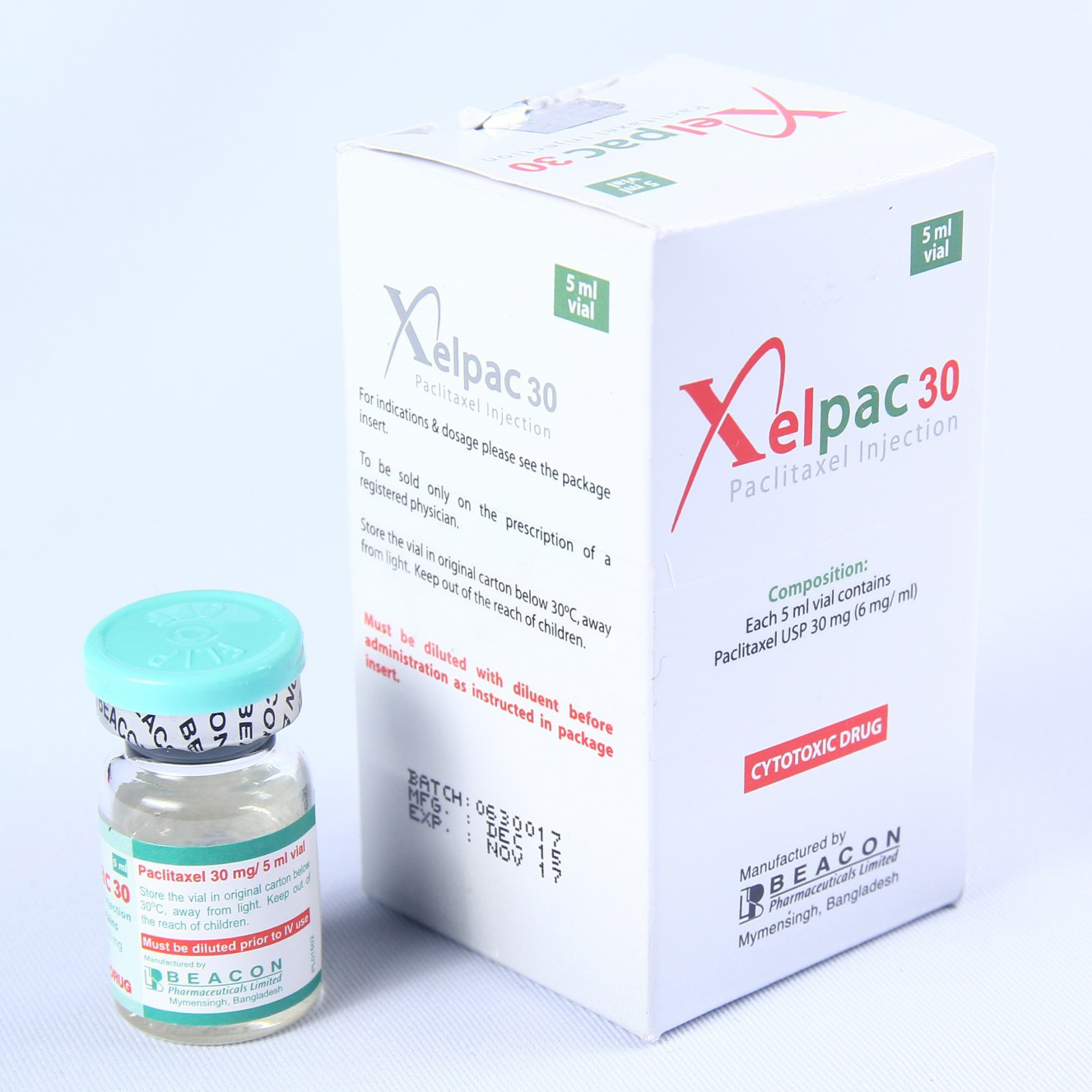
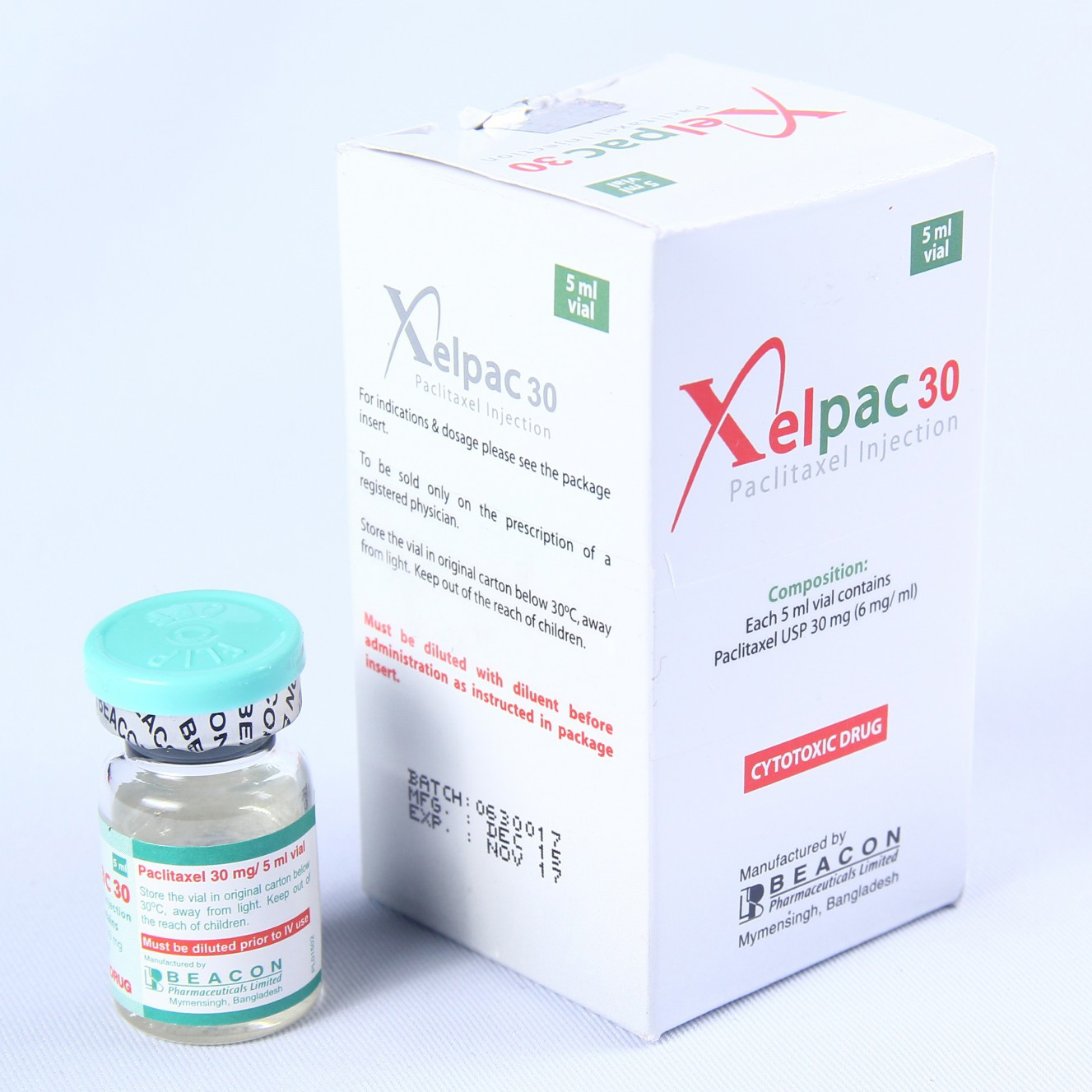
Paclitaxel is a chemotherapeutic agent and mitotic inhibitor used to treat a variety of cancers. It works by stabilizing microtubules, preventing their disassembly during cell division, which leads to cell cycle arrest and apoptosis of rapidly dividing cancer cells. Originally isolated from the bark of the Pacific yew tree, paclitaxel is administered intravenously and is also available in an albumin-bound formulation that enhances drug delivery and may improve tolerability.
Uses
Paclitaxel is a taxoid chemotherapeutic agent used as first-line and subsequent therapy for the treatment of advanced carcinoma of the ovary, and other various cancers including breast and lung cancer.
Used in the treatment of Kaposi's sarcoma and cancer of the lung, ovarian, and breast. Abraxane® is specfically indicated for the treatment of metastatic breast cancer and locally advanced or metastatic non-small cell lung cancer.
Associated Conditions
Pharmacodynamics
Paclitaxel is a taxoid antineoplastic agent indicated as first-line and subsequent therapy for the treatment of advanced carcinoma of the ovary, and other various cancers including breast cancer. Paclitaxel is a novel antimicrotubule agent that promotes the assembly of microtubules from tubulin dimers and stabilizes microtubules by preventing depolymerization. This stability results in the inhibition of the normal dynamic reorganization of the microtubule network that is essential for vital interphase and mitotic cellular functions. In addition, paclitaxel induces abnormal arrays or "bundles" of microtubules throughout the cell cycle and multiple asters of microtubules during mitosis.
Mechanism of Action
Paclitaxel interferes with the normal function of microtubule growth. Whereas drugs like colchicine cause the depolymerization of microtubules in vivo, paclitaxel arrests their function by having the opposite effect; it hyper-stabilizes their structure. This destroys the cell's ability to use its cytoskeleton in a flexible manner. Specifically, paclitaxel binds to the β subunit of tubulin. Tubulin is the "building block" of mictotubules, and the binding of paclitaxel locks these building blocks in place. The resulting microtubule/paclitaxel complex does not have the ability to disassemble. This adversely affects cell function because the shortening and lengthening of microtubules (termed dynamic instability) is necessary for their function as a transportation highway for the cell. Chromosomes, for example, rely upon this property of microtubules during mitosis. Further research has indicated that paclitaxel induces programmed cell death (apoptosis) in cancer cells by binding to an apoptosis stopping protein called Bcl-2 (B-cell leukemia 2) and thus arresting its function.
Absorption
When a 24 hour infusion of 135 mg/m^2 is given to ovarian cancer patients, the maximum plasma concentration (Cmax) is 195 ng/mL, while the AUC is 6300 ng•h/mL.
Volume of Distribution
- 227 to 688 L/m^2 [apparent volume of distribution at steady-state, 24 hour infusion]
Protein Binding
89%-98% bound to plasma protein. The presence of cimetidine, ranitidine, dexamethasone, or diphenhydramine did not affect protein binding of paclitaxel.
Route of Elimination
In 5 patients administered a 225 or 250 mg/m2 dose of radiolabeled paclitaxel as a 3-hour infusion, a mean of 71% of the radioactivity was excreted in the feces in 120 hours, and 14% was recovered in the urine.
Half Life
When a 24 hour infusion of 135 mg/m^2 is given to ovarian cancer patients, the elimination half=life is 52.7 hours.
Clearance
- 21.7 L/h/m2 [Dose 135 mg/m2, infusion duration 24 h]
- 23.8 L/h/m2 [Dose 175 mg/m2, infusion duration 24 h]
- 7 L/h/m2 [Dose 135 mg/m2, infusion duration 3 h]
- 12.2 L/h/m2 [Dose 175 mg/m2, infusion duration 3 h]
Toxicity
Rat (ipr) LD50=32530 µg/kg. Symptoms of overdose include bone marrow suppression, peripheral neurotoxicity, and mucositis. Overdoses in pediatric patients may be associated with acute ethanol toxicity.
Food Interactions
- Avoid echinacea. Co-administration may decrease the effectiveness of immunosuppressants, and echinacea may induce CYP3A4 increasing paclitaxel metabolism.
- Exercise caution with grapefruit products. Grapefruit inhibits CYP3A4 metabolism, which may increase the serum concentration of paclitaxel.
- Exercise caution with St. John's Wort. This herb induces the CYP3A4 metabolism of paclitaxel and may reduce its serum concentration.
Dosage
First-line treatment of ovarian cancer: Although alternative medication regimens for paclitaxel are under investigation at present, a combination therapy of paclitaxel and cisplatin is recommended. Depending on the duration of infusion, two different dosages are recommended for paclitaxel treatment: 175 mg/m2 of paclitaxel is administered as an intravenous infusion over a period of three hours followed thereafter by 75 mg/m2 of cisplatin and the therapy is repeated at 3-week intervals, or 135 mg/m2 of paclitaxel is administered as an intravenous infusion over a period of 24 hours followed thereafter by 75 mg/m2 of cisplatin and the therapy is repeated at 3-week intervals.
Second-line treatment of ovarian cancer: The recommended dose of paclitaxel is 175 mg/m2 administered over 3 hours, with a 3-week interval between courses.
Adjuvant chemotherapy in breast carcinoma: The recommended dose of paclitaxel is 175 mg/m2 administered over a period of 3 hours every 3 weeks for four courses, following AC therapy.
First-line chemotherapy of breast carcinoma: When used in combination with doxorubicin (50 mg/m2), paclitaxel should be administered 24 hours after doxorubicin. The recommended dose of paclitaxel is 220 mg/m2 administered intravenously over a period of 3 hours, with a 3-week interval between courses. When used in combination with trastuzumab, the recommended dose of paclitaxel is 175 mg/m2 administered intravenously over a period of 3 hours, with a 3-week interval between courses. Paclitaxel infusion may be started the day following the first dose of trastuzumab or immediately after the subsequent doses of trastuzumab if the preceding dose of trastuzumab was well tolerated.
Second-line chemotherapy of breast carcinoma: The recommended dose of paclitaxel is 175 mg/m2 administered over a period of 3 hours, with a 3-week interval between courses.
Advanced non-small-cell lung cancer: The recommended dose of paclitaxel is 175 mg/m2 administered over 3 hours followed by 80 mg/m2 of cisplatin, with a 3-week interval between courses.
Treatment of AIDS-related KS: The recommended dose of paclitaxel is 100 mg/m2 administered as a 3-hour intravenous infusion every two weeks.
Dose adjustment: Subsequent doses of paclitaxel should be administered according to individual patient tolerance. Paclitaxel should not be re-administered until the neutrophil count is >1.5 x 10⁹/1 (>1 x 10⁹/1 for KS patients) and the platelet count is >100 x 109/1 (>75 x 109/1 for KS patients).