Introduction
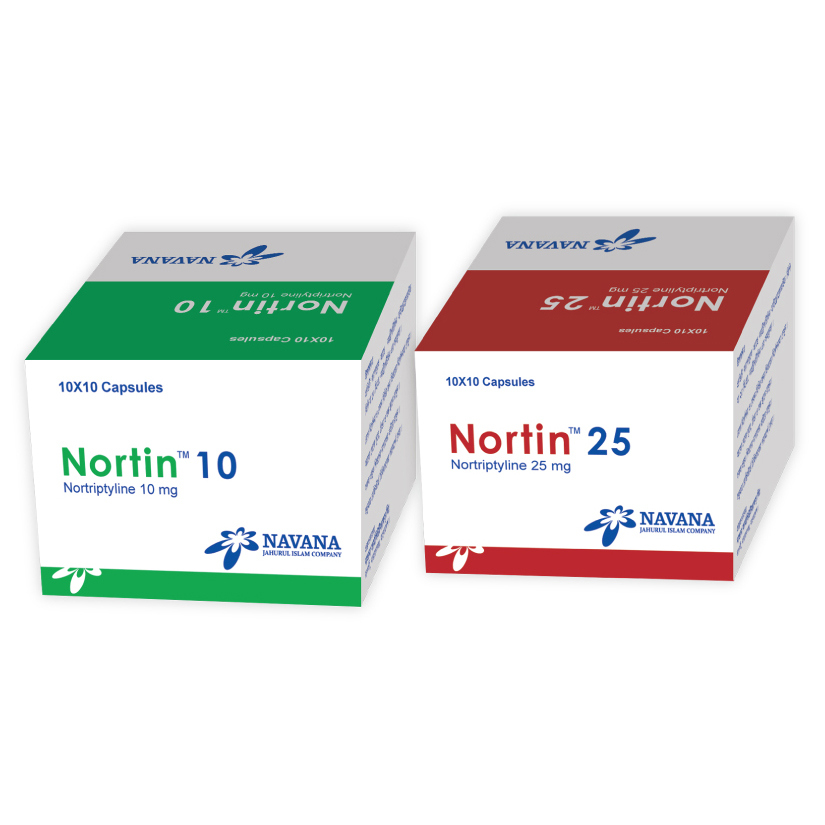
Nortriptyline hydrochloride, the active metabolite of amitriptyline, is a tricyclic antidepressant (TCA). It is used in the treatment of major depression and is also used off-label for chronic pain and other conditions.
Uses
Nortriptyline is a tricyclic antidepressant used in the treatment of depression.
Nortriptyline is indicated for the relief of the symptoms of major depressive disorder (MDD). Some off-label uses for this drug include treatment of chronic pain, myofascial pain, neuralgia, and irritable bowel syndrome.
Associated Conditions
Pharmacodynamics
Nortriptyline exerts antidepressant effects likely by inhibiting the reuptake of serotonin and norepinephrine at neuronal cell membranes. It also exerts antimuscarinic effects through its actions on the acetylcholine receptor.
Mechanism of Action
Though prescribing information does not identify a specific mechanism of action for nortriptyline, is believed that nortriptyline either inhibits the reuptake of the neurotransmitter serotonin at the neuronal membrane or acts at the level of the beta-adrenergic receptors. It displays a more selective reuptake inhibition for noradrenaline, which may explain increased symptom improvement after nortriptyline therapy. Tricyclic antidepressants do not inhibit monoamine oxidase nor do they affect dopamine reuptake. As with other tricyclics, nortriptyline displays affinity for other receptors including mACh receptors, histamine receptors, 5-HT receptors, in addition to other receptors.
Absorption
Nortriptyline is readily absorbed in the gastrointestinal tract with extensive variation in plasma levels, depending on the patient. This drug undergoes first-pass metabolism and its plasma concentrations are attained within 7 to 8.5 hours after oral administration. The bioavailability of nortriptyline varies considerably and ranges from 45 to 85%.
Volume of Distribution
The apparent volume of distribution (Vd)β, estimated after intravenous administration is 1633 ± 268 L within the range of 1460 to 2030 (21 ± 4 L/kg). Nortriptyline crosses the placenta and is found in the breast milk. It distributes to the heart, lungs, brain, and the liver.
Protein Binding
The plasma protein binding of nortriptyline is approximately 93%.
Route of Elimination
Nortriptyline and its metabolites are mainly excreted in the urine, where only small amounts (2%) of the total drug is recovered as unchanged parent compound. Approximately one-third of a single orally administered dose is excreted in urine within 24 hours. Small amounts are excreted in feces via biliary elimination.
Half Life
The average plasma half-life of nortriptyline in healthy volunteers is about 26 hours, but is said to range from 16 to 38 hours. One study mentions a mean half-life of about 39 hours.
Clearance
The average plasma clearance of nortriptyline in a study of healthy volunteers was 54 L/h. The average systemic clearance of nortriptyline is 30.6 ± 6.9 L / h, within the range of 18.6 to 39.6 L/hour.
Toxicity
The oral LD50 of nortriptyline in the rat is 405 mg/kg.Symptoms of overdose with nortriptyline include cardiac arrhythmias, severe hypotension, shock, congestive heart failure, pulmonary edema, convulsions, coma, and CNS depression. Changes in the electrocardiogram, particularly in QRS segment, may be indicative of tricyclic antidepressant toxicity.
Food Interactions
- Avoid alcohol.
- Take with or without food. Food decreases gastrointestinal irritation.
Dosage
- Adult: Low dose initially increased as necessary to 75-100 mg daily in divided doses or as a single dose (max. 150 mg daily)
- Adolescent & Elderly: 30-50 mg daily in divided doses; Child not recommended for depression
- Child 7 years: 10 mg
- 8-11 years: 10-20 mg
- Over 11 years: 25-35 mg, 30 minutes before bedtime; max period of treatment (including gradual withdrawal) 3 months- full physical examination and ECG before further course.