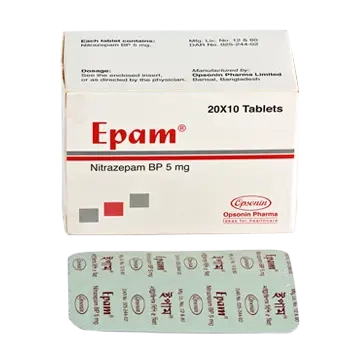
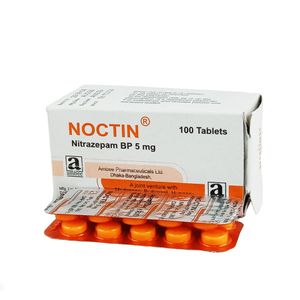
Introduction
A benzodiazepine derivative used as an anticonvulsant and hypnotic.
Uses
Nitrazepam is a long-acting benzodiazepine with intermediate onset commonly used to treat panic disorders, severe anxiety, insomnia, and seizures.
Used to treat short-term sleeping problems (insomnia), such as difficulty falling asleep, frequent awakenings during the night, and early-morning awakening.
Associated Conditions
Pharmacodynamics
Nitrazepam is a type of benzodiazepine drug. It is a powerful hypnotic drug which possesses strong sedative, anxiolytic, amnestic, anticonvulsant, and skeletal muscle relaxant properties. Nitrazepam shortens the time required to fall asleep and lengthens the duration of sleep. It is also useful for the management of myoclonic seizures.
Mechanism of Action
Nitrazepam belongs to a group of medicines called benzodiazepines. This drug affects central benzodiazepine receptors, which are associated with inhibitory GABA (gamma amino butyric acid)receptors, leading to enhanced GABA binding activity. GABA is a major neurotransmitter in the brain, which causes somnolence, relaxation of muscles, a decrease in anxiety and general central nervous system depression. Nitrazepam has anticonvulsant properties that may be attributed to its ability to bind to voltage-dependent sodium channels. Sustained repetitive firing seems to be limited by benzodiazepines effect of slowing recovery of sodium channels from inactivation.
Absorption
Bioavailability is 53-94% following oral administration.
Half Life
15-38 hours (mean elimination half life 26 hours).
Toxicity
An overdose of nitrazepam may lead to impaired breathing, dizziness, decreased cognition and balance, bluish nails and lips, slurred speech, and extreme somnolence, among others. In severe overdose, these symptoms may progress to a coma with a possibility of death.
Food Interactions
- Avoid alcohol.
- Limit caffeine intake.
- Take with food.
Dosage
- Adult: 5 mg at night; increase to 10 mg if necessary.
- Elderly: and debilitated patients: ≤normal adult dose.
- Child: Infants: 125 mcg/kg bid; gradually increase to 250-500 mcg/kg bid.