Introduction
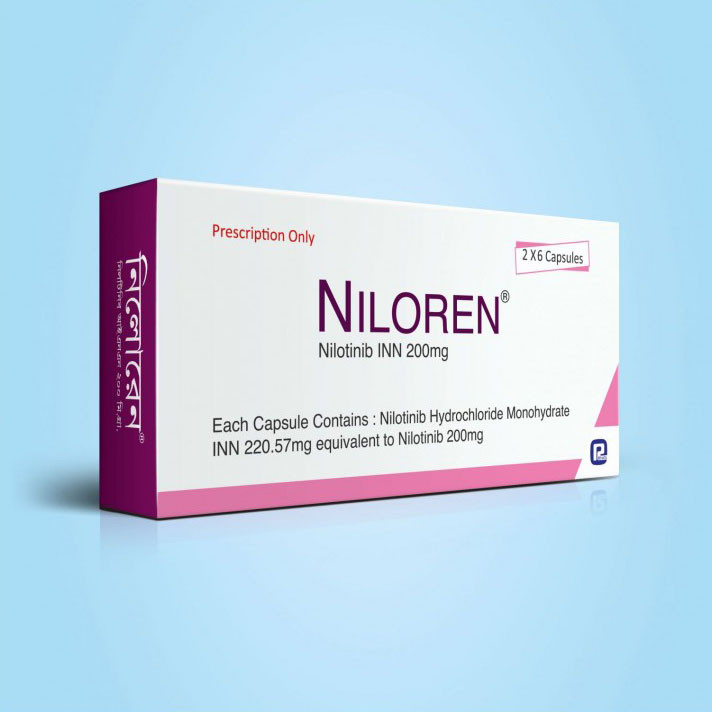
Nilotinib, also known as AMN107, is a tyrosine kinase inhibitor under investigation as a possible treatment for chronic myelogenous leukemia (CML). A Phase I clinical trial in 2006 showed that this drug was relatively safe and offered significant therapeutic benefits in cases of CML which were found to be resistant to treatment with imatinib (Gleevec), another tyrosine kinase inhibitor used as a first-line treatment for CML.
Uses
Nilotinib is a kinase inhibitor used for the chronic phase treatment of Chronic Myeloid Leukemia (CML) that is Philadelphia chromosome positive and for the treatment of CML that is resistant to therapy containing imatinib.
For the potential treatment of various leukemias, including chronic myeloid leukemia (CML).
Associated Conditions
Pharmacodynamics
Nilotinib is a transduction inhibitor that targets BCR-ABL, c-kit and PDGF, for the potential treatment of various leukemias, including chronic myeloid leukemia (CML).
Mechanism of Action
Chronic myelogenous leukaemia (CML) is caused by the BCR-ABL oncogene. Nilotinib inhibits the tyrosine kinase activity of the BCR-ABL protein. Nilotinib fits into the ATP-binding site of the BCR-ABL protein with higher affinity than imatinib, over-riding resistance caused by mutations. The ability of AMN107 to inhibit TEL-platelet-derived growth factor receptor-beta (TEL-PDGFRbeta), which causes chronic myelomonocytic leukaemia, and FIP1-like-1-PDGFRalpha, which causes hypereosinophilic syndrome, suggests potential use of AMN107 for myeloproliferative diseases characterised by these kinase fusions (Stover et al, 2005; Weisberg et al, 2005). AMN107 also inhibits the c-Kit receptor kinase, including the D816V-mutated variant of KIT, at pharmacologically achievable concentrations, supporting potential utility in the treatment of mastocytosis, and gastrointestinal stromal tumours (Weisberg et al, 2005; von Bubnoff et al, 2005; Gleixner et al, 2006).
Absorption
Orally available
Half Life
15 hours
Food Interactions
- Avoid grapefruit products. Grapefruit inhibits the CYP3A4 metabolism of nilotinib, causing increased serum levels of nilotinib.
- Avoid St. John's Wort. This herb induces CYP3A4 metabolism, which may reduce the serum concentration of nilotinib.
- Take on an empty stomach. Food increases the AUC of nilotinib. Separate nilotinib administration from meals by at least one hour before and two hours after eating.
Dosage
Resistant or intolerant Ph+ CML-CP and CML-AP: 400 mg orally twice daily.
Administer Nilotinib approximately 12 hours apart and must not take with food. Swallow the capsules whole with water. Do not consume food for at least 2 hours before the dose is taken and for at least one hour after. Dose adjustment may be required for hematologic and non-hematologic toxicities, and drug interactions. A lower starting dose is recommended in patients with hepatic impairment (at baseline).