Introduction
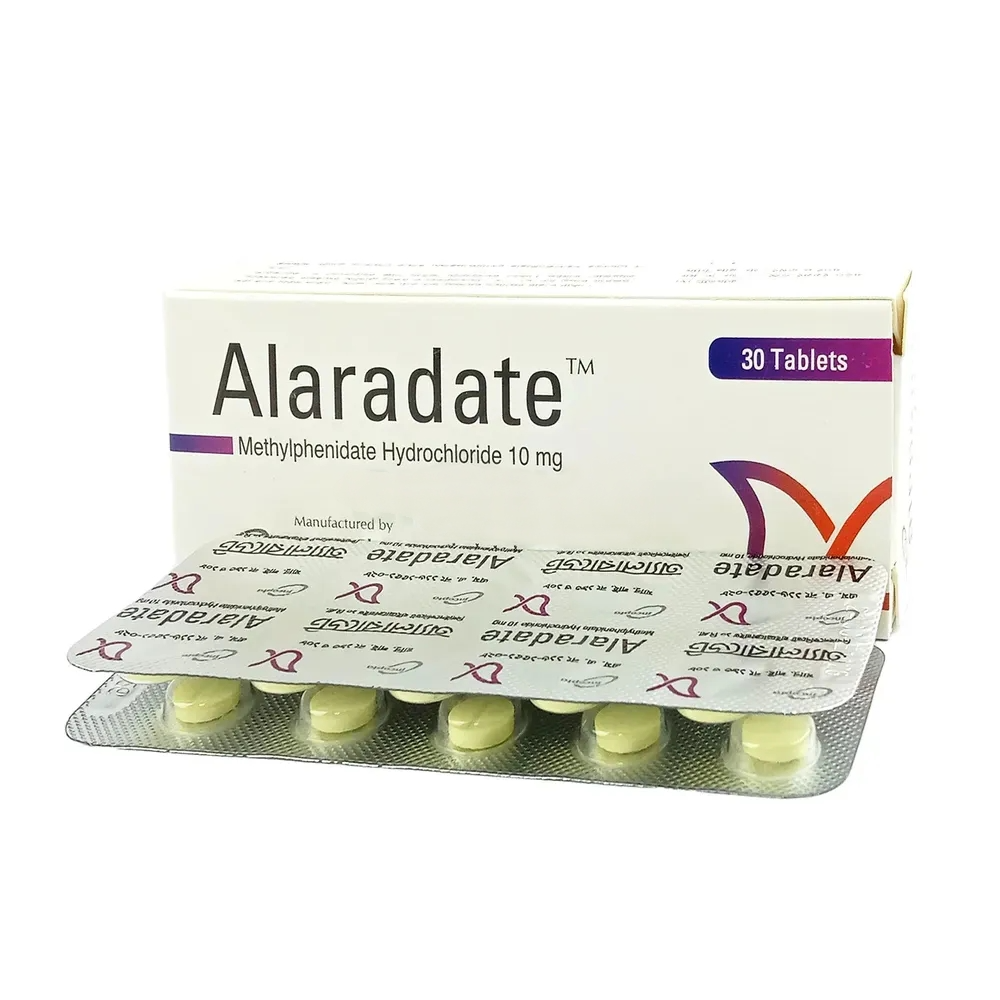
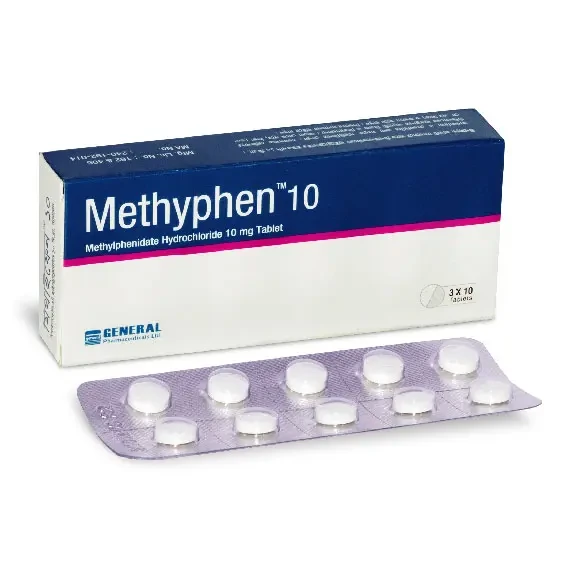
Methylphenidate is a central nervous system stimulant primarily used for the treatment of Attention-Deficit/Hyperactivity Disorder (ADHD) and narcolepsy. It helps improve symptoms such as inattention, hyperactivity, impulsivity, emotional instability, and poor concentration when combined with behavioral and educational interventions.
Methylphenidate acts mainly by inhibiting the reuptake of norepinephrine and dopamine, increasing their availability in the brain. At therapeutic doses, it enhances activity in the prefrontal cortex, improving attention, working memory, and impulse control while reducing ADHD-related symptoms. Its effects may be related to changes in dopamine transporter and receptor activity associated with ADHD.
Extended-release formulations provide prolonged symptom control through controlled drug-release systems, allowing once-daily dosing with effects lasting approximately 10–12 hours.
Methylphenidate carries a risk of abuse and dependence due to its effects on dopamine pathways, particularly at higher doses. Careful monitoring is recommended, and non-stimulant alternatives may be considered when appropriate.
Uses
Methylphenidate is a stimulant used in the management of Attention Deficit Hyperactivity Disorder (ADHD).
Methylphenidate is indicated for the treatment of Attention Deficit Hyperactivity Disorder (ADHD) in patients 6 years of age and older and for the treatment of narcolepsy.
Associated Conditions
Pharmacodynamics
Methylphenidate is a racemic mixture comprised of the d- and l-isomers. The d-isomer is more pharmacologically active than the l-isomer. Radioligand binding studies demonstrate that binding of methylphenidate in the brain is localized to dopamine-rich areas, in particular in the prefrontal cortex which has been demonstrated to play a prominent role in ADHD pathophysiology. In a number of animal models, methylphenidate enhances locomotor activity and induces stereotypic behaviours.
Mechanism of Action
While its exact mechanism is unclear, methylphenidate (MPH) has been shown to act as a norepinephrine and dopamine reuptake inhibitor (NDRI), thereby increasing the presence of these neurotransmitters in the extraneuronal space and prolonging their action. There is a dose-related effect of psychostimulants on receptor stimulation, where higher doses are shown to increase norepinephrine (NE) and dopamine (DA) efflux throughout the brain which can result in impaired cognition and locomotor-activating effects. In contrast, low doses are found to selectively activate NE and DE neurotransmission within the prefrontal cortex which is an area of the brain thought to play a prominent role in ADHD pathophysiology, thereby improving clinical efficacy and preventing side effects. The lower doses used to treat ADHD are not associated with the locomotor-activating effects associated with higher doses and instead reduce movement, impulsivity, and increase cognitive function including sustained attention and working memory. Methylphenidate's beneficial effects in sustaining attention have also been shown to be mediated by alpha-1 adrenergic receptor activity.
Clinical findings have shown that children with ADHD have an abnormality in the dopamine transporter gene (DAT1), the D4 receptor gene (DRD-4), and/or the D2 receptor gene that may be at least partly overcome by the dopaminergic effects of methylphenidate, suggesting a possible mode of action.
Absorption
Concerta®: Methylphenidate is readily absorbed. Following oral administration of Concerta, plasma methylhphenidate concentrations reach an initial maximum at about 1 hour followed by gradual ascending concentrations over the next 5-9 hours. Mean times to reach peak plasma concentrations across all doses of Concerta occurred between 6-10 hours. Once daily dosing minimizes the fluctuations between peak and trough concentrations associated with multiple doses of immediate-release methylphenidate treatments. Depending on the doses provided, Cmax was found to range from 6.0-15.0ng/mL, Tmax ranged from 8.1-9.4h, and AUC ranged from 50.4-121.5 ng·h/mL in children.
When provided as Concerta®, methylphenidate is released through the patented Osmotic Controlled-Release Oral Delivery (OROS) system where 22% of the dose is provided as an immediate release and 78% is provided through a gradual release. OROS is comprised of an osmotically active trilayer core surrounded by a semipermeable membrane with an immediate-release drug overcoat. Within an aqueous environment, such as the stomach, the drug overcoat, which consists of 22% of the dose, dissolves within one hour, providing an initial immediate-release formulation of methylphenidate. Water then permeates through the membrane into the tablet core where the osmotically active polymer excipients expand, allowing methylphenidate to release slowly through the orifice over a period of 6-7 hours. Concerta also provides a sustained 10-12 hour effect, allowing for once-daily dosing.
Biphentin®: Methylphenidate is rapidly and extensively absorbed following oral administration, with peak blood levels obtained in 1-3 hours.
When provided as Biphentin®, methylphenidate is released through a multi-layer release delivery system (MLRTM) where 40% of the dose is provided as an immediate release and 60% is provided through a gradual release. Biphentin was designed to be an alternative to separate doses of immediate-release (IR) methylphenidate by providing a biphasic concentration-time profile when given as a single dose. The MLRTM release system allows for a sustained effect for 10-12 hours, allowing for once-daily dosing that covers the major times that ADHD impairment might occur (such as school, homework periods, during the workday, etc).
Methylphenidate (immediate release): Methylphenidate hydrochloride is rapidly and extensively absorbed from the tablets following oral administration; however, owing to extensive first-pass metabolism, bioavailability is low (approx. 30%) and large individual differences exist (11-52%). In one study, the administration of methylphenidate hydrochloride with food accelerated absorption but had no effect on the amount absorbed. Peak plasma concentrations of 10.8 and 7.8 ng/mL were observed, on average, 2 hours after administration of 0.30 mg/kg in children and adults, respectively. Peak plasma concentrations showed marked variability between subjects. Both the area under the concentration-time curve (AUC), and the peak plasma concentrations (Cmax) showed dose-proportionality.
Volume of Distribution
Concerta: Plasma methylphenidate concentrations in adults decline bi-exponentially following oral administration.
Biphentin: The apparent distribution volume of methylphenidate in children is approximately 20 L/kg, with substantial variability (11 to 33 L/kg).
Methylphenidate (immediate release): The apparent distribution volume of methylphenidate in children was approximately 20 L/kg, with substantial variability (11-33 L/kg). The volume of distribution after an intravenous dose (Vss) is 2.23 L/kg for the racemate in healthy adult volunteers.
Protein Binding
Concerta: In humans, 15 ± 5% of methylphenidate in the blood is bound to plasma proteins.
Biphentin: In blood, methylphenidate and its metabolites are distributed between plasma (57%) and erythrocytes (43%). Methylphenidate and its metabolites exhibit low plasma protein binding (approximately 15%).
Methylphenidate (immediate release): In blood, methylphenidate and its metabolites are distributed between plasma (57%) and erythrocytes (43%). Methylphenidate and its metabolites exhibit low plasma protein binding (approx. 15%).
Route of Elimination
After oral administration of an immediate release formulation of methylphenidate, 78%-97% of the dose is excreted in the urine and 1%-3% in the feces in the form of metabolites within 48-96 hours. Only small quantities (<1%) of unchanged methylphenidate appear in the urine. Most of the dose is excreted in the urine as ritalinic acid (60%-86%), the remainder being accounted for by minor metabolites.
Half Life
Concerta: The half-life of methylphenidate in adults following oral administration of Concerta® was approximately 3.5 h.
Biphentin: Methylphenidate is eliminated from plasma with a mean half-life of 2.4 hours in children and 2.1 hours in adults.
Methylphenidate (immediate release): Methylphenidate is eliminated from the plasma with a mean half-life of 2.4 hours in children and 2.1 hours in adults.
Clearance
The apparent mean systemic clearance after an oral dose is 10.2 and 10.5 L/h/kg in children and adults, respectively for a 0.3 mg/kg dose, and 0.565 L/h/kg after an intravenous dose of the racemate in healthy adult volunteers.
Toxicity
Symptoms of overdose include vomiting, agitation, tremors, hyperreflexia, muscle twitching, convulsions (may be followed by coma), euphoria, confusion, hallucinations, delirium, sweating, flushing, headache, hyperpyrexia, tachycardia, palpitations, cardiac arrhythmias, hypertension, mydriasis, and dryness of mucous membranes. LD50=190mg/kg (orally in mice)
Food Interactions
- Avoid alcohol. Co-administration with alcohol may cause a "dose-dumping" effect with some extended-release formulations of methylphenidate. It may also potentiate the CNS effects of methylphenidate.
- Take with or without food. Patients may take methylphenidate with food to alleviate GI upset.